Baby sleep cycle maturation is the gradual shift from short, uneven sleep to longer, more organized sleep patterns.
Baby sleep cycle maturation can feel slow, confusing, and full of sudden changes. A young baby may sleep in brief bursts, wake often to feed, and seem unable to tell day from night. As the brain and body develop, sleep becomes more predictable, but progress is rarely smooth. This guide explains what changes, when it often happens, what caregivers can do, and when medical advice is needed.

What Is Baby Sleep Cycle Maturation?
Baby sleep cycle maturation is the development of more organized sleep patterns during the first year of life. It includes changes in sleep cycles, day and night awareness, sleep length, and the ability to return to sleep after normal brief awakenings.
Newborn sleep is not like adult sleep. A newborn may move, grunt, smile, suck, or make small sounds while asleep. This happens because newborns spend more time in active sleep, which is similar to rapid eye movement, or REM, sleep.
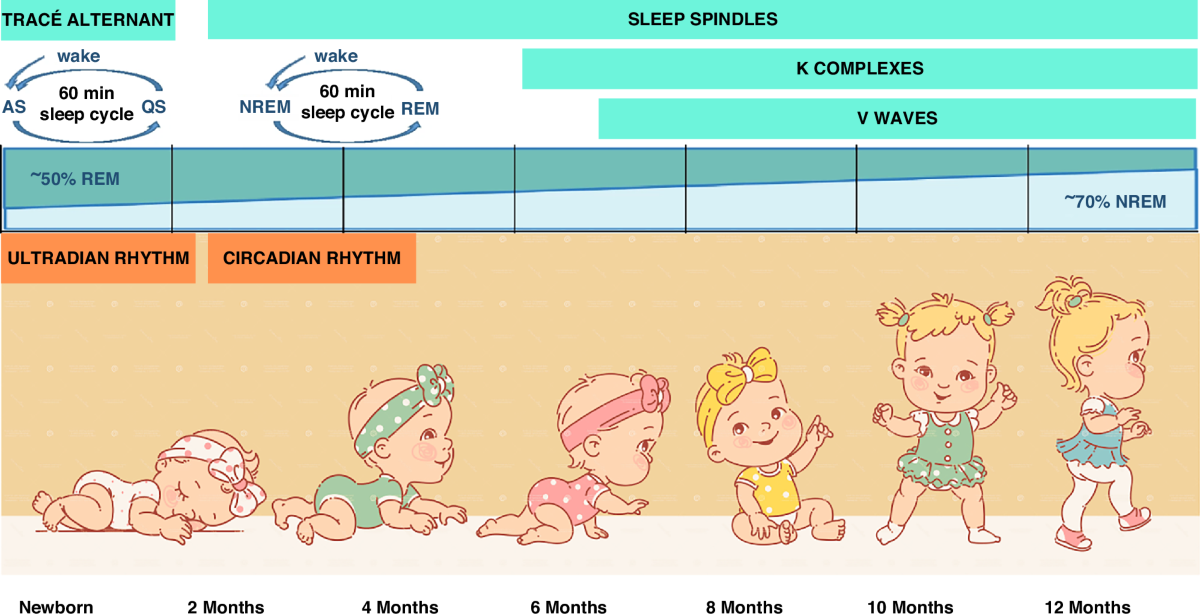
As the nervous system grows, baby sleep cycle maturation helps sleep become quieter and more settled. Babies also begin to spend more time in deeper sleep. Their body clock, called the circadian rhythm, starts to respond more clearly to light, darkness, feeding, and daily activity.
Sleep development is not a race. Some babies sleep for longer periods early, while others wake often for many months. Both patterns can occur in healthy babies.
How Baby Sleep Cycles Change Over Time
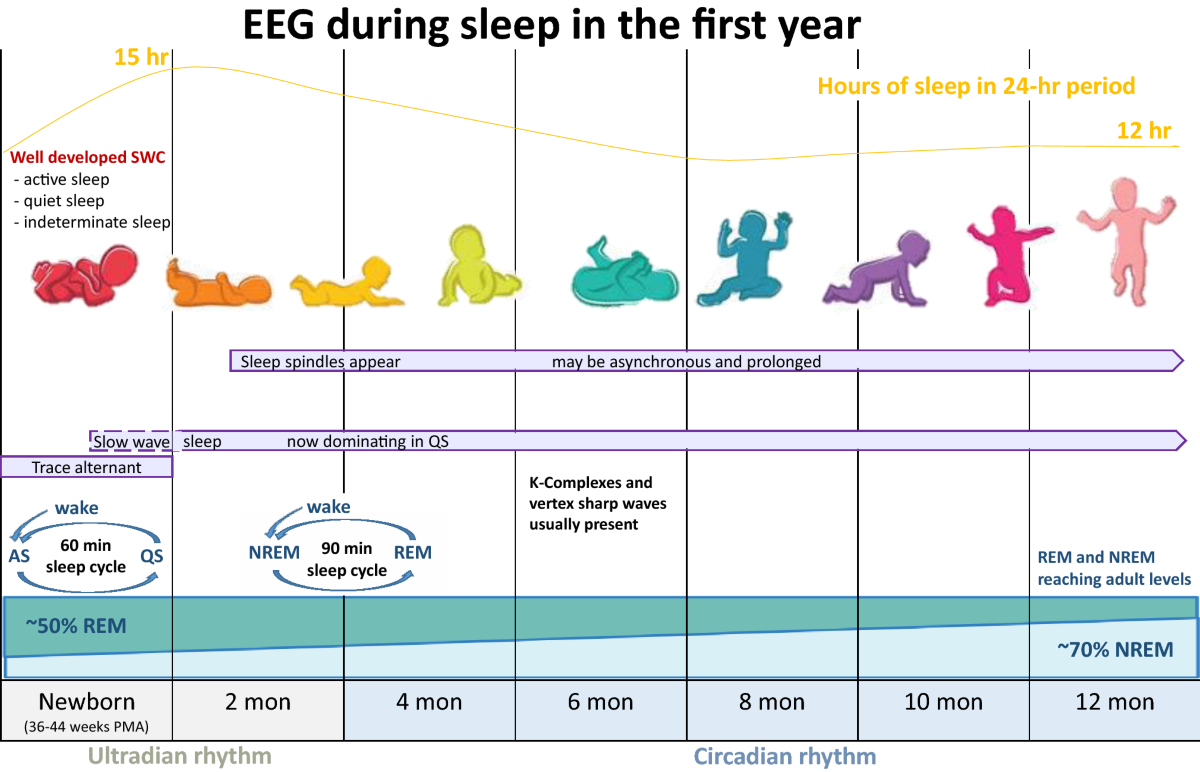
A sleep cycle is one trip through different sleep stages. Adults often have sleep cycles that last about 90 minutes. Young babies have much shorter cycles, often about 40 to 60 minutes.
At the end of a cycle, a baby may briefly wake. A mature sleeper may settle again without help. A young baby may cry, feed, need a pacifier, or look for a parent. This is one reason night waking is common during early baby sleep cycle maturation.
Newborn sleep: Birth to about 3 months
Newborns often sleep about 14 to 17 hours in 24 hours, although the range varies. Sleep may come in short periods of 30 minutes to 3 hours.
At this stage:
• Day and night patterns are still developing.
• Frequent feeding can interrupt sleep.
• The baby may wake every few hours.
• Sleep may include grunts, brief cries, and active movements.
• The baby may not yet connect several sleep cycles.
Newborns do not usually have a steady bedtime. Their sleep is spread across the whole day and night. This is normal and supports feeding and growth.
Early infant sleep: About 3 to 6 months
Around 3 to 6 months, many babies show clearer signs of baby sleep cycle maturation. They may sleep for a longer first stretch at night and take more regular naps.
The circadian rhythm becomes stronger. Light in the morning and darkness at night begin to carry more meaning. Some babies also develop a more reliable bedtime routine.
Still, sleep may change from week to week. Growth spurts, illness, teething, travel, and new skills can all cause more waking.
Later infant sleep: About 6 to 12 months
By this age, many babies sleep about 12 to 16 hours in 24 hours, including naps. Many take two or three naps, then move toward two naps.
Baby sleep cycle maturation may now include:
• Longer nighttime sleep.
• More stable nap timing.
• Fewer feeds for some babies.
• Better self-settling skills.
• Brief waking between sleep cycles.
A baby may still wake at night. Sleeping through the night often means a stretch of about 6 to 8 hours, not always 10 to 12 hours.
Toddler transition: Around 12 months and beyond
Toddlers often need about 11 to 14 hours of sleep in 24 hours. Many move from two naps to one nap between 12 and 18 months, though timing differs.
Sleep may become more settled, but new challenges can appear. Separation anxiety, walking, language growth, and a strong wish for independence may affect bedtime.

Why Does Baby Sleep Cycle Maturation Happen?
Baby sleep cycle maturation reflects changes in the brain, body, and daily rhythm. It is not caused by one single event.
Brain development
The brain slowly learns to control sleep and wake signals. Networks that manage alertness, calm, and body rhythms become more organized with age.
This process helps a baby spend more time in quiet sleep. It also supports a stronger response to daytime light and nighttime darkness.
Circadian rhythm development
A newborn’s internal clock is still immature. During pregnancy, the parent’s body helped provide timing signals. After birth, the baby must build a rhythm through light, feeding, movement, and social contact.
Morning light can help signal daytime. Dim light and low activity in the evening can support nighttime sleep.
Feeding and growth
Young babies have small stomachs. They often need to feed during the night. As feeding becomes more efficient and the baby grows, some nighttime stretches may become longer.
This does not mean every baby will stop waking at the same age. Nutrition needs differ, especially for premature babies or babies with growth concerns.
Sleep pressure
Sleep pressure is the body’s drive to sleep after being awake. It builds during the day and falls during sleep.
A baby who stays awake too long may become overtired. An overtired baby may cry more, settle less easily, and wake more often. A baby who has too much daytime sleep may also struggle at night.
Temperament and environment
Babies differ in sensitivity, activity level, and ease of calming. Noise, light, temperature, illness, and household routines also affect sleep.
These differences do not mean a caregiver has caused poor sleep. Baby sleep cycle maturation has a strong biological part, and biology cannot be controlled perfectly.
Signs of Healthy Baby Sleep Cycle Maturation
Sleep development looks different for each child. Look for gradual changes rather than perfect nights.
Common signs include:
• A longer first sleep period at night.
• More predictable sleepy times.
• Longer periods of calm sleep.
• Better ability to settle after a brief waking.
• Clearer difference between daytime and nighttime behavior.
• More regular naps.
• Less active movement during sleep.
A baby may show several of these signs and then have a difficult week. Temporary setbacks are common. They do not always mean that sleep development has stopped.
One useful lesson from pediatric sleep guidance is to judge the whole pattern, not one night. A baby who wakes twice one night and six times the next may still be developing normally.

How to Support Baby Sleep Cycle Maturation
Caregivers cannot force the brain to mature faster. However, they can create conditions that make sleep easier and safer.
Use morning light and daytime activity
Open curtains in the morning. Spend time outside when practical. Keep daytime feeds and interaction bright and social.
In the evening, lower the lights and reduce loud activity. This gives the body clock a simple message: day is for activity, and night is for rest.
Create a short bedtime routine
A routine does not need to be long. It may take 15 to 30 minutes.
Try this order:
-
Feed the baby if needed.
-
Change the diaper.
-
Put on sleep clothing.
-
Dim the lights.
-
Read, sing, or cuddle.
-
Place the baby in the sleep space.
The goal is repetition, not perfection. A familiar routine can act like a bridge from busy daytime to quiet nighttime.
Watch sleepy cues
Early sleepy cues may include:
• Slower movement.
• Looking away.
• Less smiling or talking.
• Rubbing the face.
• Yawning.
• Becoming quiet.
Crying is often a late sleepy cue. Try starting the routine when the baby first looks tired, but do not treat every yawn as a strict signal. Babies also yawn for other reasons.
Avoid excessive wake time
Wake windows can be useful, but they are not exact rules. A baby’s needs change with age, nap length, feeding, and health.
Use age-based guidance as a flexible starting point:
• Newborns often manage about 45 to 90 minutes awake.
• Young infants may manage about 1 to 2 hours.
• Older infants may manage about 2 to 4 hours.
These ranges are broad. Your baby’s cues matter more than a clock.
Offer chances to settle
When developmentally appropriate, place the baby down calm and awake at times. This lets the baby practice settling in the sleep space.
This does not mean leaving a distressed baby alone. Respond to hunger, discomfort, fear, illness, and the need for comfort. Gentle support and responsive care are compatible with healthy sleep development.

Safe Sleep During Sleep Cycle Maturation
Safe sleep is more important than getting a longer sleep stretch. The American Academy of Pediatrics recommends that babies sleep on their backs for every sleep, on a firm, flat surface, with no loose bedding or soft objects.
Use these safety practices:
• Place the baby on the back for naps and nighttime sleep.
• Use a firm crib, bassinet, or portable play yard mattress.
• Keep pillows, blankets, bumpers, and stuffed toys out of the sleep space.
• Share a room, not a bed, ideally for at least the first 6 months.
• Avoid smoke, alcohol, cannabis, and sedating medicines around the baby.
• Stop swaddling when the baby shows signs of rolling.
• Use a sleep sack that fits well and does not weigh the baby down.
• Avoid weighted sleep products unless a qualified clinician specifically advises otherwise.
Room sharing can make feeding and checking easier. Bed sharing can happen unexpectedly, especially during night feeds, so plan ahead. If you might fall asleep, remove pillows and blankets from the area and return the baby to a separate sleep surface as soon as you wake.

Common Sleep Challenges and What They Mean
Frequent night waking
Frequent waking may happen because of hunger, short sleep cycles, discomfort, illness, or a need for help settling. It can also be normal for the baby’s age.
A sudden change deserves attention if it comes with fever, breathing trouble, poor feeding, unusual sleepiness, or fewer wet diapers.
The four-month sleep change
Many families notice more waking around 4 months. This often matches a shift toward more mature sleep cycles.
The baby may now wake between cycles more clearly. This change can feel like sleep has become worse, but it may reflect normal development.
Nap refusal
Nap refusal can occur when a baby is moving from three naps to two or from two naps to one. It may also happen when the baby is overtired or not tired enough.
Adjust the schedule slowly. Keep a quiet rest period even if the nap does not happen.
Early morning waking
Early waking may relate to light, noise, hunger, room temperature, or a bedtime that is too early or too late. Keep the room dark and respond in a calm, boring way until the planned morning start.
Sleep regression
A sleep regression is a period when sleep becomes harder after improving. The term is common, but it is not a formal medical diagnosis.
Regressions may follow new skills, illness, travel, separation anxiety, or changes in routine. They usually improve with time and steady support.

Mistakes That Can Make Sleep Harder
Many tired caregivers try reasonable ideas that do not fit their baby’s needs. These are common mistakes to avoid.
Treating every schedule as a rule
Online schedules can help, but babies are not clocks. A strict plan may create stress if it ignores hunger, growth, or temperament.
Use schedules as a guide. Adjust based on your baby’s cues and your pediatric clinician’s advice.
Keeping a baby awake to make them tired
This often backfires. Overtired babies can become wired and harder to soothe.
A calm, earlier bedtime may work better than stretching wake time.
Changing several things at once
If you change bedtime, naps, feeding, and the sleep space together, you may not know what helped. Try one small change at a time when possible.
Expecting linear progress
Baby sleep cycle maturation often moves forward, then back for a short time. A new tooth or cold can disrupt sleep even after several good weeks.
Progress means learning over time, not sleeping perfectly every night.
Comparing babies
A friend’s baby may sleep longer, while another baby may wake often. Comparison can create guilt without offering useful information.
Focus on safe sleep, healthy growth, and a pattern that works for your family.
A Practical Plan for Supporting Better Sleep
Try this simple plan for one to two weeks.
-
Keep a short sleep log. Record wake time, naps, feeds, bedtime, and night waking.
-
Set a regular morning start. Keep it within a similar range most days.
-
Add morning light and daytime activity.
-
Use the same short bedtime routine.
-
Watch sleepy cues and avoid long periods of overtiredness.
-
Keep nighttime care quiet and dim.
-
Check the sleep space for safety every night.
-
Review the pattern weekly, not after one difficult night.
If another adult helps, share the plan. A tired caregiver should not have to manage every waking alone. Taking turns can improve safety and reduce exhaustion.
One practical lesson often seen in infant sleep support is that small changes work better than dramatic resets. Families usually make more progress when they choose one clear goal, such as a steady morning start or a calmer bedtime.
When to Call a Pediatric Health Professional
Talk with a pediatric clinician if you have concerns about feeding, growth, breathing, or sleep quality. Seek prompt medical care for breathing pauses, blue or gray skin, severe breathing effort, or a baby who is difficult to wake.
Ask for guidance if your baby:
• Snores often or gasps during sleep.
• Has noisy breathing that worries you.
• Sweats heavily during feeds or sleep.
• Feeds poorly or has fewer wet diapers.
• Is not gaining weight as expected.
• Has extreme irritability or unusual sleepiness.
• Wakes often because of apparent pain.
Premature babies and babies with medical conditions may follow a different sleep path. Their sleep plan should come from their health care team.
Sleep training questions also deserve an individual answer. There is no single method that fits every family, and safe sleep rules apply no matter which approach you choose.
Frequently Asked Questions About Baby Sleep Cycle Maturation
At what age does baby sleep cycle maturation begin?
Baby sleep cycle maturation begins from birth, but major changes often become easier to notice around 3 to 6 months. The process continues through the first year and beyond.
How long is a baby sleep cycle?
A young baby sleep cycle often lasts about 40 to 60 minutes. A baby may briefly wake at the end of each cycle before returning to sleep.
Does baby sleep cycle maturation mean my baby will sleep through the night?
Not always. Maturation can lead to longer sleep stretches, but night waking may continue because of hunger, illness, teething, development, or the need for comfort.
Why does my baby wake more often around 4 months?
Around 4 months, sleep patterns often become more organized, and the baby may wake between shorter cycles. This change is common and does not mean you have done anything wrong.
Can I speed up baby sleep cycle maturation?
You cannot speed up brain development, but you can support it with light exposure, a steady routine, age-appropriate wake times, and safe sleep habits. Keep expectations flexible because babies mature at different rates.
Is it safe to use sleep training during baby sleep cycle maturation?
Some families use sleep training when their baby is developmentally ready, but the right timing and method vary. Always continue safe sleep practices and ask a pediatric clinician about feeding or medical concerns.
[CodeImg?] Wait user says no placeholder after FAQ. Remove. Need conclusion h2, no placeholder. Ensure no placeholder after FAQ. Continue.
Conclusion
Baby sleep cycle maturation is a gradual process shaped by brain development, feeding, circadian rhythm, sleep pressure, temperament, and daily routines. Short sleep cycles and frequent waking are normal in early life, while longer stretches and steadier naps often develop over time.
Support this process with morning light, a calm bedtime routine, flexible wake times, responsive care, and a safe sleep space. Watch the overall pattern rather than expecting perfect nights.
If sleep changes suddenly or comes with breathing problems, poor feeding, poor growth, or unusual behavior, contact a pediatric health professional. Keep learning, make small changes, and give yourself compassion while your baby’s sleep system grows.

