Newborns wake often at night because tiny stomachs, immature clocks, and normal feeding needs shape their sleep.
Newborn nighttime waking patterns can feel confusing, especially when one night looks calm and the next feels endless. Most newborns sleep in short blocks, wake to feed, and have not yet learned the difference between day and night. Understanding normal newborn sleep, feeding cues, safe sleep, and warning signs can help you respond with more confidence and less worry.

What Are Normal Newborn Nighttime Waking Patterns?
Newborn nighttime waking patterns are the repeated periods when a baby wakes, feeds, needs a diaper change, or seeks comfort during the night. In the first weeks, these patterns are not guided by a steady body clock. Instead, sleep is shaped by hunger, growth, digestion, comfort, and brain development.
Many newborns sleep for two to four hours at a time. Some wake more often, such as every hour or two. Others may have one longer stretch followed by several short ones. Both patterns can occur in healthy babies, though your baby’s feeding needs and medical history always matter.
A newborn may wake for reasons that seem small to an adult. A wet diaper, a burp, a cold room, a loud sound, or the need for closeness can bring a baby from sleep to alertness. Newborn sleep is light and active, so grunts, facial movements, sucking motions, and brief cries do not always mean the baby is fully awake.

How Often Do Newborns Wake at Night?
There is no single normal number of nighttime wakings for every newborn. Many babies wake two to four times during a night, while others wake six or more times. Feeding method, age, birth weight, health, and growth can all affect the pattern.
During the first days, frequent waking is expected. A newborn’s stomach is small, and breast milk or formula is digested often. Some babies also cluster feed, which means they feed several times close together before a longer sleep period.
Newborn nighttime waking patterns may look like this:
• A baby sleeps for two hours, feeds, and returns to sleep.
• A baby wakes every 90 minutes for several hours.
• A baby feeds repeatedly in the evening, then sleeps for three hours.
• A baby wakes, makes soft sounds, and settles without a full feed.
• A baby has different sleep lengths each night.
These patterns can change from one day to the next. A growth spurt, a busy day, illness, or a change in feeding can lead to more waking for a short time.

Why Do Newborns Wake So Much at Night?
Newborn nighttime waking patterns have several normal causes. These causes often overlap, so one waking may involve hunger, light sleep, and a need for comfort at the same time.
Small stomachs and frequent feeds
Newborns need regular feeds because they grow quickly and can take only small amounts at one time. Breastfed babies may feed eight to 12 times in 24 hours, although normal ranges vary. Formula-fed babies also need regular feeds, based on their age, size, and guidance from their health professional.
Hunger cues may include rooting, hand-to-mouth movements, lip smacking, and increased alertness. Crying is often a later hunger cue. Feeding before intense crying may help the baby latch or take a bottle more calmly.
An immature body clock
A newborn’s circadian rhythm is still developing. The body does not yet release sleep hormones on a reliable day-night schedule. This is why a baby may sleep more in the day and wake often at night.
Bright light and normal daytime activity can help support this developing rhythm. At night, dim lights, quiet voices, and simple care can show the baby that nighttime is for sleep.
Active sleep
Newborns spend much of their sleep in an active state similar to rapid eye movement sleep. During this stage, they may twitch, smile, grunt, suck, or briefly open their eyes. These actions can look like waking, but the baby may still be asleep.
Pause for a few seconds before picking the baby up if there is no strong cry. The baby may settle without help. This small pause can prevent accidental full waking.
Comfort and closeness
Newborns are not trying to manipulate adults when they want to be held. Touch, warmth, movement, and a familiar voice help them feel safe. A baby who falls asleep in your arms may wake when placed in a crib because the surroundings feel different.
Responding to a newborn does not spoil the baby. At this age, comfort supports regulation and trust.
Gas, reflux, or discomfort
Some babies wake because of gas, spit-up, nasal stuffiness, or an uncomfortable position. Mild spit-up is common, but repeated vomiting, poor feeding, pain, breathing trouble, or poor weight gain needs medical attention.
Do not place a baby on an incline or use sleep positioners for reflux. Safe sleep guidance recommends placing babies flat on their backs on a firm, clear surface.

How Newborn Nighttime Waking Patterns Change by Age
Newborn nighttime waking patterns usually change slowly. Progress is rarely straight. A baby may sleep longer for several nights and then wake more often during a growth spurt.
The first week
In the first week, many babies sleep often but wake frequently to feed. Some are very sleepy, especially after a difficult birth or if they were born early. Your pediatrician or birth care team may advise waking the baby for feeds until weight gain is well established.
Keep track of wet diapers, feeds, and medical advice. A sleepy baby who is hard to wake may need prompt professional assessment.
Weeks two through four
By this stage, some babies begin to have one longer sleep period. The rest of the night may still include frequent waking. Evening cluster feeding is common and does not always mean your milk supply is low.
Newborn nighttime waking patterns may become more active during growth spurts. Extra feeding for a few days can be normal.
Weeks five through eight
Some babies begin to show a clearer day-night pattern around this time, though many still wake several times. A longer first stretch may appear, but it is not guaranteed. Babies can also wake more often during developmental changes.
Do not compare your baby with a friend’s baby or with social media sleep charts. Normal newborn sleep has a wide range.
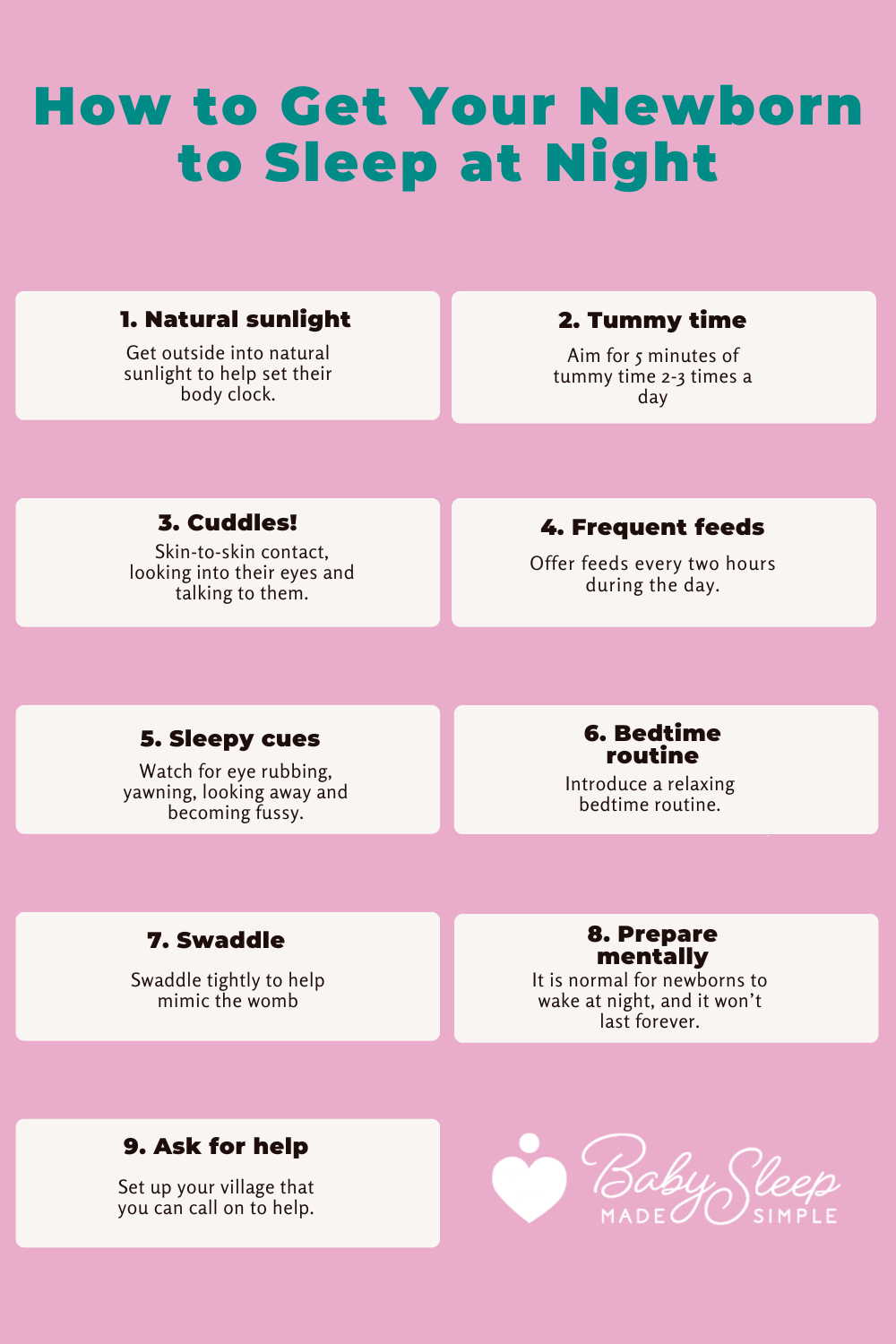
Newborn Nighttime Waking Patterns and Feeding
Feeding should guide much of your response to nighttime waking. Newborns need enough nutrition for growth, hydration, and development. Do not reduce night feeds or stretch sleep without advice from your baby’s health professional.
For breastfeeding, watch feeding quality rather than the clock alone. Signs of effective feeding may include regular swallowing, relaxed hands after feeding, and steady diaper output. A lactation professional can help if feeding is painful or the baby seems unable to transfer milk well.
For formula feeding, follow preparation instructions carefully. Never dilute formula to make it last longer. Do not prop a bottle or leave a bottle in the crib, as this can raise the risk of choking, ear problems, and tooth decay later.
Helpful feeding steps include:
-
Look for early hunger cues.
-
Feed the baby in a calm, supported position.
-
Burp if the baby seems uncomfortable.
-
Keep the baby awake during a feed when needed.
-
Place the baby on the back in the sleep space after feeding.
-
Follow your clinician’s advice about waking for feeds.
A baby who wakes every hour and feeds poorly may need an assessment. Frequent waking alone is not always a problem, but poor weight gain, weak sucking, very few wet diapers, or unusual sleepiness should not be ignored.

How to Support Healthier Newborn Nighttime Waking Patterns
You cannot force a newborn to sleep through the night. However, you can create calm habits that support sleep and protect your own energy.
Use light and sound to teach day from night
During the day, open curtains and allow normal household sounds. Feed and interact with your baby when they are alert. At night, keep lights low and voices soft.
This approach does not create instant results. It gives the baby’s body repeated clues as the internal clock develops.
Keep nighttime care simple
Prepare diapers, burp cloths, water for yourself, and feeding supplies before bed. Use a dim light rather than a bright overhead lamp. Avoid play, long conversations, and screens near the baby during night care.
A simple routine may look like this:
• Feed.
• Burp if needed.
• Change the diaper if it is wet or soiled.
• Offer brief comfort.
• Return the baby to the sleep space.
Not every baby needs a diaper change at every waking. Follow your clinician’s advice, especially for newborns with diaper rash or feeding concerns.
Learn the difference between stirring and waking
Watch for a strong cry, open eyes, rooting, or active body movements. Soft grunts and brief fussing may be part of active sleep. Waiting a moment can help you identify what the baby needs.
This does not mean ignoring a crying baby. It means giving yourself a short chance to observe before starting a full care routine.
Protect parental sleep
Share night duties when possible. One adult might handle the diaper while the other feeds. If breastfeeding, a partner can bring the baby, refill water, and settle the baby afterward.
Avoid feeding or holding a baby on a couch or armchair when you feel very sleepy. These surfaces are especially dangerous if an adult falls asleep with the baby.

Safe Sleep During Nighttime Waking
Safe sleep is essential during every sleep period, including naps and early morning sleep. Place your baby on their back for every sleep on a firm, flat mattress covered only by a fitted sheet.
Keep the baby’s sleep space free of pillows, loose blankets, bumpers, stuffed toys, and weighted products. Room-sharing without bed-sharing is recommended for the first months because it allows you to respond quickly while reducing some sleep-related risks.
Important safe sleep habits include:
• Use a crib, bassinet, or portable play yard that meets current safety standards.
• Place the baby on the back, even if the baby spits up.
• Keep the sleep surface firm and flat.
• Avoid sleeping with the baby on a sofa, recliner, or adult bed.
• Keep smoke and vaping away from the baby.
• Avoid alcohol, cannabis, sedating medicine, and other substances that can reduce alertness.
• Stop swaddling when the baby shows signs of rolling.
A baby can wake often and still be safe. Waking does not protect against every sleep-related danger, so safe sleep practices must remain consistent.
Common Mistakes That Can Make Night Waking Harder
Many tired parents try reasonable ideas that do not work well for newborns. The problem is not poor parenting. It is that newborn sleep follows biology more than schedules.
Expecting long sleep too soon
“Sleeping through the night” often means five or six hours, not a full adult night. Many newborns are not ready for that stretch. Expecting it too soon can lead to unsafe attempts to delay feeds.
Keeping the baby awake all day
Parents may try to tire a newborn by limiting naps. This often causes overtiredness, which can make settling harder and lead to more crying. Newborns usually need many hours of sleep across the full day.
Using a strict clock schedule
A clock can help you notice trends, but newborns need flexible care. Hunger, growth, and health can change the pattern quickly. Use cues and professional feeding guidance along with any routine.
Adding unsafe items to the crib
Pillows, wedges, blankets, and sleep positioners do not make newborn nighttime waking patterns safer. They can increase the risk of suffocation or entrapment.
Comparing babies
One baby may sleep in three-hour blocks while another wakes every 90 minutes. Comparison can create fear when the difference is still within a normal range.
In my experience, the most useful change is often not a new sleep product. It is a simpler night plan, shared duties, and realistic expectations. Families tend to feel more in control when they track feeding and health signs instead of counting every waking as a failure.
When Newborn Nighttime Waking May Signal a Problem
Frequent waking is often normal, but some signs need medical advice. Contact your pediatrician, midwife, or other health professional if your baby:
• Is difficult to wake for feeds.
• Feeds poorly or has a weak suck.
• Has fewer wet diapers than expected.
• Shows signs of dehydration, such as a very dry mouth or unusual sleepiness.
• Has repeated forceful vomiting.
• Has trouble breathing, pauses in breathing, or bluish skin.
• Has a fever, especially during the first months.
• Is not gaining weight as expected.
• Cries sharply and cannot be comforted.
For urgent breathing problems, blue or gray skin, severe weakness, or an unresponsive baby, call emergency services. Trust your judgment. Parents often notice that something feels different before they can explain why.
Newborn nighttime waking patterns can also change after illness, a feeding change, or a new medicine. A brief sleep log can help your clinician understand the full picture.
A Simple Sleep and Feeding Log
A short log can reveal patterns without turning sleep into a test. Record information for two or three days rather than tracking every detail for weeks.
You might note:
• Feeding time and length or approximate amount.
• Wet and soiled diapers.
• Sleep start and wake times.
• Possible signs of discomfort.
• Your baby’s mood and alertness.
Look for broad trends. For example, you may notice that evening cluster feeding comes before the longest sleep stretch. Or you may see that the baby wakes often after short feeds and settles better after more complete feeds.
Do not use a log to judge yourself. Use it as a communication tool. Bring it to a health visit if you have concerns about feeding, growth, or sleep.
Frequently Asked Questions About Newborn Nighttime Waking Patterns
Is it normal for a newborn to wake every two hours at night?
Yes. Waking every two hours can be normal because newborns have small stomachs and need frequent feeds. If the baby feeds well, has expected diaper output, and gains weight, this pattern is often part of normal early development.
When do newborns start sleeping longer at night?
Some babies begin to have a longer sleep stretch within the first two months, but timing varies widely. Longer sleep may come and go during growth spurts, illness, or developmental changes.
Should I wake my newborn to feed at night?
Many newborns need scheduled feeds until they regain birth weight and show steady growth. Follow instructions from your pediatrician or other health professional, especially if your baby was premature, jaundiced, very sleepy, or had feeding problems.
How can I help my newborn know the difference between day and night?
Use bright light and normal activity during the day. At night, keep care quiet, dim, and brief while meeting feeding and comfort needs.
Can responding to nighttime waking spoil a newborn?
No. Newborns need responsive care and cannot manipulate adults through crying. Comfort helps them feel safe while their nervous system and sleep rhythm mature.
Should I start sleep training when my baby is a newborn?
Most newborns are too young for formal sleep training because they need frequent feeds and support. Focus first on safe sleep, responsive feeding, calm routines, and recovery for the whole family.
[CodeImg?] User says don't give CodeImg after FAQ. Don't.
Conclusion
Newborn nighttime waking patterns are usually shaped by frequent feeding, small stomachs, active sleep, and an immature body clock. Waking every one to four hours can be normal, and patterns may change from night to night.
Focus on safe sleep, feeding cues, calm nighttime care, and realistic expectations. Ask for medical advice when feeding, diaper output, breathing, weight gain, or alertness seems unusual.
Take each night in small steps, share the workload when you can, and remember that newborn sleep is a season, not a permanent state. For more support, discuss your baby’s pattern with a trusted pediatric professional and share your experience or questions with other new parents.