Newborn poop color can be normal, but certain shades signal feeding, digestion, or health concerns.
If you’re staring at diapers and wondering what is normal, you are not alone. A newborn poop color chart can help you make sense of the early days, from sticky black meconium to mustard yellow breastfed stool and the green or brown shades that often come later. As someone who has spent years helping parents decode newborn stool patterns, I know how reassuring it is to understand what you are seeing and when it is time to call the pediatrician.
What a newborn poop color chart helps you understand
A newborn poop color chart is a simple guide that shows what different stool colors may mean in the first days and weeks of life. It can help you tell the difference between normal newborn digestion and signs that need medical attention.
In real life, this matters more than most new parents expect. A diaper can tell you a lot about feeding progress, hydration, and how well a baby is adjusting after birth. I have seen parents panic over green stool only to learn it was a harmless feeding shift, and I have also seen yellow stool become an important clue that a baby was thriving well.
A good newborn poop color chart usually includes these common colors:
- Black
- Dark green
- Yellow
- Mustard
- Brown
- Green
- Red
- White or pale gray
Each color can mean something different depending on the baby’s age, feeding type, and overall health. That is why it helps to look at the chart as a tool, not a diagnosis.
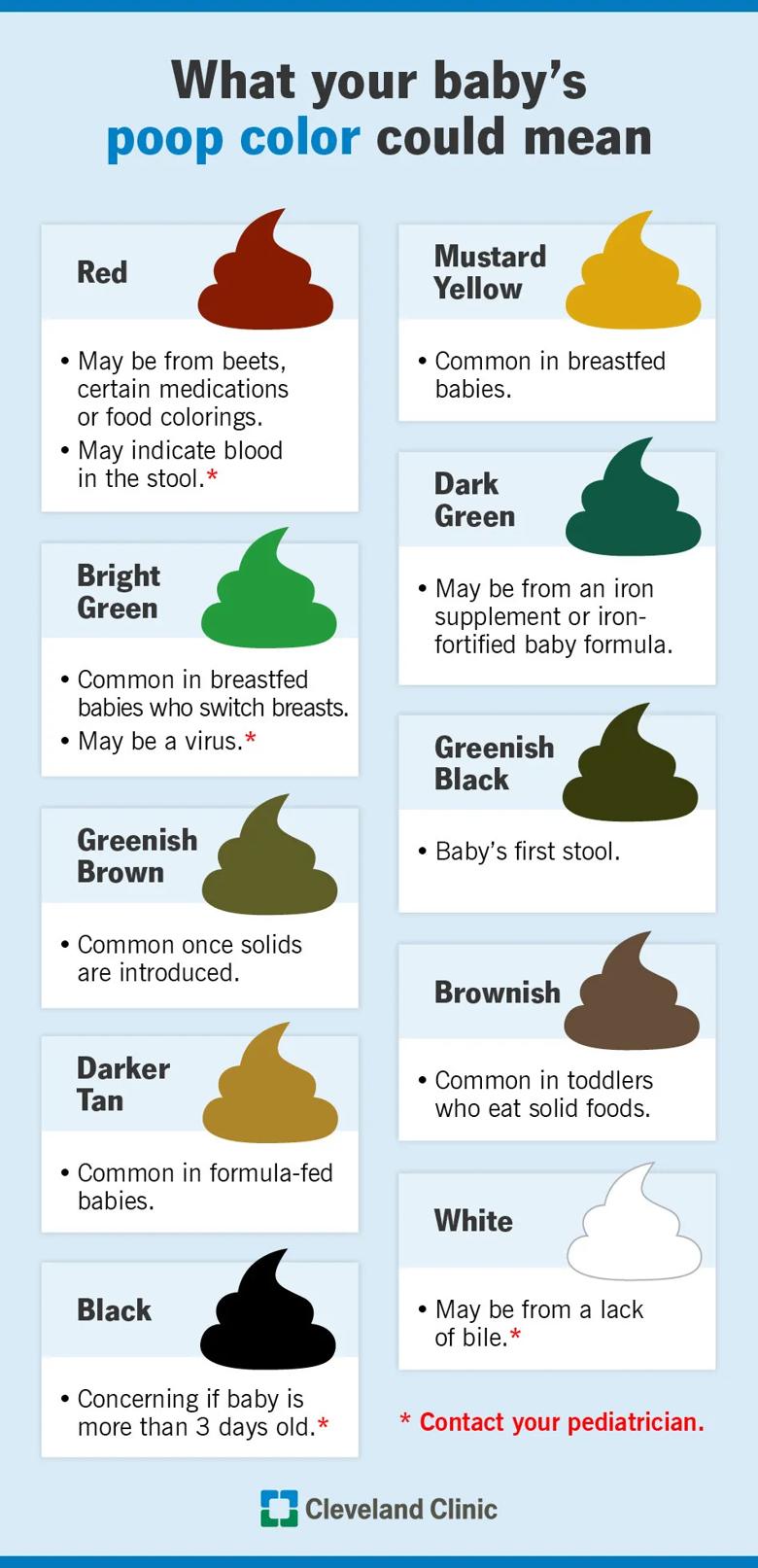
Newborn poop color chart by shade and meaning
Black stool in the first days
Black stool is often meconium, the baby’s first poop. It is thick, sticky, and tar-like, and it usually appears in the first 24 to 48 hours after birth.
This is normal at the start because meconium is made of material the baby swallowed in the womb. If black stool continues beyond the first few days, it is worth checking with the pediatrician.
Dark green stool
Dark green poop is also common in the early newborn period. It often shows up when meconium is moving out and transitional stool is starting.
I often tell parents to think of this stage like a bridge between “first poop” and “real feeding poop.” It can look surprising, but in many babies it is part of the normal process.
Yellow stool
Yellow stool is very common in breastfed babies. It may look soft, seedy, or a little like mustard.
This is usually a sign that milk is being digested well. Many parents are relieved when they see this color because it often means feeding is on track.
Mustard stool
Mustard yellow stool is one of the classic newborn poop colors, especially in breastfed infants. It can be loose, grainy, and mild smelling.
This is a normal and healthy sign in many babies. If the baby is gaining weight and feeding well, mustard stool is usually nothing to worry about.
Brown stool
Brown poop often becomes more common as babies grow older or begin formula feeding. It can range from light brown to darker brown.
Brown stool is usually normal, especially after the newborn stage. The exact shade can vary based on formula type, digestion speed, and feeding changes.
Green stool
Green stool can happen for several harmless reasons. It may be linked to formula, iron supplements, faster digestion, or foremilk-hindmilk imbalance in some breastfed babies.
Green by itself is not always a problem. What matters most is how the baby is acting, feeding, and growing.
Red stool
Red stool can be more concerning because it may point to blood. Sometimes the cause is simple, like a small anal fissure, but it can also signal something that needs urgent care.
If you see red in the diaper, it is smart to call your pediatrician the same day. Even a small amount should be checked, especially in a very young baby.
White, gray, or pale stool
White, gray, or clay-colored stool is not normal in newborns. It may suggest a problem with bile flow or liver function.
This color deserves prompt medical attention. If you ever see pale stool, contact your pediatrician right away.
:max_bytes(150000):strip_icc()/The-Baby-Poop-Guide-final-JPG-a25453d0731a4059a519f260aef92f1e.jpg)
What normal newborn poop looks like by feeding type
Newborn poop color chart readings are easier when you also think about how the baby is fed. Breastfed and formula-fed babies often have different stool patterns.
Breastfed babies
Breastfed babies often have:
- Yellow stools
- Mustard-colored stools
- Soft, seedy texture
- Mild smell
These stools can look loose, and that is usually normal. I remember helping one parent who thought the stool looked too runny, but it was exactly what we expected for a healthy breastfed newborn.
Formula-fed babies
Formula-fed babies often have:
- Tan or brown stools
- Firmer texture
- Stronger smell
- Less frequent bowel movements than breastfed babies
Formula can change both color and texture. The stool may also be greener at times, especially if the formula contains iron.
Mixed-fed babies
Babies who get both breast milk and formula may show a mix of stool colors and textures. Their poop can change from day to day depending on feeding patterns.
This can make the newborn poop color chart feel less predictable, but that is normal. The trend over time matters more than one diaper.
Common causes of poop color changes in newborns
A newborn poop color chart is most useful when you know what causes changes. Many stool color shifts are harmless and linked to feeding or digestion.
Feeding changes
Switching from colostrum to mature breast milk, or from breast milk to formula, can change stool color. The digestive system is still learning how to process milk.
Iron
Iron-fortified formula or iron supplements can make stool look darker green or brown. This is usually expected and not a sign of illness.
Fast digestion
When food moves quickly through the gut, stool may stay green. This is more likely if the baby is eating frequently or having digestive sensitivity.
Medicine or supplements
Some medicines can change stool color too. If your baby takes anything prescribed, ask whether stool color changes are expected.
Blood in the stool
Red or black stool outside the normal newborn period may mean blood. This is one reason the newborn poop color chart should always be used with caution and good judgment.
When newborn poop color is normal vs concerning
Not every unusual diaper means trouble. Still, some colors should never be ignored.
Usually normal
These are often normal, especially if the baby seems well:
- Black meconium in the first days
- Dark green transitional stool
- Yellow or mustard stool in breastfed babies
- Brown stool in formula-fed babies
- Green stool without other symptoms
Needs a call to the pediatrician
Contact your pediatrician if you notice:
- White, gray, or clay-colored stool
- Red stool or visible blood
- Black stool after the meconium stage
- Diarrhea with poor feeding
- Stool changes with vomiting, fever, or sleepiness
Needs urgent medical care
Seek urgent care if stool changes come with:
- Trouble breathing
- Weakness or extreme sleepiness
- Signs of dehydration
- Repeated vomiting
- Fever in a newborn
I always remind parents that poop color matters, but the whole baby matters more. A happy, feeding, alert baby with a normal growth pattern is usually a good sign.

How to use a newborn poop color chart at home
Using a newborn poop color chart does not have to feel overwhelming. A simple habit can make it much easier.
- Check the diaper in natural light when possible.
- Note the color, texture, and frequency.
- Think about the baby’s age and feeding type.
- Watch for other signs like fever, vomiting, or poor feeding.
- Call the pediatrician if a color looks off or keeps showing up.
One mistake I have seen many times is focusing only on color and ignoring the bigger picture. A chart is helpful, but it works best when paired with feeding logs, diaper counts, and your baby’s behavior.
Newborn poop color chart and what each stage means
Days 1 to 2
In the first 1 to 2 days, meconium is expected. It is usually black or very dark green and sticky.
This stage shows that your baby is clearing out what was stored before birth.
Days 3 to 4
You may see transitional stool. It often turns greenish-brown or greenish-yellow.
This is a sign that milk is starting to pass through the digestive system.
Days 5 and beyond
Stool color often depends on feeding type. Breastfed babies may have yellow, mustard, or seedy stools, while formula-fed babies may have tan, brown, or green stools.
If stool stays black, white, gray, or red, that is not typical and should be checked.
Tips for reading a newborn poop color chart without panic
The first weeks can make even calm parents feel like diaper detectives. A few simple habits can help.
- Look at trends, not one diaper
- Compare stool color with feeding type
- Watch for changes in behavior
- Keep a note or photo log if your pediatrician asks for it
- Trust your instincts if something seems wrong
I have found that parents feel much more confident when they learn what normal looks like for their own baby. That confidence can make those late-night diaper changes feel a little less stressful.
Frequently Asked Questions of newborn poop color chart
What is the normal color of a newborn’s poop?
Normal newborn poop changes by age and feeding type. In the first days, it is usually black or dark green, then it often turns yellow, mustard, brown, or green.
Is green poop normal in newborns?
Yes, green poop is often normal in newborns. It can happen during the transition from meconium, with formula feeding, or when digestion moves quickly.
Why is my newborn’s poop black?
Black poop in the first 1 to 2 days is usually meconium, which is normal. If black stool continues after the early newborn stage, call the pediatrician.
When should I worry about newborn poop color?
You should worry if stool is white, gray, red, or black after the meconium stage. These colors can point to a medical issue and should be checked quickly.
Does formula change newborn poop color?
Yes, formula often makes stool darker, firmer, and more brown or tan. Some formula-fed babies also have greener stools, which can still be normal.
Conclusion
A newborn poop color chart is a simple but powerful tool for new parents. It can help you understand what is normal, what may be related to feeding, and what needs a doctor’s attention. Most of the time, stool color changes are part of your baby’s normal adjustment, but certain colors like white, red, gray, or persistent black should never be ignored.
The biggest takeaway is to watch the whole picture, not just the diaper. If your baby is feeding well, gaining weight, and acting like themselves, that is often reassuring. Keep the newborn poop color chart handy, trust your observations, and reach out to your pediatrician whenever something feels off.