Tummy time for newborns helps build neck, shoulder, and core strength early.
Tummy time for newborns is one of the simplest ways to support healthy motor development from the very beginning. I’ve seen how small, consistent sessions can make a big difference in head control, comfort, and confidence. In this guide, I’ll walk you through what tummy time is, when to start, how to do it safely, and how to make it easier for both you and your baby.

What tummy time for newborns means
Tummy time for newborns is short, supervised time when your baby lies on their stomach while awake. This position helps babies use muscles they will need for rolling, sitting, crawling, and later movement skills.
It also helps prevent flat spots on the back of the head, which can happen when babies spend too much time on their backs. Pediatric experts often recommend starting early, even in the first days home, as long as the baby is awake and supervised.
In simple terms, tummy time for newborns is like the baby version of a workout. It may look small, but it builds the foundation for a lot of big skills later.
Why it matters so much
Babies are born with limited head and upper body control. Tummy time gives them a safe chance to practice lifting the head, turning side to side, and pushing through the arms.
That practice supports:
- Neck strength
- Shoulder stability
- Core muscle development
- Head shape balance
- Visual tracking
- Early body awareness
I always tell parents that tummy time for newborns is less about “exercise” and more about gentle practice. Think of it as helping your baby learn how to hold their own little world up one minute at a time.
Benefits of tummy time for newborns
The benefits of tummy time for newborns go beyond neck strength. It supports whole-body development in a way that is easy to overlook because the sessions are so short.
Some of the biggest benefits include:
- Better head control: Babies learn to lift and hold their head more steadily.
- Stronger muscles: The neck, back, shoulders, and arms all get stronger.
- Lower risk of flat head spots: Time off the back of the head helps shape balance.
- Better motor milestones: Skills like rolling, crawling, and sitting can come easier.
- Improved sensory input: Babies feel new pressure on the chest, arms, and legs.
- More alert play time: Many babies enjoy looking around from this new angle.
There is also a simple emotional benefit. Tummy time for newborns can become a little bonding routine when you stay close, talk softly, and smile at your baby. That calm, face-to-face connection can make the experience feel safe and comforting.
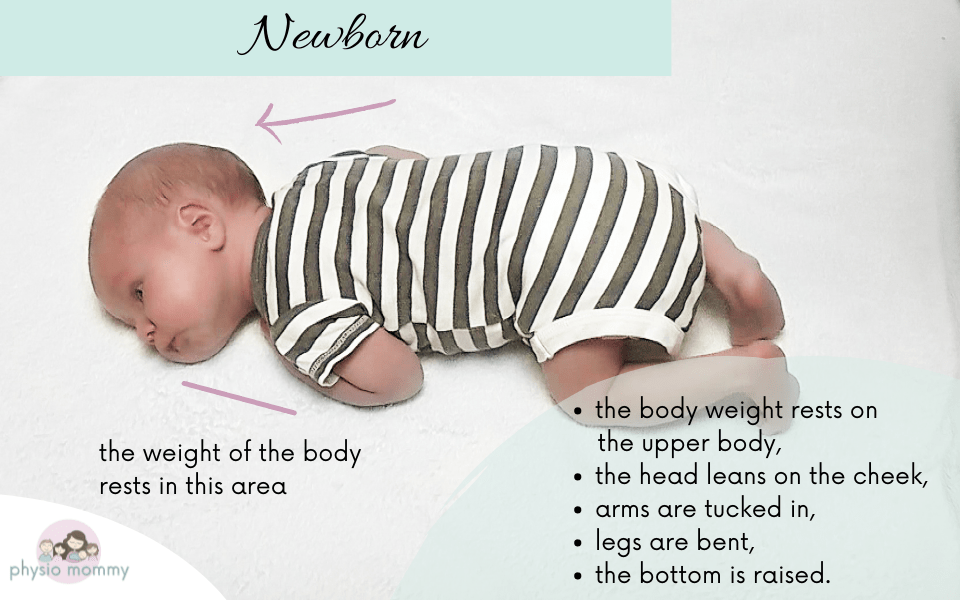
When to start tummy time for newborns
Most babies can begin tummy time for newborns soon after birth, once they are awake and comfortable. For full-term babies, this often means starting in the first days or weeks at home in short sessions.
If your baby was born early, had medical concerns, or seems uncomfortable in the tummy-down position, check with your pediatrician first. Safety always comes first, and some babies need a slower start.
A helpful rule I’ve used with families is this: start tiny, then build up. Even one or two minutes at a time can be enough in the beginning.
Best times to try it
Try tummy time for newborns when your baby is:
- Awake
- Calm
- Recently fed, but not right after a full feeding
- Clean and dry
- Supervised by an adult
Avoid tummy time when your baby is sleepy, overly hungry, or upset. A fussy baby rarely enjoys learning something new, and that is completely normal.
How to do tummy time for newborns safely
Safe tummy time for newborns is simple, but a few details matter. Always keep your baby awake and watched closely.
Follow these steps:
- Lay your baby on a firm, flat surface such as a play mat or clean blanket.
- Place baby on the stomach with the head turned to one side if needed.
- Stay within arm’s reach the whole time.
- Keep the session short at first, even one to three minutes.
- End the session if your baby gets very upset or tired.
You can also do tummy time on your chest. This is often easier for newborns because they can smell, hear, and see you. For many families, chest tummy time is the easiest way to start tummy time for newborns.
Safe setup tips
A good setup helps a lot:
- Use a firm surface, not a soft couch or bed
- Keep pillows, loose blankets, and toys out of reach unless used safely
- Make sure the room is comfortable and not too cold
- Stay alert and never leave your baby alone
A mistake I’ve seen often is starting with too long a session. Parents sometimes think they need to push through crying, but with tummy time for newborns, small wins matter more than long struggles.
How long tummy time for newborns should last
There is no need to aim for long sessions right away. For tummy time for newborns, short and frequent is better than rare and long.
A practical starting point is:
- 1 to 3 minutes at a time, a few times a day
- Gradually add time as your baby tolerates it
- Work toward a total of 20 to 30 minutes a day by around 2 to 3 months, if your baby is doing well
Some babies need much slower progress. That is okay. Tummy time for newborns is a gradual skill, not a race.
Signs your baby is ready for more
Your baby may be ready for longer sessions if they:
- Stay calm longer
- Lift the head more easily
- Turn the head from side to side
- Push up a little on the arms
- Seem curious instead of stressed
If your baby strongly dislikes tummy time for newborns, do not assume something is wrong. Often, the position just needs to be adjusted, or the session needs to be shorter and more playful.
Easy ways to make tummy time for newborns easier
A lot of parents tell me tummy time feels harder on them than on the baby. That is understandable. The good news is that a few small changes can make tummy time for newborns much smoother.
Try these ideas:
- Start on your chest: This feels warmer and more familiar.
- Use a rolled towel under the chest: This can help babies lift the head more easily.
- Place a mirror nearby: Babies often enjoy looking at faces and reflections.
- Talk, sing, or make eye contact: Your voice is calming and familiar.
- Use short bursts: Two minutes done well is better than ten minutes filled with tears.
One of the best tricks I’ve seen is pairing tummy time for newborns with a daily routine, like after diaper changes or after a calm wake-up. Babies learn faster when the routine feels predictable.
Helpful tummy time positions
There is more than one way to do it:
- Chest-to-chest tummy time: Baby lies on your chest while you recline slightly.
- Lap tummy time: Baby lies belly-down across your lap while supervised.
- Floor tummy time: Baby lies on a firm mat for the classic version.
- Towel support tummy time: A small rolled towel under the chest can give extra lift.
Each position has a purpose. If one version causes fussing, try another. The best tummy time for newborns is the one your baby can tolerate consistently.

What if my newborn hates tummy time?
This is one of the most common concerns, and it is very normal. Many babies protest tummy time for newborns at first because the position feels hard and unfamiliar.
If your baby fusses, try not to panic. Fussing does not always mean pain. Sometimes it just means effort.
Try this instead:
- Make the session shorter
- Do tummy time after a nap or diaper change
- Use your chest instead of the floor
- Stay face-to-face and talk gently
- Stop before your baby becomes fully upset
If your baby cries hard every time, or seems to arch, spit up a lot, or look uncomfortable, mention it to your pediatrician. Reflux, gas, or other issues can sometimes make tummy time for newborns feel unpleasant.
Common mistakes to avoid
A few things can make tummy time harder than it needs to be:
- Starting too early after feeding
- Leaving baby on a soft, unsafe surface
- Trying to do too much too soon
- Ignoring clear signs of fatigue
- Using tummy time only once in a while
Consistency matters more than intensity. In my experience, babies usually improve once parents stop aiming for perfect sessions and start aiming for regular, gentle practice.
Tummy time for newborns and developmental milestones
Tummy time for newborns plays a role in early milestones, but it does not force babies to develop on a fixed schedule. Every baby is different.
Over time, tummy time can support:
- Better head lifting in the early weeks
- More stable head control by around 2 to 4 months
- Arm pushing and chest lifting
- Rolling practice later on
- Better posture and movement planning
The goal is not to rush milestones. The goal is to give the body the chance to learn. Tummy time for newborns is like laying the first bricks in a house; you do not see the whole building right away, but the base matters.
Signs tummy time for newborns is going well
You may wonder if it is working. Often, progress is subtle at first.
Good signs include:
- Baby lifts the head a little more each week
- Baby tolerates the position for a bit longer
- Baby turns the head both ways
- Baby relaxes more quickly after the session
- Baby starts to look around with interest
Even tiny progress counts. When parents notice small changes, they usually feel more confident, and that confidence helps them stay consistent with tummy time for newborns.
When to call a pediatrician
Most babies do well with tummy time for newborns, but sometimes it is smart to ask for medical advice.
Call your pediatrician if your baby:
- Seems very stiff or very floppy
- Always turns the head to one side
- Strongly dislikes tummy time every time
- Has trouble lifting the head at all over time
- Shows signs of discomfort after feeding
- Was born early or has a medical condition and you are unsure how to begin
Trust your instincts. You know your baby best, and getting help early is always a good idea.
Frequently Asked Questions of tummy time for newborns
How often should I do tummy time for newborns?
Try several short sessions each day instead of one long one. Even a few minutes at a time can help your baby build strength and comfort.
Can tummy time for newborns be done on my chest?
Yes, chest tummy time is a great place to start. It is warm, close, and usually feels safer and more soothing for a newborn.
What if my baby falls asleep during tummy time for newborns?
If your baby falls asleep, move them to a safe sleep space on their back. Tummy time should only happen when your baby is awake and supervised.
Is tummy time for newborns safe after feeding?
It is usually better to wait a little after feeding so your baby is more comfortable. If your baby spits up often, ask your pediatrician for timing advice.
How do I know if tummy time for newborns is enough?
There is no perfect number for every baby, but regular daily practice matters most. Start small, build slowly, and focus on comfort and consistency.
Conclusion
Tummy time for newborns may seem simple, but it does important work behind the scenes. It helps build strength, supports motor development, and gives your baby a better chance to meet early milestones with confidence.
The best approach is gentle, consistent, and flexible. Start with short sessions, use your chest or lap if needed, and let your baby’s comfort guide the pace.
If you are just getting started, begin today with one short session and build from there. For more baby care tips and newborn development guidance, explore trusted parenting resources and keep learning as your baby grows.