Newborn feeding physiology guides reflexes, hunger cues, milk transfer, digestion, and early feeding behavior.
Newborn feeding can look simple, but it is a carefully timed blend of brain signals, reflexes, hormones, muscle work, and caregiver support. Understanding newborn feeding physiology and feeding behavior helps parents tell the difference between normal variation and a possible feeding problem. This guide explains how newborns feed, what their cues mean, and how to support safe, effective feeding at the breast or bottle.
What newborn feeding physiology means
Newborn feeding physiology is the way a baby’s body senses hunger, starts a feed, takes in milk, digests it, and signals fullness. It includes the nervous system, sucking muscles, breathing control, stomach function, hormones, and energy use.
Newborns are not born with the same feeding skills as older babies. Their bodies must coordinate three tasks at once:
• Sucking to draw milk into the mouth
• swallowing to move milk safely into the esophagus
• Breathing to keep oxygen levels steady
This is called suck, swallow, breathe coordination. It is one of the most important parts of newborn feeding physiology and feeding behavior.
Most healthy full-term newborns can manage this pattern well. Yet the skill is still new. A baby may pause, breathe, cough, or fall asleep during a feed. These pauses are often normal, especially in the first days.
A newborn’s stomach is also small. On the first day, the stomach may hold only a small amount at a time. Capacity grows over the first week and continues to expand as feeding becomes more regular. This is one reason newborns feed often rather than taking large meals.
Early milk, called colostrum, is thick and rich in immune factors. It comes in small amounts, but those small amounts match the early stomach size of many newborns. Mature milk usually increases over the next few days, although timing can vary.
The body also uses hormones during feeding. When a baby suckles, nerve signals can support the release of prolactin and oxytocin. Prolactin supports milk production, while oxytocin helps move milk through the ducts. Stress, pain, and poor support may affect this process, but they do not mean a parent has failed.

Newborn feeding reflexes and early development
Reflexes help a newborn find food and begin feeding before learned skills become strong. These reflexes are part of newborn feeding physiology and feeding behavior.
Rooting reflex
When a baby’s cheek or mouth area is touched, the baby may turn toward the touch and open the mouth. This is the rooting reflex. It helps the newborn find the breast or a bottle nipple.
Rooting can also happen when a baby is not hungry. Light touch, clothing, or movement may trigger it. For this reason, rooting is helpful but should be read along with other feeding cues.
Sucking reflex
When something touches the roof of the mouth, a newborn may begin to suck. This reflex helps the baby remove milk. Some babies have a strong and organized suck from birth, while others need time and support.
A pacifier, finger, or bottle nipple may trigger sucking. Sucking alone does not always prove that a baby is taking enough milk. Look for swallowing, steady breathing, and good output as well.
Swallowing reflex
Swallowing moves milk from the mouth into the digestive tract. A newborn must slow the flow of milk enough to swallow safely. If milk flows too fast, the baby may cough, sputter, pull away, or become upset.
Hand-to-mouth behavior
Newborns often bring their hands to their mouths. This action may help them calm themselves, but it can also be an early hunger cue. Removing the hands before every feed may make it harder to read the baby’s behavior.
The role of birth maturity
Premature babies may have less mature suck, swallow, and breathing skills. Some late-preterm babies look strong but tire quickly. Babies with low muscle tone, medical conditions, or difficult births may also need extra feeding support.
A key lesson in newborn feeding physiology and feeding behavior is that feeding ability is not based on age alone. It also depends on alertness, strength, breathing, oral anatomy, and overall health.

Newborn feeding behavior and hunger cues
Newborn feeding behavior is the set of actions a baby uses to show hunger, interest, effort, satisfaction, or fatigue. These behaviors can be subtle. Crying is usually a late hunger cue, not the first sign.
Early hunger cues may include:
• Stirring or waking from sleep
• Opening the mouth
• Turning the head from side to side
• Licking the lips
• Moving the hands toward the mouth
• Making soft sounds
• Increasing body movement
Middle hunger cues may include:
• Stretching the arms and legs
• Squirming
• Making louder sounds
• Becoming more alert
• Searching strongly for the nipple
Late hunger cues may include:
• Crying
• Redness around the face
• Fast, jerky movements
• Difficulty latching or calming
• Turning away from the breast or bottle
A very upset baby may struggle to organize feeding. Calm the baby with skin-to-skin contact, gentle holding, or a short pause. Then offer the feed again.
Fullness cues matter just as much as hunger cues. A baby may slow the sucking, relax the hands, release the nipple, turn away, or fall into a relaxed sleep. These signs suggest the baby may be finished, although falling asleep early can also signal tiredness.
Newborn feeding physiology and feeding behavior can change from feed to feed. One feed may be short and active. The next may be slower. Growth, sleep, temperature, illness, and time of day can all affect behavior.
Parents often worry when a baby wants to feed again soon after a feed. Frequent feeding can be normal, especially during cluster feeding. Still, frequent feeding should be paired with signs of effective milk transfer and adequate diaper output.
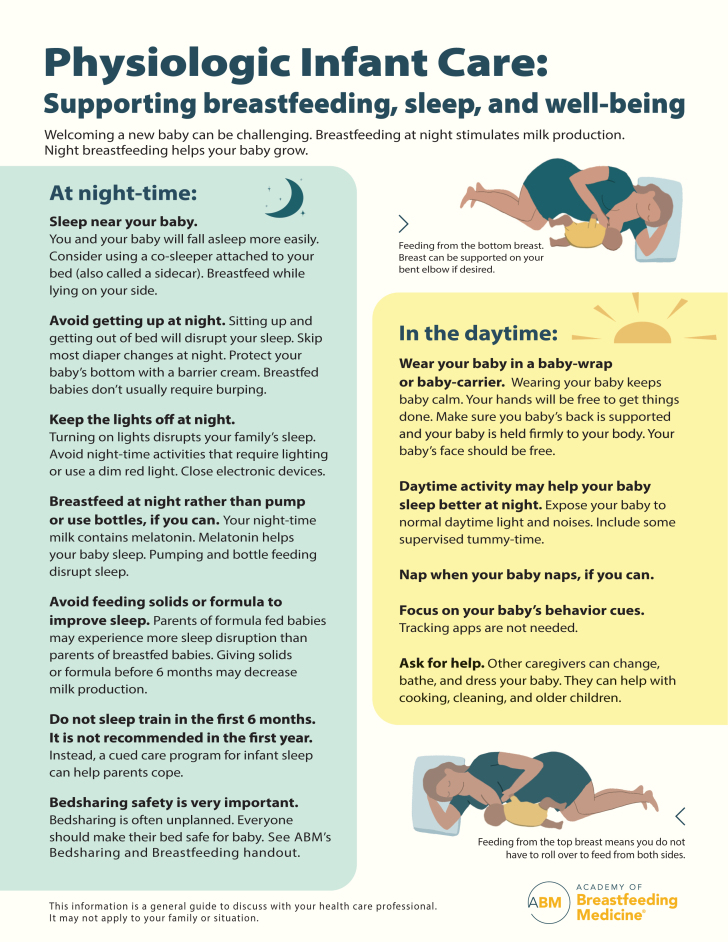
Breastfeeding physiology and milk transfer
During breastfeeding, the newborn’s mouth, tongue, jaw, and facial muscles work together to create suction and compression. A deep latch helps the baby draw milk from the breast with less pain for the parent.
Milk transfer is not based on suction alone. The baby must also use the tongue and jaw in a rhythmic pattern. When milk is moving well, parents may hear or see swallowing. The baby’s cheeks often look rounded rather than hollow.
A comfortable latch often includes:
• The baby’s mouth opened wide
• More areola visible above the upper lip than below the lower lip
• The chin touching or nearly touching the breast
• Slow, deep sucks after the first quick sucks
• Little or no pinching pain
Some nipple tenderness can occur during the first days. Severe pain, cracked skin, bleeding, or pain that continues through the feed deserves professional assessment.
Milk ejection, often called let-down, may feel like tingling, pressure, leaking, or nothing noticeable at all. A parent does not need to feel let-down for milk to be moving. Watching the baby’s swallowing and body relaxation is often more useful.
Newborn feeding physiology and feeding behavior are closely linked during breastfeeding. A baby who is sleepy may not create enough stimulation for strong milk transfer. Skin-to-skin contact, gentle breast compression, and a calm setting may help, but persistent sleepiness should be checked.
A practical lesson for families is to avoid judging a feed only by its length. A short feed with active swallowing may be more effective than a long feed with little milk transfer.

Bottle-feeding physiology and paced feeding
Bottle feeding also requires coordinated sucking, swallowing, and breathing. The main difference is that milk may flow more easily from a bottle than from the breast. A fast flow can overwhelm a newborn who is still learning to pause.
Paced bottle feeding helps the baby control the flow. It does not mean making the baby work excessively. It means holding the baby in a more upright position and keeping the bottle closer to horizontal.
Helpful steps include:
- Hold the baby semi-upright with the head and neck supported.
- Touch the nipple to the baby’s lips and wait for a wide mouth.
- Keep the bottle angled so the nipple is filled but milk does not pour quickly.
- Allow pauses every few sucks.
- Watch the baby’s breathing, face, hands, and body.
- Stop when the baby shows fullness cues.
Signs of a flow that may be too fast include coughing, gulping, leaking milk from the mouth, wide eyes, pulling away, stiffening, or noisy breathing. A slower-flow nipple may help, but nipple labels are not standardized. The baby’s behavior matters more than the package number.
Never force a bottle to be finished. Pressure can disrupt newborn feeding physiology and feeding behavior by teaching the baby to ignore fullness. It may also increase stress, spit-up, or feeding resistance.
Bottle hygiene is also important. Follow local public health guidance for cleaning, preparing, storing, and discarding formula or expressed milk. Never prop a bottle or leave a baby alone with one.
How digestion affects newborn feeding
Newborn digestion is still developing. The stomach empties at a different rate depending on the milk, the amount taken, the baby’s maturity, and the baby’s health. Small spit-ups are common because the muscle at the top of the stomach is still immature.
Normal spit-up usually involves a small amount of milk that comes up without strong force. The baby may remain comfortable and continue to gain weight.
Reflux may be more concerning when it comes with:
• Poor weight gain
• Painful crying during or after feeds
• Green or bloody vomit
• Forceful vomiting
• Breathing trouble
• Refusal to feed
• Fewer wet diapers
• A swollen or tender belly
These signs need prompt medical advice. Projectile vomiting, breathing difficulty, blue color, extreme sleepiness, or signs of dehydration require urgent care.
Burping is not always necessary after every feed. Some babies swallow more air than others. Hold the baby upright for a short time, and stop if the baby is calm and comfortable.
Newborn feeding physiology and feeding behavior can also be affected by stool patterns. Breastfed babies may have frequent loose stools at first. Some later go several days between stools while remaining well. Formula-fed babies may have different stool color and texture.
Do not add cereal, water, juice, or other foods to a newborn’s bottle unless a qualified clinician gives specific instructions. These additions can be unsafe and may change the balance of nutrients.

How to know if a newborn is feeding well
No single sign proves that a newborn is getting enough milk. The best assessment uses several signs together. These include feeding behavior, swallowing, diaper output, weight, and overall alertness.
Signs of effective feeding may include:
• The baby wakes for some feeds
• The baby latches or accepts the nipple
• Sucking changes from quick to deeper, rhythmic sucks
• Swallowing is seen or heard
• The baby’s hands and body relax during the feed
• The baby appears satisfied after some feeds
• Wet diapers increase over the first several days
• Weight is monitored by a health professional
Many newborns lose some weight after birth. This can be normal, but the amount and timing matter. A clinician should review weight changes with feeding behavior and diaper output.
Parents should contact a pediatrician or lactation professional if the baby:
• Is difficult to wake for feeds
• Has fewer wet diapers than expected
• Feeds for a very long time but rarely swallows
• Coughs or chokes often
• Has worsening jaundice
• Has a dry mouth or weak cry
• Continues to lose weight
• Shows signs of breathing stress
Newborn feeding physiology and feeding behavior are best evaluated early when concerns arise. Early support is often simpler than waiting until the baby is very tired or the parent is in pain.
Common factors that change newborn feeding behavior
Feeding behavior can change for many reasons. Some changes are normal. Others need medical review.
Common short-term factors include:
• Growth spurts
• Cluster feeding
• A noisy or bright environment
• Being too tired
• A strong milk ejection reflex
• A bottle nipple with a fast or slow flow
• Gas or mild spit-up
• Changes in sleep patterns
Birth factors may also affect feeding. A baby born by cesarean birth, after a long labor, or after exposure to certain medicines may be sleepy in the first day. This does not predict long-term feeding ability, but the baby may need closer observation at first.
Oral anatomy can affect milk transfer. A small jaw, high palate, restricted tongue movement, or cleft palate may create challenges. These findings should be assessed by trained professionals rather than judged from a photo or a simple online checklist.
Maternal health also matters. Heavy bleeding after birth, thyroid disease, diabetes, breast surgery, retained placental tissue, and some medicines may affect milk production or feeding comfort. These issues are not always visible, so a full health history is important.
Cultural feeding practices and family advice can shape decisions too. Grandparents and community members may offer helpful support, but advice can also conflict with current safety guidance. Families deserve respectful care that considers culture while protecting the newborn.
The central idea in newborn feeding physiology and feeding behavior is flexibility. A good plan meets the baby’s needs, protects milk supply when desired, and supports the parent’s health.
Practical ways to support healthy newborn feeding
A calm feeding setting can make a real difference. Dim lights, close contact, and reduced noise may help a baby stay organized. Skin-to-skin contact can support warmth, alertness, and early feeding behavior.
Try these practical steps:
• Feed when early hunger cues appear.
• Support the baby’s head, neck, and body in one line.
• Keep the baby close rather than reaching toward the baby.
• Watch for active swallowing, not just sucking.
• Give pauses when the baby needs to breathe.
• Burp or change position if the baby seems uncomfortable.
• Stop when the baby shows clear fullness cues.
• Track feeds, diapers, and concerns without becoming trapped by exact minutes.
• Arrange a weight check when recommended.
One mistake families often make is waking a baby by rubbing the feet hard or repeatedly moving the arms. Gentle skin-to-skin contact, a diaper change, or light pressure on the back may work better. If the baby remains too sleepy to feed, contact a health professional.
Another common mistake is switching products or feeding methods after one difficult feed. One hard feed does not always mean the entire plan has failed. Look for patterns over several feeds, then ask for skilled support.
Newborn feeding physiology and feeding behavior should be viewed as a relationship, not a test. The baby is learning, and the caregiver is learning the baby’s signals. Confidence grows through careful observation.
When to seek feeding help
Seek help early if feeding feels painful, stressful, or confusing. A pediatrician, lactation consultant, neonatal nurse, or feeding therapist can observe a feed and identify problems that are hard to see at home.
Ask for help when:
• The baby cannot latch or repeatedly slips off.
• The parent has severe nipple or breast pain.
• The baby falls asleep within minutes and rarely resumes feeding.
• There is little or no swallowing during most feeds.
• The baby coughs, chokes, or turns blue.
• Weight gain is poor or uncertain.
• Diaper output is lower than expected.
• Feeding takes most of the day and leaves little time for rest.
Urgent medical assessment is needed for breathing difficulty, blue or gray skin, severe weakness, repeated forceful vomiting, signs of dehydration, or a baby who cannot be awakened enough to feed.
Professional support should not be viewed as a failure. Newborn feeding physiology and feeding behavior involve many moving parts. Timely help protects both the baby and the caregiver.
Evidence-based guidance supports responsive feeding, safe sleep, careful milk preparation, and regular monitoring when concerns exist. Advice should be adapted for premature babies and newborns with medical conditions.
Frequently asked questions about newborn feeding physiology and feeding behavior
How often should a newborn feed?
Many healthy newborns feed about 8 to 12 times in 24 hours, but patterns vary. Feed based on early hunger cues, and follow individualized advice if the baby was premature, small, ill, or has weight concerns.
Why does my newborn fall asleep while feeding?
Newborns often become sleepy because feeding takes effort and close contact is calming. Falling asleep after active sucking and swallowing may be normal, but repeated early sleep with poor diaper output or poor weight gain needs professional review.
How can I tell if my newborn is getting enough milk?
Look for active swallowing, relaxed body language after feeds, increasing wet diapers, and appropriate weight changes. Diaper counts alone cannot replace a weight check and feeding assessment.
Is cluster feeding normal for a newborn?
Cluster feeding can be normal, especially during growth periods or in the evening. If the baby never seems satisfied, has little swallowing, causes severe pain, or has poor output, seek feeding support.
Should I wake my newborn to feed?
Some newborns need scheduled waking, especially when they are premature, jaundiced, very sleepy, or not gaining weight well. Ask the baby’s clinician how long the baby can safely sleep between feeds.
Why does my newborn cough during bottle feeding?
Coughing may mean the milk flow is too fast or the baby needs a pause. Use a more upright position and paced feeding, and seek medical advice if coughing is frequent or occurs with breathing changes.
Can newborn feeding behavior change from day to day?
Yes. Sleep, growth, milk flow, digestion, stimulation, and health can change feeding behavior. Focus on patterns, swallowing, output, and weight instead of judging one feed alone.
Conclusion
Newborn feeding physiology and feeding behavior explain how babies find food, coordinate sucking with breathing, digest small feeds, and show hunger or fullness. Reflexes help start feeding, but effective feeding also depends on alertness, body support, milk flow, and caregiver response.
Watch the whole picture: early hunger cues, active swallowing, relaxed body language, wet diapers, and healthy weight changes. Feed responsively, avoid pressure, and seek help early when pain, poor transfer, breathing trouble, or low output appears.
Every newborn learns at a different pace. Use these principles as a guide, discuss concerns with a qualified health professional, and explore trusted newborn feeding resources to build confidence during the first weeks.