Baby crawling stages usually move from tummy time to rocking, scooting, creeping, and hands-and-knees crawling.
Baby crawling stages can feel like a small thing, but they are a big milestone in your baby’s growth. I’ve watched many babies move through this phase in very different ways, and the pattern is often less about speed and more about steady progress. In this guide, I’ll walk you through the common baby crawling stages, what each one means, when to expect them, and how to support your baby with confidence.
What Are Baby Crawling Stages?
Baby crawling stages are the steps many babies take before they move smoothly across the floor on their own. Not every baby follows the exact same path, but most babies build the same core skills in order: head control, rolling, pushing up, rocking, scooting, and then crawling.
Think of it like learning to dance. First, your baby gets the rhythm. Then the steps. Then the full move comes together. The baby crawling stages are the same idea, just with arms, legs, balance, and a lot of determination.
These stages matter because they help develop:
- Strength in the neck, shoulders, arms, core, and hips
- Balance and coordination
- Depth perception and spatial awareness
- Hand and leg teamwork
- Confidence in movement
Crawling is not only about getting from one place to another. It also helps babies explore, problem solve, and build independence.
The Main Baby Crawling Stages
Most babies progress through baby crawling stages in a loose sequence. Some skip one stage. Others repeat a stage for weeks. That is normal. What matters most is progress over time.
1. Tummy Time and Head Control
This is usually the first step. During tummy time, babies learn to lift their heads, strengthen their upper body, and build the muscles they will later use for crawling.
At first, many babies dislike tummy time. That is common. I often tell parents to start with short sessions, even just a few minutes at a time, and build from there. A blanket on the floor, a toy just out of reach, and your voice nearby can make a big difference.
Signs your baby is moving through this stage:
- Lifting the head during tummy time
- Pushing up on forearms
- Turning the head side to side
- Looking around with better control
2. Rolling Over
Rolling is a key bridge in the baby crawling stages. It helps babies move weight from side to side and strengthens the core.
Many babies roll from tummy to back first, then back to tummy later. Once babies start rolling both ways, they often gain better control of their body in preparation for crawling.
Helpful signs:
- Reaching for toys while on the tummy
- Twisting the body to one side
- Kicking and turning during floor play
- Using arms and legs together more often
3. Pushing Up and Pivoting
Next comes stronger upper-body support. Babies begin pushing up on straight or bent arms. Some also pivot in circles while on their tummy.
This stage is exciting because it shows that your baby is learning how to shift weight and move purposefully. That weight shift is a major part of the baby crawling stages.
What you may notice:
- Chest lifted off the floor
- Arms straightening during tummy time
- Turning in a circle to reach a toy
- Small forward or backward movements
4. Rocking on Hands and Knees
This is one of the clearest baby crawling stages before full crawling. Babies often get onto hands and knees, then rock forward and back.
Rocking helps babies practice balance. It also builds the strength needed to move one arm and the opposite leg together. That cross-body pattern is important for crawling and later walking.
Common signs:
- Getting into a hands-and-knees position
- Rocking while smiling or wobbling
- Looking eager to move but not sure how
- Pushing off the floor with knees or hands
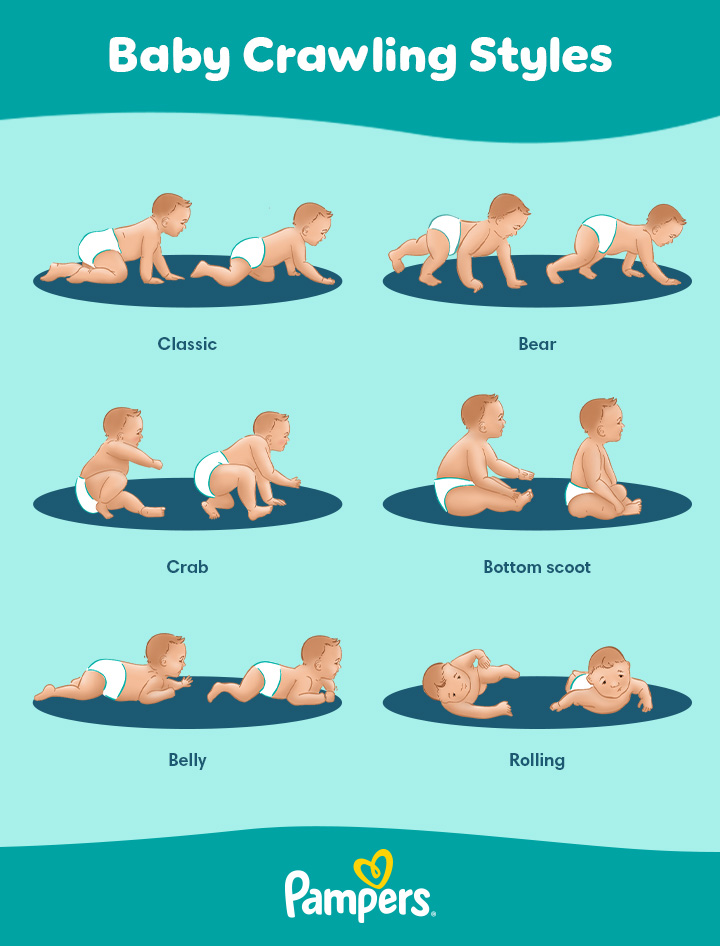
5. Scooting or Army Crawling
Some babies skip straight to scooting across the floor on their belly. Others move by dragging one leg or using elbows and forearms. This is often called army crawling or commando crawling.
This is still part of the baby crawling stages, even if it does not look like classic crawling. Babies may use whatever method works best for their body.
You might see:
- Pulling forward with the arms
- Pushing with the toes
- Sliding on the stomach
- Moving quickly toward toys or people
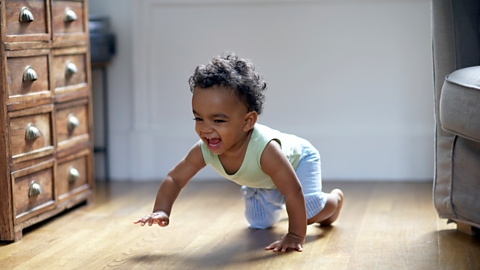
6. Classic Hands-and-Knees Crawling
This is the image most people picture when they think about crawling. Babies move with alternating hands and knees in a coordinated pattern.
Not every baby reaches this stage in the same way or at the same age. Some babies crawl after scooting. Some move straight into standing. Both can be normal. Still, hands-and-knees crawling is a strong sign that the baby crawling stages are coming together well.
You may notice:
- Opposite arm and leg moving together
- More speed and control
- Better turning and stopping
- Less wobbling than before
7. Cruising and Early Standing
Many babies begin pulling up and cruising along furniture after crawling becomes easier. This is not crawling itself, but it often follows the baby crawling stages.
Cruising helps babies practice weight-bearing, balance, and stepping. It is the next big leap before independent walking.
Signs include:
- Pulling up to stand
- Holding the couch or coffee table
- Side-stepping while holding furniture
- Bending down and standing back up with help

Baby Crawling Stages by Age Range
Age ranges can be helpful, but they are not strict rules. Babies grow at different speeds. In my experience, parents feel more relaxed when they treat ages as rough guideposts, not deadlines.
Here is a general timeline:
- 2 to 4 months: Better head control and tummy time strength
- 4 to 6 months: Rolling and early pushing up
- 6 to 8 months: Pivoting, rocking, and some scooting
- 7 to 10 months: Army crawling or hands-and-knees crawling
- 9 to 12 months: Cruising and early standing
The American Academy of Pediatrics notes that many babies begin crawling around 7 to 10 months, but some do it earlier and some later. That range is wide for a reason. Development is personal, not perfect.
Why Some Babies Crawl Differently
There is no single “correct” way to move through baby crawling stages. Babies are little inventors. They use the strongest method available to them.
Some reasons crawling styles differ:
- Body shape and muscle tone
- Time spent on the floor
- Temperament and motivation
- Birth history, including prematurity
- Opportunities for free movement
- Preferences for one side of the body
I once saw a baby who refused classic crawling but became a fast belly scootter and then walked early. Another baby crawled for months with beautiful form but did not rush into walking. Both were healthy. That is why context matters more than style alone.
How to Support Baby Crawling Stages at Home
You do not need fancy gear to help your baby. A safe floor, time, and patience go a long way.
Try these practical tips:
- Give daily tummy time in short, frequent sessions
- Place toys just out of reach to encourage movement
- Use a firm, clean floor instead of a soft bed or couch
- Let your baby move barefoot for better grip
- Reduce time in swings, bouncers, and seats when possible
- Sit on the floor and model movement with your baby
- Cheer every attempt, even the wobbly ones
A small mistake I see often is parents helping too much. It comes from love, of course. But babies learn by trying, shifting, failing, and trying again. The best support is usually a safe space and a little encouragement.
Common Concerns Parents Have About Crawling
It is normal to worry if your baby seems slow to crawl, crawls oddly, or skips a stage. Most of the time, variation is harmless.
Here are a few things to keep in mind:
- Some babies never do classic hands-and-knees crawling
- Scooting, rolling, or bottom shuffling can still be normal
- Left-right preference before 12 months can be worth mentioning to a doctor
- A baby who hates tummy time may need shorter, more frequent practice
- Premature babies may reach crawling milestones later when adjusted for age
If something feels off, trust your instinct. You know your baby better than anyone. A pediatrician can check muscle tone, symmetry, and overall development if you are unsure.
When to Talk to a Pediatrician
Most crawling differences are normal, but some signs deserve a closer look. It is wise to check in if your baby:
- Is not showing good head control by about 4 months
- Seems very stiff or very floppy
- Uses one side much more than the other
- Does not roll by around 6 months
- Is not moving in any way by 9 months
- Loses skills they already had
These signs do not always mean there is a problem. But early guidance is helpful if something needs support.
Benefits of Crawling for Development
Baby crawling stages offer more than movement. They support the whole body and brain.
Benefits include:
- Stronger muscles in the arms, back, hips, and core
- Better coordination between both sides of the body
- Improved hand-eye coordination
- Stronger balance and posture
- More curiosity and exploration
- Early problem-solving skills
Crawling also helps babies learn distance. A toy that seemed far away becomes reachable. That little success builds confidence in a very real way.

Frequently Asked Questions of baby crawling stages
What are the first signs my baby is ready to crawl?
The first signs usually include strong tummy time, good head control, and pushing up on the arms. You may also notice rocking, rolling, or trying to reach for toys while on the floor.
Is it normal if my baby scoots instead of crawling?
Yes, scooting is a normal part of the baby crawling stages for many babies. Some babies belly crawl or bottom shuffle and still develop well.
What if my baby skips crawling?
Some babies do skip classic crawling and move on to pulling up, cruising, and walking. That can still be normal if your baby is meeting other motor milestones and seems balanced overall.
How can I help my baby crawl more?
Give daily tummy time, place toys just out of reach, and let your baby spend more time on the floor. Short, frequent practice often works better than one long session.
When should I worry about delayed crawling?
If your baby is not moving at all by around 9 months, or seems very stiff, floppy, or one-sided, talk to a pediatrician. Early advice is helpful, even if the issue turns out to be minor.
Conclusion
Baby crawling stages are a beautiful mix of strength, practice, and discovery. From tummy time to rocking, scooting, and hands-and-knees crawling, each stage helps your baby grow in body and confidence.
The most important thing to remember is that progress does not need to be rushed. Give your baby safe floor time, steady encouragement, and room to explore at their own pace. If you want, keep learning about infant motor milestones and talk with your pediatrician anytime you need reassurance or guidance.