Newborn milk transfer during breastfeeding shows how well a baby removes milk from the breast.
Newborn milk transfer during breastfeeding can feel hard to judge because you cannot see how much milk your baby drinks. As a lactation-focused guide, I will explain the signs of effective transfer, why transfer may be low, how to improve it, and when to seek help. You will learn to read your baby’s cues with more confidence, without relying on guesswork.
What Is Newborn Milk Transfer During Breastfeeding?
Newborn milk transfer during breastfeeding means the movement of breast milk from the parent’s breast into the baby’s mouth and stomach. It depends on several steps working together:
• The baby latches deeply.
• The baby uses a steady suck and swallow pattern.
• The breast releases milk through the let-down reflex.
• The baby stays alert enough to keep feeding.
• The baby removes milk well enough to support growth and milk production.
A baby may spend 20 minutes at the breast and still transfer very little milk. Another baby may drink effectively in 10 minutes. Feeding length alone does not show how much milk a newborn has taken.
Think of the breast like a water source and the baby’s mouth like a small pump. A deep latch helps the pump work well. A shallow latch may create sucking sounds, nipple pain, and poor milk removal.
Newborn milk transfer during breastfeeding is different from milk supply. Milk supply describes how much milk the breasts make. Milk transfer describes how much milk the baby removes. A parent can have a full milk supply while the baby struggles to transfer it.

Why Effective Milk Transfer Matters
Good newborn milk transfer during breastfeeding helps a baby receive calories, fluid, fat, and other nutrients. It also tells the breasts to keep making milk. Breast milk production often works through a supply-and-demand process: frequent, effective removal usually supports ongoing production.
Effective transfer may also help reduce breast fullness and discomfort. When milk remains in the breast for long periods, some parents develop painful congestion or plugged areas. These problems can make feeding harder and may increase stress.
For the baby, poor milk transfer may lead to:
• Slow weight gain
• Fewer wet diapers
• Long, tiring feeds
• Sleepiness at the breast
• Signs of dehydration
• Increased need for supplementation
Poor transfer does not mean anyone has failed. Newborn feeding is a skill for both the baby and the parent. Premature birth, tongue movement limits, birth complications, jaundice, illness, breast anatomy, and positioning can all affect feeding.
The earlier a feeding problem is noticed, the easier it may be to correct. A weight check and a feeding assessment can provide more useful information than trying to judge milk intake by breast softness or feeding time.

Signs of Good Newborn Milk Transfer During Breastfeeding
Newborn milk transfer during breastfeeding is often visible through a group of signs. No single sign proves that a baby has taken enough milk. Look at the whole feeding pattern.
Watch the baby’s suck and swallow pattern
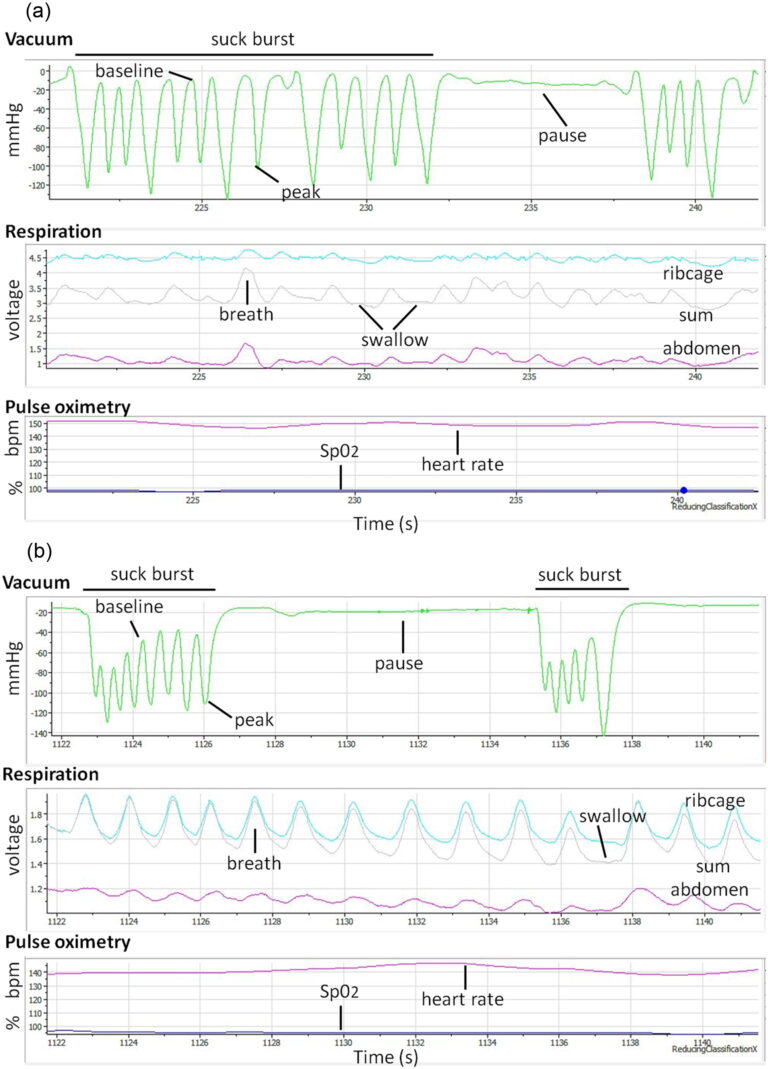
A newborn may begin with quick sucks to encourage milk flow. As milk starts to flow, the pattern often changes to slower, deeper sucks. You may hear or see a swallow after several sucks.
Signs of milk transfer can include:
• A deep, rhythmic suck
• A pause after the baby draws milk into the mouth
• A soft “kuh” or “ah” sound during swallowing
• Movement near the baby’s temple or ear
• Rounded cheeks, not hollow cheeks
• A relaxed hand or body as feeding continues
Some babies swallow quietly. If you cannot hear swallowing, look for a change in the jaw movement and a brief pause in sucking.
Check the latch
A good latch often feels like a strong pull, not a sharp pinch. The baby’s mouth should cover more of the lower areola than the upper areola when viewed from above. The chin should touch the breast, and the nose should remain free or lightly touch the breast.
After feeding, the nipple should look rounded or gently shaped. A nipple that looks creased, slanted, or lipstick-shaped may point to shallow attachment.
Observe the breast after feeding
The breast may feel softer after effective feeding, but this is not a perfect test. Breasts can feel soft before a feed and still contain milk. They can also feel full after a feed if the baby has taken only a small amount.
Newborn milk transfer during breastfeeding is best judged through several clues:
• The baby has active swallowing.
• The baby seems satisfied after many feeds.
• Wet and dirty diapers increase as expected.
• Weight follows an appropriate pattern.
• The parent has little or no nipple damage.

Diaper and Weight Signs of Milk Intake
Diapers offer a simple way to track newborn milk intake. In the first few days, diaper patterns change as the baby moves from colostrum to larger volumes of mature milk.
General patterns may include:
• Day 1: At least one wet diaper is common.
• Day 2: At least two wet diapers is common.
• Day 3: At least three wet diapers is common.
• Day 4 onward: Many babies have about six or more wet diapers in 24 hours.
Stool color also changes. Early stools are dark and sticky. They often become green, then yellow and loose as milk intake rises. Parents should follow their health care professional’s advice because individual patterns vary.
Weight is one of the strongest measures of newborn milk transfer during breastfeeding. Most newborns lose some weight after birth. Many begin to regain it once milk volume increases, often reaching birth weight within about two weeks, although timing can vary.
A baby who continues to lose weight, gains very slowly, or has fewer diapers needs prompt medical review. Do not wait for severe symptoms. A pediatric clinician or lactation professional can assess a full feed and create a safe plan.

How to Assess Newborn Milk Transfer During Breastfeeding
A professional can assess newborn milk transfer during breastfeeding by watching a complete feeding. This is often more useful than discussing feeding in general terms.
A feeding assessment may include:
• Checking the baby’s mouth, tongue, and jaw movement
• Watching the latch and positioning
• Listening for swallowing
• Looking for nipple compression or damage
• Reviewing feeding frequency and duration
• Checking diaper records
• Reviewing birth history and weight changes
• Comparing prefeed and postfeed weights when needed
A test weight uses a precise infant scale. The baby is weighed before feeding and again after feeding, using the same diaper and clothing. The weight change can estimate milk intake because one gram of weight is roughly equal to one milliliter of milk.
Test weights have limits. Small scale errors, movement, clothing changes, and spit-up can affect the result. One feed also does not always represent the baby’s entire day. The result should be interpreted by a trained professional.
At home, parents can gather useful information by writing down:
• Start and end times
• Which breast the baby used
• Swallowing sounds
• Wet and dirty diapers
• Baby’s mood after feeding
• Any pain or nipple changes
This record can help a clinician see patterns. It should support care, not create anxiety.

Common Causes of Low Milk Transfer
Low newborn milk transfer during breastfeeding can have more than one cause. Finding the cause matters because the best solution depends on the problem.
Shallow latch or poor positioning
A shallow latch may compress the nipple instead of drawing breast tissue deeply into the mouth. This can reduce milk flow and cause pain.
Try aligning the baby’s chest and belly toward your body. Bring the baby to the breast, rather than leaning your breast toward the baby. Wait for a wide-open mouth, then guide the baby in chin first.
Sleepiness or low feeding stamina
Some newborns are sleepy after a difficult birth, with jaundice, after exposure to certain medicines, or when they are not taking in enough milk. A sleepy baby may latch but stop active sucking quickly.
Gentle breast compression, skin-to-skin contact, and switching sides may help. If the baby is hard to wake, feeds poorly, or has too few wet diapers, contact a medical professional promptly.
Oral movement concerns
Some babies have difficulty moving the tongue or jaw. A tight frenulum, sometimes called tongue-tie, is one possible factor, but it is not the only explanation for feeding problems.
A visible frenulum alone does not prove that treatment is needed. An experienced clinician should assess tongue function, milk transfer, weight gain, and parent comfort together.
Fast or slow milk flow
A strong let-down may cause coughing, pulling away, or fussiness. A slower flow may lead to frustration or long feeds. Both can affect newborn milk transfer during breastfeeding.
Position changes, breast compression, paced pauses, or expressing a small amount before latching may help some families. Ask for tailored guidance before making major changes.
Prematurity or medical conditions
Premature babies may tire quickly because sucking, swallowing, and breathing are still developing. Some babies with heart, breathing, muscle, or neurological concerns also need extra support.
These babies may need expressed milk, temporary supplementation, or a special feeding plan. The goal is both adequate nutrition and continued development of breastfeeding skills.
Practical Ways to Improve Milk Transfer
Small changes can make a large difference. Try one change at a time so you can tell what helps.
Use skin-to-skin contact
Place the baby in a diaper against your bare chest and cover both of you with a blanket. Skin-to-skin contact can support calm behavior and feeding readiness. It may also help the baby use natural feeding reflexes.
Improve body alignment
Keep the baby’s ear, shoulder, and hip in a straight line. The baby’s body should face your body. Good alignment helps the baby open wide and use the jaw more freely.
Encourage a deeper latch
Brush the nipple across the baby’s upper lip. Wait for a wide mouth. Move the baby quickly toward the breast, with the chin touching first.
If you feel sharp pain that does not improve after the first few sucks, gently break the suction with a clean finger and try again.
Use breast compression
When the baby’s sucking slows, place your hand around the breast and gently compress it. Hold the pressure while the baby sucks and swallows. Release when the baby pauses.
Breast compression should not cause pain. Avoid squeezing near the nipple or pressing so hard that the breast becomes sore.
Offer both breasts when needed
Some babies feed well from one breast and then need the second breast. Others need several switches to stay active. Watch swallowing and alertness rather than following a strict time rule.
Marking the breast used last can help you remember where to begin at the next feed. However, your baby’s cues matter more than a rigid schedule.
Protect milk production if transfer is low
If a baby does not remove milk well, expressing milk can help protect supply. Hand expression or pumping after some feeds may be part of a temporary plan.
The right frequency depends on the baby’s age, weight, health, and feeding ability. A lactation professional can help prevent unnecessary pumping and reduce the risk of oversupply or pain.
What Not to Use as the Only Measure
Parents often search for one clear sign of newborn milk transfer during breastfeeding. Unfortunately, no single sign gives the full answer.
Do not rely only on:
• How long the baby feeds
• How full or soft the breasts feel
• Whether the baby sleeps after feeding
• Whether the baby wants to feed again soon
• Whether you can pump a certain amount
• Whether the baby accepts a bottle after nursing
Pumping output does not equal the milk available to the baby. A pump may remove less milk than a healthy baby, and pump fit or timing can affect output.
A baby may sleep after feeding because the baby is satisfied, tired, warm, or unwell. Frequent feeding can be normal, especially during growth periods. That is why diapers, weight, swallowing, and clinical assessment matter together.
When to Seek Professional Help
Contact your baby’s health care professional or a qualified lactation consultant if you notice concerns about newborn milk transfer during breastfeeding.
Seek help soon when:
• Feeding hurts throughout the session.
• The baby makes clicking sounds often.
• The nipple looks pinched after feeding.
• The baby feeds for very long periods but never seems satisfied.
• The baby has too few wet diapers.
• The baby is difficult to wake for feeds.
• Weight loss continues or weight gain is poor.
• The baby has yellow skin that is worsening.
• You feel worried or unsure about feeding.
Seek urgent medical care if the baby is very difficult to wake, has breathing trouble, appears severely dehydrated, or is not feeding. Signs of dehydration may include a very dry mouth, unusual weakness, markedly fewer wet diapers, or no urine for an unusually long period.
A feeding problem is not a reason for shame. In practice, many families wait because they believe pain or poor transfer will improve on its own. Early support often saves time, protects milk production, and makes feeding feel less overwhelming.
Breastfeeding and Supplementation
Sometimes a baby needs extra milk while the cause of low transfer is being addressed. Supplementation may include expressed breast milk, donor milk, or infant formula, depending on availability, safety, and medical advice.
Supplementation does not cancel the breastfeeding relationship. It is a tool for keeping the baby nourished. When possible, expressing milk during a missed or incomplete breastfeed may help protect the milk supply.
A supplement plan should answer four questions:
-
How much milk should the baby receive?
-
How often should the baby feed?
-
How will the baby receive the supplement?
-
When and how will the plan be reviewed?
Avoid reducing supplements suddenly without checking the baby’s weight and intake. The safest plan is based on the baby’s medical needs, growth, and the parent’s goals.
A Simple Daily Plan for Better Milk Transfer
Use this routine as a guide, not as a strict rule.
-
Offer the breast when the baby shows early hunger cues, such as stirring, hand-to-mouth movement, or rooting.
-
Use skin-to-skin contact and align the baby’s body with yours.
-
Check for a deep latch and listen for swallowing.
-
Use breast compression when sucking slows.
-
Offer the second breast if the baby remains alert and interested.
-
Record wet diapers and feeding concerns.
-
Attend weight checks as recommended.
-
Ask for help early if pain, sleepiness, or poor intake continues.
Try not to compare your baby with another baby. Feeding styles vary. The goal is not to create a perfect-looking feed. The goal is safe intake, steady growth, comfortable feeding, and a plan that works for your family.
Frequently Asked Questions About Newborn Milk Transfer During Breastfeeding
How can I tell if my newborn is transferring milk?
Look for deep, rhythmic sucking followed by swallowing, relaxed hands, and a more settled baby after many feeds. Diaper output and weight gain provide stronger evidence than feeding length alone.
How long should a newborn breastfeed?
There is no single correct time. Some newborns feed effectively in 10 minutes, while others need longer, but unusually long feeds with little swallowing may suggest low milk transfer.
Does a soft breast mean my baby is not getting milk?
No. Breast softness does not reliably show milk supply or milk intake. Newborn milk transfer during breastfeeding is better assessed through swallowing, diapers, weight, and a feeding evaluation.
Can a baby have a good latch but still transfer little milk?
Yes. A baby may appear attached but not remove much milk due to sleepiness, weak sucking, oral movement limits, low milk flow, or another medical issue. Watching a full feed can help identify the cause.
Should I pump after breastfeeding if transfer seems low?
Pumping may help protect milk production when a baby is not removing enough milk, but the best schedule depends on your situation. Ask a lactation professional or clinician for a plan based on weight, diapers, and feeding results.
Is clicking during breastfeeding always a problem?
Clicking can happen when a baby loses suction or struggles to maintain a deep latch. Occasional sounds may be harmless, but frequent clicking with pain, leaking milk, or poor weight gain deserves an assessment.
When should I worry about low milk transfer?
Seek prompt advice if your baby has too few wet diapers, remains very sleepy, feeds poorly, loses too much weight, or does not gain as expected. Urgent care is needed for severe sleepiness, breathing problems, or signs of significant dehydration.
Conclusion
Newborn milk transfer during breastfeeding depends on a deep latch, active sucking, effective swallowing, milk flow, and the baby’s overall health. Feeding time and breast softness cannot tell the full story. Diapers, weight, swallowing, comfort, and a complete feeding assessment offer a clearer picture.
Use skin-to-skin contact, careful positioning, breast compression, and early support when needed. If feeding feels painful or your baby seems too sleepy or unsatisfied, reach out before the concern grows. Share your questions with a pediatric clinician or lactation professional, and explore trusted breastfeeding resources for continued support.