Choose baby toys by age by matching safety, skill level, and sensory needs to each stage.
Choosing the right baby toys by age is one of those small parenting decisions that makes a big difference. In my experience, the best toys are not the flashiest ones. They are the ones your baby can actually use, enjoy, and grow with safely. When you understand how to choose baby toys by age, you make playtime more useful, more fun, and a lot less stressful.

Why age matters when choosing baby toys
A baby’s brain grows fast in the first few years. A toy that is perfect for a 3-month-old may be boring or even unsafe for a 12-month-old. That is why how to choose baby toys by age is really about matching the toy to your baby’s current stage of development.
Age matters for three main reasons:
• Safety: younger babies put everything in their mouths, so toys need to be large, non-toxic, and free of small parts
• Development: the right toy supports skills like reaching, grasping, stacking, crawling, and problem-solving
• Interest: babies stay engaged when the toy matches what they can do right now
I have seen parents buy toys that looked educational but were too advanced. The result? The toy sat in the corner while a plastic spoon got all the attention. Babies usually prefer simple things they can explore with their hands, eyes, and mouth.
How to choose baby toys by age from birth to 3 months
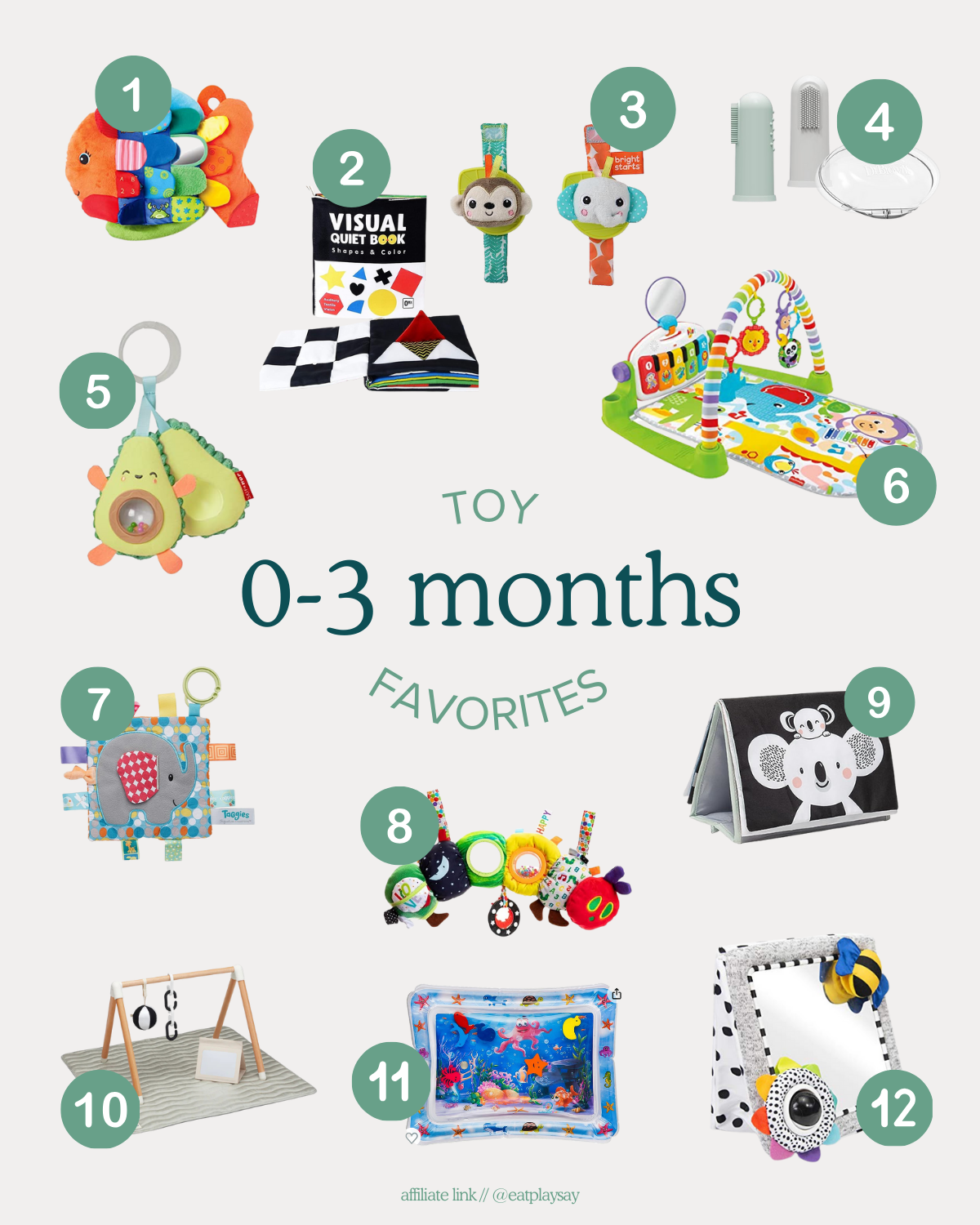
Newborns do not need complicated toys. At this stage, babies are learning to focus their eyes, react to sound, and feel gentle textures. The best toys are simple and calming.
Good toy choices for this age:
• High-contrast black-and-white toys
• Soft rattles
• Cloth books with bold patterns
• Baby-safe mirrors
• Gentle musical toys with low volume
Look for toys that are easy to hold, soft to touch, and light enough for tiny hands. Avoid toys with loose parts, sharp edges, or loud sounds. In my own experience, a simple black-and-white board book often holds a newborn’s attention longer than a noisy electronic toy.
What to avoid:
• Toys with batteries that are easy to access
• Toys with strings, ribbons, or cords
• Anything too small to be mouthed safely
• Overstimulating toys with flashing lights and loud sounds
How to choose baby toys by age for 3 to 6 months
At this stage, babies start reaching, batting, grasping, and bringing toys to their mouths. This is a big milestone. Toys should encourage movement, texture play, and hand-eye coordination.
Best options include:
• Teething toys made from safe materials
• Soft fabric balls
• Easy-to-grip rattles
• Tummy time toys with mirrors or crinkle sounds
• Sensory mats with different textures
This is also the time when babies begin to understand cause and effect. If they shake a toy and it makes noise, they learn that their actions matter. That is why how to choose baby toys by age should always include development, not just entertainment.
Helpful tip from real life: if a toy is too heavy or slippery, the baby may lose interest fast. I have found that lightweight toys with one clear feature work better than toys trying to do everything at once.
How to choose baby toys by age for 6 to 9 months
Babies in this age range often roll, sit with support, and explore more actively. They enjoy toys that move, make sounds, or invite them to interact. This is a great stage for sensory learning.
Good toy ideas:
• Stacking rings
• Soft blocks
• Busy books
• Cups for nesting and dumping
• Push-and-pull toys for early movers
• Toys that squeak or crinkle
Babies this age love repetition. They may drop a toy 20 times and expect you to pick it up every single time. That is not a flaw. It is part of learning about gravity, attention, and object permanence.
When deciding how to choose baby toys by age, choose items that help your baby practice sitting, reaching, and transferring objects from one hand to the other. These small actions build motor skills in a natural way.
How to choose baby toys by age for 9 to 12 months
By now, many babies are crawling, cruising, or even taking first steps. They are also more curious and more able to solve simple problems. Toys should support movement, stacking, sorting, and early pretend play.
Great choices for this age:
• Push toys
• Shape sorters with large pieces
• Sturdy blocks
• Pop-up toys
• Board books with simple pictures
• Toys that encourage standing and walking
This is a great stage for toys that reward effort. A baby may spend a long time trying to fit a block into a shape sorter. That struggle is where the learning happens.
One mistake I often see is giving babies toys that are too advanced because they look “educational.” If your child cannot interact with the toy independently, it may frustrate them instead of helping them. That is why how to choose baby toys by age works best when the toy is just one step ahead of your child, not five steps ahead.
How to choose baby toys by age for 12 to 18 months
Toddlers in this range are moving fast. They are walking more, pointing, stacking, and copying adults. They also love toys that help them feel in control.
Best toy types:
• Pull toys
• Simple puzzles with large knobs
• Pretend play toys like play phones or toy food
• Blocks and nesting toys
• Musical instruments made for toddlers
• Books with flaps or textures
This age is often full of trial and error. The toy may be used in a way you never expected, and that is normal. A toy car may become a pretend spoon. A stacking cup may become a hat.
How to choose baby toys by age at this stage means focusing on open-ended play. Open-ended toys can be used in many ways, so they grow with your child and support creativity.
How to choose baby toys by age for 18 to 24 months
Older babies and young toddlers are learning language, memory, and early pretend skills. They want to copy what they see and act out real life. Toys that support imagination and problem-solving are a strong fit.
Useful options:
• Pretend kitchen sets
• Animal figures
• Large floor puzzles
• Sorting toys
• Ride-on toys with balance support
• Building toys with larger pieces
This is also a good time to look at toy durability. Toddlers are not gentle. They throw, bang, stack, and test everything. A good toy should survive real toddler use, not just look nice on a shelf.
When people ask how to choose baby toys by age, I always remind them that quality matters more than quantity. A few sturdy toys are better than a pile of flimsy ones that break easily.
Key safety rules for choosing baby toys by age
Safety should always come first. The best age-appropriate toy is still the wrong choice if it is not safe.
Here are the most important safety checks:
• Choose toys with no small parts for children under 3
• Avoid toys with long cords, strings, or loops
• Check for non-toxic materials and paint
• Make sure the toy cannot break into sharp pieces
• Look for age labels on the package
• Inspect toys often for wear and tear
You should also think about cleaning. Babies put toys in their mouths constantly, so washable toys are much easier to manage. In my experience, the toys that survive are the ones that can be wiped down in seconds.
The American Academy of Pediatrics and consumer safety groups consistently stress age grading because it helps lower choking and injury risks. That is why how to choose baby toys by age is not just about learning. It is also about protecting your child.
What makes a toy developmentally good?
A good baby toy supports one or more of these areas:
• Sensory development: sight, sound, touch, and movement
• Fine motor skills: grasping, pinching, stacking, and sorting
• Gross motor skills: crawling, reaching, walking, and balancing
• Cognitive skills: problem-solving, memory, and cause and effect
• Language: naming objects, copying sounds, and early communication
The best toys do not need to be expensive. A soft ball, stacking cups, or a simple board book can do more for development than a very complex electronic toy. This is one of the biggest lessons I have learned while helping families choose toys.
So when you think about how to choose baby toys by age, ask yourself: can my child use this toy with their current skills? If the answer is yes, you are on the right track.
How to read toy labels the smart way
Toy packaging can be helpful, but not all labels mean the same thing. “Ages 6 months and up” is a guideline, not a rule.
Check these details:
• Age recommendation
• Choking hazard warnings
• Material information
• Cleaning instructions
• Battery compartment safety
• Certification marks for safety standards
It is smart to treat the label as a starting point. You know your child best. A toy for 12 months may be perfect for one child and too advanced for another. That flexibility is part of how to choose baby toys by age wisely.
Common mistakes parents make
I have seen a few patterns over and over. These mistakes are easy to make, especially with so many cute options in stores.
Common mistakes include:
• Buying toys that are too advanced
• Choosing loud toys instead of useful ones
• Ignoring choking hazards
• Buying too many toys at once
• Forgetting that babies need open-ended play too
• Picking toys only because they are trendy
A toy does not need batteries to be valuable. In fact, many of the best toys for babies are simple. They invite the child to do the work, which is where real learning happens.
Practical checklist for how to choose baby toys by age
Use this simple checklist before you buy:
• Is the toy safe for my child’s age?
• Can my baby use it independently?
• Does it support a current skill or a near-future skill?
• Is it easy to clean?
• Is it durable enough for daily use?
• Does it encourage movement, sensing, or thinking?
• Will my baby stay interested in it more than once?
If you can answer yes to most of these, the toy is probably a good fit. This checklist has saved me from a lot of impulse buys that looked great online but did very little in real life.
Frequently Asked Questions of how to choose baby toys by age
What is the safest toy for a newborn?
The safest toys for newborns are soft, simple, and large enough that they cannot be swallowed. Good choices include high-contrast cards, cloth books, and soft rattles made for infants.
Do babies really need age-appropriate toys?
Yes, because age-appropriate toys match your baby’s skills and reduce safety risks. They also help your child practice the right motor and thinking skills at the right time.
Are expensive toys better for babies?
Not always. Many affordable toys, like stacking cups or board books, support development just as well as expensive electronic toys. What matters most is safety, simplicity, and fit for age.
How many toys does a baby need?
A baby needs fewer toys than most people think. A small rotation of safe, age-appropriate toys is often better than a huge pile, because it keeps playtime fresh and less overwhelming.
Should I follow the age label exactly?
Use the age label as a guide, not a strict rule. Your baby’s abilities, interests, and safety needs matter just as much as the number on the box.
Conclusion
Choosing toys gets much easier when you focus on your baby’s age, skills, and safety. The best toy is not always the most popular one. It is the one that helps your child explore, learn, and play with confidence.
When you remember how to choose baby toys by age, you can shop with less stress and more purpose. Start with simple, safe, and developmentally right toys, then build from there as your baby grows. If this guide helped, take a moment to review your current toy basket, or share your own favorite baby toy tips in the comments.