Most babies are ready for complementary feeding around six months when they show key physical and developmental signs.
Baby readiness for complementary feeding is about more than reaching a certain age. It means your baby can sit with support, control their head, bring food to their mouth, and swallow safely. These skills show that the body and brain are ready for a new step beyond breast milk or infant formula.
This guide explains how to spot baby readiness for complementary feeding, what foods and textures to offer, how to reduce choking risks, and which common mistakes to avoid. The advice reflects guidance from the World Health Organization, the American Academy of Pediatrics, and the Centers for Disease Control and Prevention.
What Is Complementary Feeding?
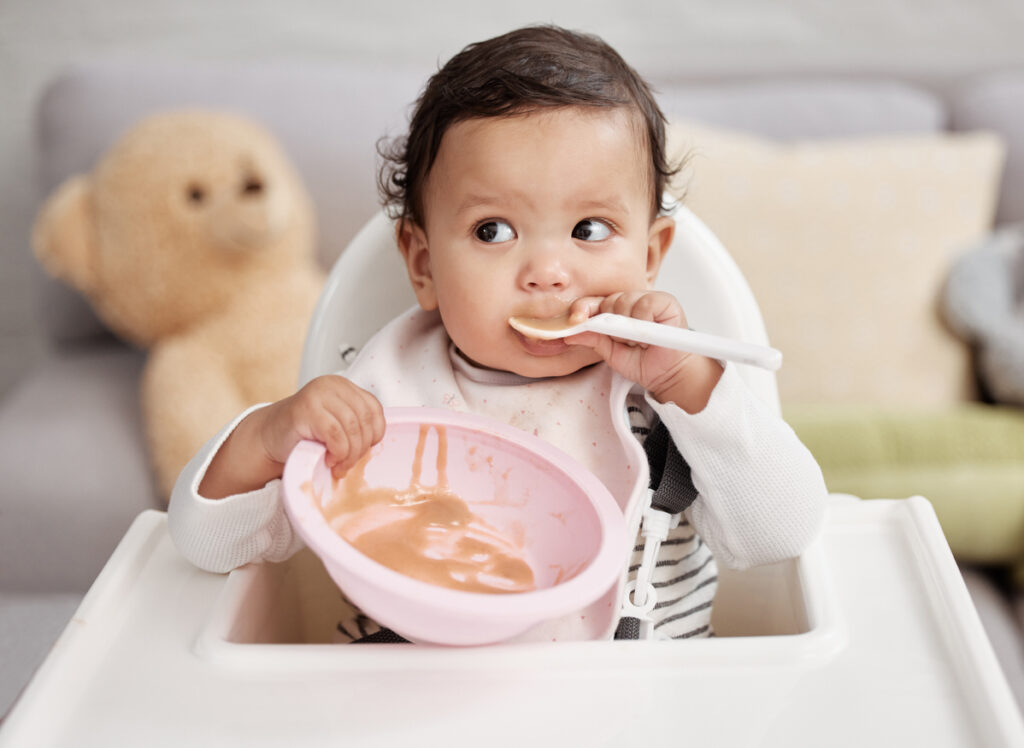
Complementary feeding is the gradual introduction of solid and semi-solid foods while breast milk or infant formula remains an important source of nutrition. It usually begins at about 6 months, when milk alone no longer meets every nutritional need.
The word “complementary” matters. Food complements milk; it does not replace it at once. During the first year, breast milk or iron-fortified infant formula still provides much of your baby’s energy and nutrients.
Baby readiness for complementary feeding should guide the timing. Age gives you a useful starting point, but development gives you the better answer.
Complementary foods may include:
- Smooth or mashed vegetables and fruits
- Soft grains, such as oatmeal
- Beans, lentils, tofu, eggs, fish, poultry, and meat
- Plain yogurt and pasteurized cheese
- Soft pieces of cooked food that your baby can pick up
- Iron-rich foods, which are especially important at this stage
Every baby develops at a different pace. Some babies take to food quickly. Others need several calm tries before they understand what to do.

When Do Babies Start Complementary Feeding?
Most healthy babies start complementary feeding at about 6 months. Starting before 4 months is not recommended because many babies are not yet ready to manage food safely.
Some babies may need a slightly different plan. Babies born early, babies with poor growth, or babies with swallowing, muscle, or medical concerns may need advice from a pediatrician or feeding specialist.
Baby readiness for complementary feeding depends on several skills working together. A baby may be interested in food but still lack the body control needed to eat safely.
Look for readiness around the 6-month mark, including:
- Sitting upright with little help
- Holding the head steady
- Opening the mouth when food approaches
- Reaching for food or watching others eat
- Bringing toys or hands to the mouth
- Moving food from the front of the mouth toward the throat
- Swallowing food instead of pushing it out with the tongue
Do not use tooth eruption as a readiness sign. Babies can eat soft foods safely without teeth because their gums are strong.

Signs of Baby Readiness for Complementary Feeding
Knowing the signs can make the first meal feel less stressful. Think of readiness as a small group of skills, not one magic sign.
Strong head and neck control
Your baby should keep their head steady while sitting. Good head control helps them breathe and swallow during meals.
A baby who slumps, falls forward, or cannot keep the head upright may need more time. Always seat your baby in an upright, supported position for eating.
Sitting with support
Your baby does not need to sit perfectly alone. However, they should sit upright with light support and remain steady enough to focus on food.
A safe high chair should support the back and allow the baby’s feet to rest on a footrest when possible. A stable posture helps your baby control the mouth and reduces the risk of gagging caused by poor positioning.
Reaching for food
Interest is helpful, but it is not enough by itself. Babies often reach for anything within view, including cups, napkins, and spoons.
Look for interest combined with good posture, head control, and the ability to bring objects to the mouth. Together, these signs offer a stronger picture of baby readiness for complementary feeding.
Swallowing instead of pushing food out
Young babies have a natural tongue-thrust reflex. It helps protect them early in life, but it can make new food move back out of the mouth.
As readiness develops, your baby begins to move food back and swallow it. A few messy attempts are normal. Repeatedly pushing out all food may mean your baby needs more time.
Bringing objects to the mouth
Babies who can guide toys or safe teethers to their mouths are practicing an important feeding skill. This movement supports self-feeding later.
It also shows growing hand, eye, and mouth coordination. Let your baby explore safe foods with clean hands when you begin.

A Simple Baby Readiness for Complementary Feeding Checklist
Use this checklist before offering the first meal. Your baby does not need to perform every skill perfectly, but most signs should be present.
- Can your baby sit upright with support?
- Can your baby hold their head steady?
- Does your baby show interest in food?
- Can your baby bring objects to their mouth?
- Does your baby open their mouth for a spoon?
- Can your baby move food back and swallow?
- Does your baby remain alert during meals?
- Can your baby turn away or close their mouth to show they are full?
If the answer is yes to most questions, baby readiness for complementary feeding is likely developing. If you are unsure, ask your child’s pediatrician before starting.
A useful real-life example is a baby who watches every meal but still folds forward in the high chair. That baby may be curious but not ready. Curiosity is the invitation; body control is the green light.

How to Start Complementary Feeding Safely
Start with a small amount once a day when your baby is calm and alert. Avoid offering food when your baby is very hungry, tired, or upset.
Breastfeed or provide formula as usual. Then offer a few spoonfuls of food, or let your baby touch and taste a soft food. The goal at first is learning, not eating a full serving.
Follow these steps:
- Seat your baby upright in a safety-tested high chair.
- Stay close and watch every bite.
- Offer one food at a time when practical.
- Begin with a small amount.
- Let your baby set the pace.
- Stop when your baby turns away, closes their mouth, or loses interest.
- Increase variety and texture slowly.
Soft foods can be mashed, puréed, minced, or cut into safe finger-sized pieces. Move toward thicker textures and soft lumps as your baby gains skill. Delaying texture changes for too long may make later feeding harder for some babies.
Baby readiness for complementary feeding also includes emotional readiness. A relaxed baby learns better than a baby who feels rushed.

Best First Foods for Babies
There is no single perfect first food. A varied menu helps your baby learn different tastes, smells, and textures.
Focus on foods rich in iron and other key nutrients. Iron is important for brain development, and a baby’s iron stores begin to decrease around 6 months.
Good choices include:
- Iron-fortified oatmeal
- Puréed or finely minced meat
- Soft cooked beans and lentils
- Mashed tofu
- Well-cooked eggs
- Smooth nut or seed butter thinned with water or yogurt
- Soft fish with all bones removed
- Mashed avocado
- Cooked sweet potato
- Soft broccoli florets
- Plain whole-milk yogurt without added sugar
Offer vegetables and fruits in many forms. Some babies prefer naturally sweet foods first, but repeated exposure can help them accept vegetables over time.
Do not add sugar or salt to baby food. Honey should be avoided before 12 months because it can cause infant botulism. Cow’s milk should not replace breast milk or formula before 12 months, although pasteurized dairy foods can be part of a varied diet earlier.
Introducing Allergens
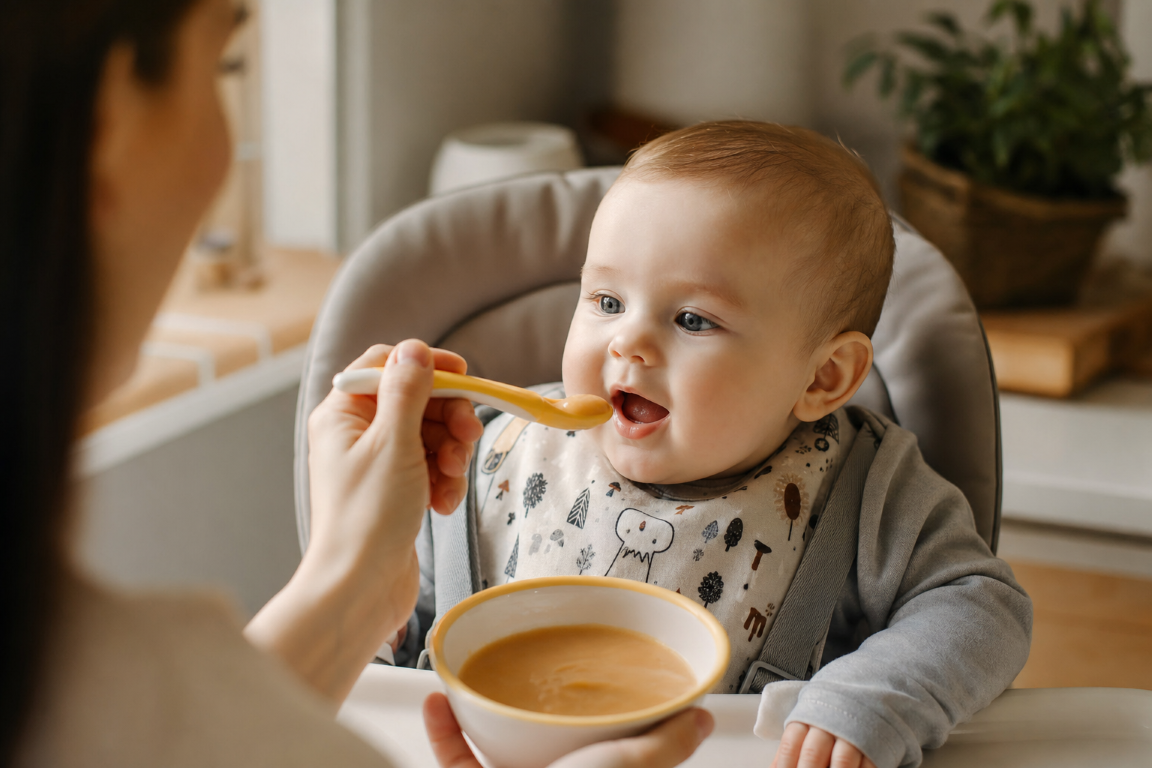
Current guidance generally supports introducing common allergenic foods around 6 months, when your baby is ready, rather than delaying them for many months. Early introduction may help reduce the risk of some food allergies, especially peanut and egg allergy, in certain children.
Common allergens include:
- Peanut
- Egg
- Milk
- Wheat
- Soy
- Sesame
- Fish
- Shellfish
- Tree nuts
Offer one common allergen in a safe form and a small amount. For example, thin smooth peanut butter with warm water or yogurt. Never give whole nuts, thick spoonfuls of nut butter, or other choking hazards.
Watch for signs of an allergic reaction, such as hives, facial swelling, repeated vomiting, coughing, wheezing, or trouble breathing. Breathing trouble, swelling of the tongue, or sudden weakness requires emergency help.
Babies with severe eczema, an existing food allergy, or another high-risk condition may need a personalized plan. Ask a pediatrician or allergist before introducing peanut or other major allergens.

Choking Prevention and Safe Food Textures
Choking can happen silently, so prevention is essential. Always watch your baby while they eat, and never feed them while they are lying down, walking, playing, or riding in a car.
Gagging is common when babies learn to eat. It may involve noise, coughing, or a red face. Choking may be quiet, and the baby may struggle to breathe or turn blue. Learn infant choking first aid before starting solids.
Avoid or change the shape of foods that can block the airway, including:
- Whole grapes
- Raw carrot coins
- Whole nuts
- Popcorn
- Hot dog rounds
- Hard raw apple pieces
- Large chunks of meat
- Thick globs of nut butter
- Hard candy
- Marshmallows
- Raw chunks of celery
Cut round foods lengthwise into quarters. Cook hard vegetables until soft. Shred meat and remove bones from fish. Spread nut butter thinly or mix it into another food.
Baby readiness for complementary feeding does not remove choking risk. It simply means your baby has the skills to begin learning with safe food preparation and close supervision.

Responsive Feeding: Let Your Baby Lead
Responsive feeding means noticing your baby’s hunger and fullness signals. You offer safe food, and your baby decides whether and how much to eat.
Hunger signs may include:
- Reaching for food
- Opening the mouth
- Becoming more alert
- Leaning toward food
Fullness signs may include:
- Turning away
- Closing the mouth
- Pushing food away
- Losing interest
- Becoming distracted
Do not force one more bite. Pressure can make mealtimes tense and may interfere with your baby’s ability to notice fullness.
A helpful approach is to act like a guide, not a manager. You choose what food to offer, when to offer it, and where meals happen. Your baby chooses whether to eat and how much.
This approach supports trust. It also respects the fact that appetite changes from day to day.
Common Mistakes to Avoid
Many parents feel pressure to make the first meal perfect. It does not need to be perfect. It needs to be safe, calm, and repeated over time.
Avoid these common mistakes:
- Starting only because the baby reaches 6 months, without checking readiness signs
- Replacing breast milk or formula too quickly
- Offering only smooth purées for many months
- Pressuring the baby to finish a portion
- Serving foods with added sugar or excess salt
- Giving honey before 12 months
- Offering unsafe chunks or round foods
- Feeding in a reclined seat
- Introducing several new allergens at once
- Assuming a grimace means the baby dislikes a food forever
One lesson many parents learn is that the first meal may end with more food on the baby’s face than in the stomach. That is normal. Early feeding is skill practice, much like learning to hold a spoon.
Baby Readiness for Complementary Feeding and Special Situations
Some babies need extra support before starting solids. Speak with a health professional if your baby was born premature or has a condition that affects growth, muscle tone, swallowing, or breathing.
Seek medical advice if your baby:
- Coughs or chokes often during feeds
- Has a wet or gurgly voice after eating
- Has poor weight gain
- Has trouble sitting even with support
- Shows extreme fatigue during feeds
- Has a known food allergy
- Has severe eczema
- Refuses all textures for a long period
A pediatrician, registered dietitian, speech-language pathologist, or occupational therapist may help. Feeding support is not a sign that you have failed. It is like using a map when the road is unfamiliar.
For babies born early, readiness may depend on corrected age and developmental skills rather than birth date alone. Their care team can offer the safest timing and texture plan.
Frequently Asked Questions About Baby Readiness for Complementary Feeding
What are the main signs of baby readiness for complementary feeding?
The main signs include steady head control, sitting with support, bringing objects to the mouth, showing interest in food, and swallowing rather than pushing food out. These skills usually appear around 6 months, but each baby develops at a different pace.
Can a baby start solids before 6 months?
Most babies should wait until about 6 months, and solids should not begin before 4 months. A pediatrician may suggest a different plan for a baby with specific medical or growth needs.
Does my baby need teeth before starting complementary foods?
No. Babies can manage soft, appropriately prepared foods with their gums. Food must still be cooked, mashed, shredded, or cut into safe shapes to reduce choking risk.
Should breast milk or formula stop after solids begin?
No. Breast milk or infant formula remains a major source of nutrition during the first year. Complementary foods are added gradually and do not replace milk right away.
How do I know if my baby is gagging or choking?
Gagging is often noisy and may include coughing or a red face. Choking can be quiet and may cause breathing trouble or a blue color, so caregivers should learn infant choking first aid.
When should I introduce peanut and egg?
Many babies can try peanut and egg around 6 months when they are ready for complementary foods. Babies with severe eczema or an existing food allergy should receive medical advice before trying these foods.
How much food should a baby eat at the first meal?
Start with a small amount, such as a few teaspoons, and follow your baby’s cues. The early goal is learning and tasting, not eating a large serving.
Conclusion
Baby readiness for complementary feeding involves more than age or interest in your dinner. Look for steady head control, supported sitting, hand-to-mouth skills, and the ability to move and swallow food.
Begin with safe, soft foods while continuing breast milk or infant formula. Offer iron-rich choices, introduce allergens carefully, increase textures over time, and let your baby guide the amount. With patience, close supervision, and support from your pediatrician when needed, meals can become a safe and joyful part of your baby’s growth.
Use the readiness checklist at your next well-child visit, explore trusted infant feeding resources, and share your questions or experiences in the comments.