Baby bedtime resistance often stems from overtiredness, changing sleep needs, discomfort, or a bedtime routine that feels unclear.
Bedtime resistance can leave loving parents feeling worn out and unsure what to try next. As a child sleep topic, it is rarely about “bad behavior.” It is often a signal that your baby’s body, sleep schedule, or surroundings need a small adjustment. This guide explains the main baby bedtime resistance causes, how to spot them, and what gentle steps can help.
What Is Baby Bedtime Resistance?
Baby bedtime resistance means a baby repeatedly struggles to settle at bedtime. Your baby may cry, arch their back, turn away, cling to you, wake as soon as you put them down, or stay alert when you expect sleep.
Some babies resist naps as well. Others sleep well during the day but fight the evening sleep period. Short-term resistance is common during growth spurts, illness, travel, or developmental changes. Ongoing resistance may point to a schedule problem, discomfort, or a learned sleep pattern.
The key is to look for patterns rather than judge one difficult night. Babies do not have the language to say, “I am too tired,” or “My gums hurt.” Their crying and movement often become the message.

Common Baby Bedtime Resistance Causes
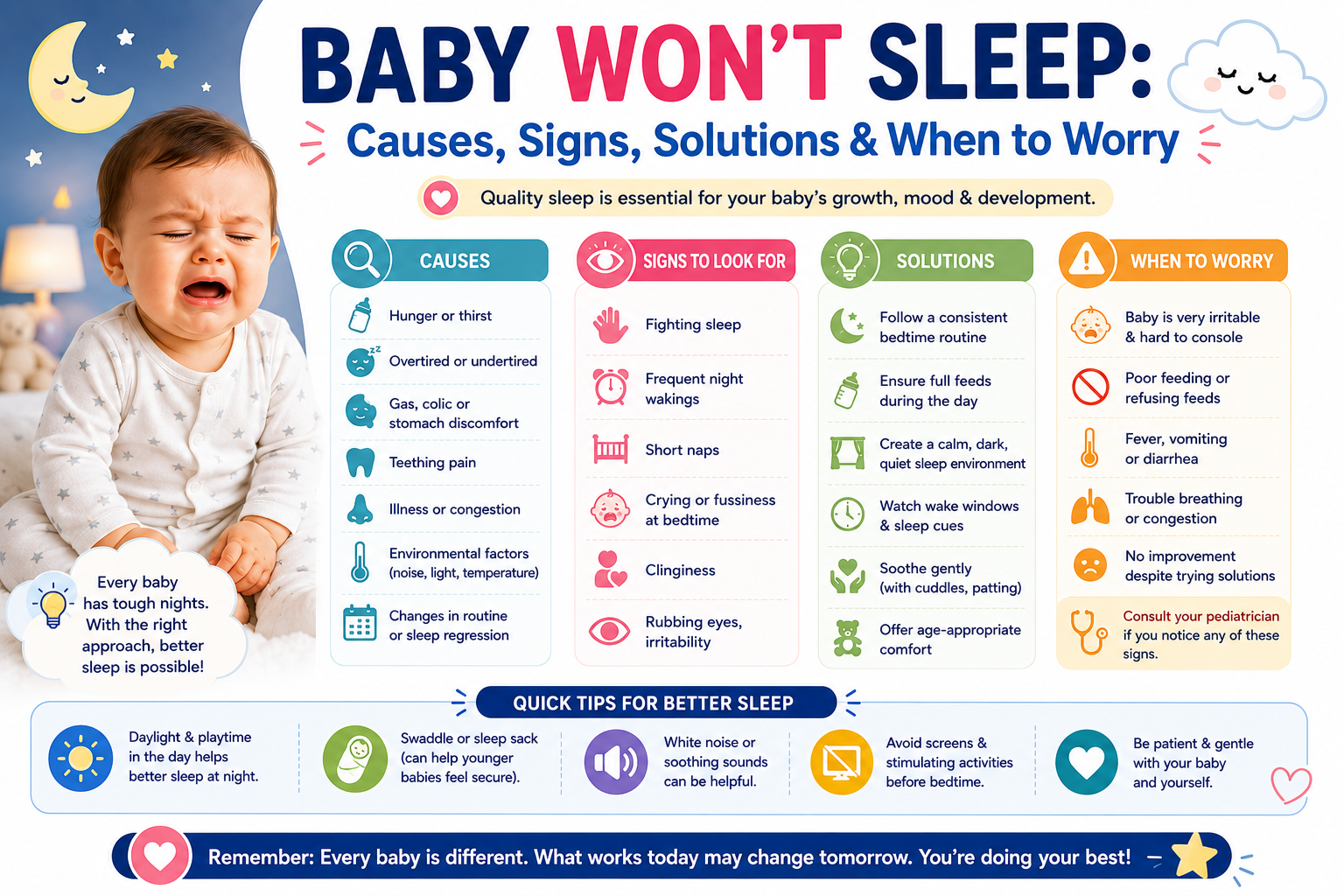
The most common baby bedtime resistance causes are linked to sleep timing, physical comfort, development, and the bedtime environment. More than one cause may occur at the same time.
1. Your Baby Is Overtired
Overtiredness is one of the most important baby bedtime resistance causes. When a baby stays awake too long, their body may release stress hormones that make it harder to relax.
An overtired baby may look energetic instead of sleepy. They may laugh, kick, cry, rub their eyes, or become fussy during feeding. This can feel confusing because parents often assume a tired baby will fall asleep faster.
In practice, overtiredness can act like a second wind. The baby’s body is tired, but their nervous system is on high alert.
2. Your Baby Is Not Tired Enough
The opposite problem also occurs. If your baby naps late, wakes late, or has a long nap near bedtime, they may not have enough sleep pressure to settle.
A baby who is not tired enough may babble, roll, crawl, or play in the crib. They may seem calm but resist sleep for a long time. This is not always a sign of distress. Sometimes the bedtime is simply too early for that day.
3. The Wake Window Does Not Match Your Baby’s Needs
A wake window is the time a baby can usually stay awake between sleep periods. These ranges vary by age and by child, so they should not be treated as strict rules.
Typical patterns may look like this:
• Newborns often manage brief periods of wakefulness, sometimes less than an hour.
• Babies around 3 to 6 months may stay awake for roughly 1.5 to 2.5 hours.
• Babies around 6 to 12 months may manage about 2 to 4 hours.
• Toddlers often need longer periods between sleep times.
These are broad estimates, not medical requirements. Your baby’s mood, sleep quality, and behavior matter more than a clock. A sudden schedule change can create several baby bedtime resistance causes at once.
4. Your Baby Is Hungry or Needs a Feeding Pattern Change
Hunger can make it hard for a baby to settle. This is especially true during growth spurts, when feeding needs may increase for a short time.
Some babies also become distracted during daytime feeds. They then take in more milk or formula at night. A calm, quiet feeding before bed may help, but do not force a large feed or use feeding as the only way to settle every waking.
For babies under 12 months, breast milk or infant formula remains the main source of nutrition. Speak with your pediatrician before changing feeding amounts, night feeds, or introducing new foods.
5. Teething or Physical Discomfort
Teething, gas, reflux symptoms, a stuffy nose, eczema, constipation, or a wet diaper can all affect sleep. These issues are common baby bedtime resistance causes because lying down may make discomfort feel worse.
Teething can cause sore gums and more crying, but it does not explain every sleep problem. A fever, diarrhea, severe rash, or unusual distress should not be blamed on teething without medical advice.
Check simple sources of discomfort:
• Is the diaper dry?
• Is the room too warm or too cold?
• Does the baby have a blocked nose?
• Are clothing tags or tight bands irritating the skin?
• Does feeding seem painful?
6. Separation Anxiety
Many babies become more aware of separation during the second half of the first year. They may cry when you leave the room or wake soon after being placed in the crib.
This change is a normal part of attachment and development. Your baby has learned that you still exist when out of sight, but they may not yet feel comfortable being apart at bedtime.
A short, steady routine can help. Respond with warmth, but keep your words and actions calm. Repeatedly restarting play or adding new activities can make separation feel even harder.
7. New Motor Skills and Brain Development
Babies often resist sleep when learning to roll, sit, crawl, stand, or walk. Their brains are busy practicing the new skill, even when their bodies need rest.
You may see a baby stand in the crib and cry because they cannot sit back down. Another baby may roll across the mattress and become frustrated. These developmental changes usually improve with daytime practice and gentle support.
Give your baby safe floor time while awake. If your baby can pull to stand, make sure the crib mattress is at the correct height and that the sleep space is free of loose objects.
8. A Bedtime Routine That Is Too Long or Too Stimulating
A bedtime routine should help your baby slow down. A long routine with bright lights, loud play, screens, or frequent changes may have the opposite effect.
Common stimulating activities include active bouncing, exciting toys, television, and several caregivers taking turns trying to settle the baby. The baby may become confused about whether it is time to play or sleep.
A simple routine may include:
-
Dim the lights.
-
Change the diaper and pajamas.
-
Feed if needed.
-
Read a short book or sing softly.
-
Place the baby in the crib according to your chosen sleep approach.
The routine does not need to be perfect. Repetition matters more than length.
9. Sleep Associations
A sleep association is something your baby connects with falling asleep. Examples include feeding, rocking, walking, holding, or using a pacifier.
Sleep associations are not automatically bad. Many are loving and useful. The challenge comes when a baby needs the same help each time they naturally wake between sleep cycles.
If you want to change a sleep association, do it gradually. Reduce the amount of help in small steps instead of removing every comfort at once. This can make the transition easier for both of you.
10. An Uncomfortable Sleep Environment
Light, noise, temperature, and clothing can influence sleep. A room that is bright at bedtime may confuse your baby’s body clock. Sudden sounds can also interrupt settling.
For safer sleep, place your baby on their back on a firm, flat surface. Keep pillows, blankets, bumpers, and soft toys out of the crib. Room sharing without bed sharing is recommended for at least the first six months when possible.
A dark, quiet room may help, but complete silence is not required. Soft, steady background noise can mask household sounds when used safely and kept at a low volume.

How to Identify the Cause of Bedtime Resistance
Finding the cause takes observation. You do not need a perfect sleep diary, but a simple record for three to five days can reveal useful patterns.
Write down:
• Morning wake time
• Nap start and end times
• Feeding times
• Signs of tiredness
• Bedtime routine
• Time placed in the crib
• How long settling takes
• Night wakings
• Possible signs of pain or illness
Look for clues. If your baby cries after a very long wake period, overtiredness may be involved. If your baby plays happily for 45 minutes, bedtime may be too early. If resistance begins after every feed, reflux, gas, or feeding discomfort may need attention.
Do not change five things at once. Try one small adjustment for several nights, unless your baby seems sick or unsafe. Too many changes make it hard to know what helped.
A useful question is: “What happens right before the resistance begins?” The answer often points toward the cause.
Practical Ways to Reduce Bedtime Resistance
The best response depends on the cause. These steps can help many families create a calmer bedtime.
Use a Consistent Sleep Rhythm
Aim for a fairly steady morning wake time and bedtime. A flexible rhythm is more realistic than an exact schedule, especially during the first year.
Watch for early sleep cues such as:
• Slower movement
• Reduced eye contact
• Yawning
• Rubbing the face
• Quiet staring
• Mild fussiness
Try to begin the routine before your baby becomes frantic. Crying is a late sleep cue for many babies.
Keep the Routine Short and Predictable
A 15 to 30 minute routine is enough for many families. Use the same order most nights, even if the exact times change.
For example, dim the lights, change the diaper, feed, read, cuddle, and move to the crib. A predictable sequence acts like a bridge from busy family time to sleep.
Offer Comfort Without Adding More Stimulation
Use a soft voice and slow movements. Keep lights low and avoid turning bedtime into a negotiation.
If your baby cries, check for hunger, illness, discomfort, or a safety issue first. Then use the soothing method that fits your family, such as patting, brief holding, or sitting nearby.
Adjust the Schedule Slowly
If bedtime is too early, move it later by 10 to 15 minutes every few nights. If your baby seems overtired, begin the routine 10 to 15 minutes earlier.
Small changes are often easier to maintain than a major schedule reset. Give each adjustment enough time to show a pattern.
Practice New Skills During the Day
If your baby stands in the crib, practice sitting down during play. If your baby is learning to roll, give plenty of supervised floor time.
Daytime practice can reduce frustration at night. It also supports motor development without turning bedtime into a training session.
Use Safe Sleep Practices Every Time
The safest sleep setup includes:
• A firm, flat crib, bassinet, or play yard mattress
• A fitted sheet only
• Baby placed on their back for every sleep
• No loose blankets, pillows, stuffed toys, or crib bumpers
• No exposure to cigarette smoke or vaping aerosols
• Avoidance of weighted sleep sacks and weighted blankets for infants
Swaddling must stop when a baby shows signs of rolling. A wearable blanket that does not restrict movement may be safer than loose bedding.
Choose a Response Plan You Can Maintain
Families use many approaches, including responsive settling, gradual withdrawal, scheduled checks, or feeding changes. No single method works for every baby or parent.
The best plan is one that is safe, age appropriate, and realistic for your home. Consistency does not mean ignoring your baby. It means responding in a calm, repeatable way.

Baby Bedtime Resistance by Age
Baby bedtime resistance causes often change as sleep needs develop.
Newborns
Newborns have immature body clocks and need frequent feeds. Day and night confusion is normal in the early weeks.
Focus on safe sleep, feeding support, daylight exposure during the day, and low stimulation at night. Do not expect a strict bedtime schedule yet.
Babies Around 3 to 6 Months
Many babies begin to develop a more predictable sleep rhythm during this stage. They may also experience changes in sleep cycles and nap patterns.
Overtiredness, missed naps, and new awareness of surroundings are common sources of resistance. A calm routine and age appropriate wake periods may help.
Babies Around 6 to 12 Months
Separation anxiety, crawling, standing, teething, and shifting from three naps to two can affect bedtime. These are some of the most frequent baby bedtime resistance causes in this age group.
Offer daytime practice for new skills and keep bedtime responses steady. If night feeding changes are being considered, discuss them with your child’s healthcare professional.
Toddlers
Toddlers may resist bedtime because they want control, more connection, or more play. This is no longer only an infant sleep issue.
Offer two small choices, such as “blue pajamas or green pajamas?” Keep the boundary firm: bedtime is not optional, but your child can have a little control within the routine.

Mistakes That Can Make Bedtime Resistance Worse
Well-meaning actions can sometimes increase the struggle.
• Changing the bedtime method every night can make the routine unclear.
• Keeping a baby awake longer to “make them tired” may lead to overtiredness.
• Using screens before bed can add light and stimulation.
• Offering a new toy, snack, or activity after every cry may encourage repeated requests.
• Staying in a bright room during night care can make it harder to return to sleep.
• Ignoring signs of illness or pain can delay needed care.
One lesson many parents learn is that a calm plan works better than a perfect plan. A baby may still cry during a healthy bedtime routine. The goal is not zero crying every night. The goal is safe, responsive care and a pattern that gradually becomes easier.
It is also important to protect the caregiver. Take turns when possible. If you feel overwhelmed, place your baby safely in the crib and step away for a few minutes. Never shake, hit, or roughly handle a baby.

When to Call a Pediatrician
Most bedtime resistance is temporary, but some symptoms need medical attention. Contact your pediatrician if your baby has ongoing sleep trouble along with poor feeding, poor weight gain, frequent vomiting, breathing problems, loud snoring, persistent pain, or unusual sleepiness.
Seek urgent care for signs of breathing trouble, blue or gray skin, severe dehydration, a seizure, or a baby who is difficult to wake. For babies younger than 3 months, a rectal temperature of 100.4°F (38°C) or higher needs prompt medical guidance.
A healthcare professional can also help when you suspect reflux, allergies, eczema, ear pain, constipation, or another medical issue. Sleep advice cannot replace an examination when symptoms suggest illness.
There are limits to general sleep guidance. Babies differ in temperament, feeding needs, health, and development. If a recommendation does not fit your baby or your family, ask a qualified healthcare professional for personalized advice.
Frequently Asked Questions About Baby Bedtime Resistance Causes
Why does my baby cry as soon as I start the bedtime routine?
Your baby may already be overtired, or they may connect the routine with separation from you. Start the routine a little earlier and keep it calm, short, and predictable.
Can teething cause bedtime resistance?
Teething may cause sore gums and extra fussiness, but it is not the cause of every sleep problem. Ask a pediatrician before giving any pain medicine, and avoid products that are not recommended for infants.
Should I keep my baby awake longer to improve bedtime?
Usually, no. Keeping a baby awake too long can increase overtiredness and make settling harder. Adjust bedtime in small steps based on your baby’s sleep cues and nap pattern.
Is it normal for a baby to resist bedtime during a developmental leap?
Yes. New skills such as crawling, standing, or walking can make a baby more alert and eager to practice. Daytime practice, a steady routine, and safe crib setup can help.
When should I worry about bedtime resistance?
Seek medical advice if resistance is paired with breathing problems, poor feeding, poor growth, repeated vomiting, severe pain, or unusual sleepiness. Also contact your pediatrician if the problem continues and leaves your family unable to function.
Does sleep training cause bedtime resistance?
Some sleep approaches may cause short-term protest because the response pattern changes. A safe, age appropriate plan with consistent caregiving can help, but families should choose an approach that fits their values and their child’s health needs.
Conclusion
Baby bedtime resistance causes often include overtiredness, low sleep pressure, changing wake windows, hunger, discomfort, separation anxiety, new motor skills, and an exciting bedtime environment. The best solution starts with observation, safe sleep practices, and one small change at a time.
Your baby is not trying to make bedtime difficult. They are communicating with the tools they have. Watch the pattern, respond with patience, and ask your pediatrician for help when symptoms or worry continue. Try one practical adjustment tonight, and explore trusted infant sleep resources for ongoing support.