Baby sleep schedule by age changes fast, and the right routine depends on your baby’s stage.
If you are trying to make sense of baby sleep schedule by age, you are not alone. Newborn sleep can feel random, but over time, it starts to follow more predictable patterns. I’ve seen how small shifts in wake windows, nap timing, and bedtime can make a huge difference, and this guide breaks it all down in a simple, practical way.

Why baby sleep schedule by age matters
A baby sleep schedule by age is not just about getting more sleep. It helps your baby get the right amount of rest for growth, brain development, mood, and feeding. It also helps parents spot when a routine is off, which can make those long days and longer nights feel more manageable.
Sleep needs change a lot in the first year. A newborn may sleep most of the day, while an older baby needs longer stretches of awake time and fewer naps. That is why a schedule that works at 6 weeks often stops working by 4 months.
Here is the big idea:
- Younger babies need shorter wake windows and more naps.
- Older babies can stay awake longer and sleep in bigger blocks.
- Bedtime usually gets earlier as babies get older and naps shift.
In my experience, many parents think their baby is “not a good sleeper,” when really the schedule just does not match the baby’s age. Once the timing lines up better, sleep often improves without forcing anything.
Baby sleep schedule by age: newborn to 12 months
Every baby is different, but age-based sleep ranges give you a strong starting point. Think of them as a map, not a rulebook. Your baby may need a little more or less sleep than average, and that can still be normal.
Newborns: 0 to 8 weeks
Newborns sleep a lot, often 14 to 17 hours in 24 hours, but not in long chunks. Sleep is usually broken into short stretches of 1 to 3 hours because their stomachs are tiny and they need frequent feeds.
A simple newborn rhythm often looks like this:
- Wake for feeding
- Short awake time
- Sleep again
- Repeat through the day and night
Typical wake windows are very short, often 45 to 60 minutes. That includes feeding, burping, diaper changes, and a little cuddling.
Useful tips for this stage:
- Do not expect a strict routine yet.
- Keep nights dark and calm.
- Use daylight in the morning to help set body clock patterns.
- Watch sleepy cues like yawning, red brows, and staring off.
A common mistake I have seen is keeping a newborn awake too long because the baby “seems fine.” In reality, overtired newborns often cry more and sleep worse.
2 to 3 months
By this age, sleep may become slightly more organized. Babies often sleep 14 to 16 hours a day, with naps spread across the day and one or two longer night stretches.
Wake windows usually grow to about 60 to 90 minutes. Some babies can handle a little longer, but many still get overtired fast.
A sample baby sleep schedule by age for 2 to 3 months may include:
- 4 to 5 naps
- Bedtime around 7:00 to 9:00 p.m.
- Night feeds as needed
- Morning wake-up around the same time each day
At this stage, you can start building gentle habits:
- A simple bedtime routine
- A consistent sleep space
- Calming cues like swaddling if safe and approved by your pediatrician
This is also the stage where parents often notice day and night confusion improving. The baby may begin sleeping a bit longer at night, especially with good daytime light exposure and regular feeding.
4 to 6 months
This is a big shift in the baby sleep schedule by age. Many babies sleep about 12 to 15 hours in 24 hours, often with 3 to 4 naps and longer night sleep than before. Some babies also go through the 4-month sleep regression, where sleep cycles mature and night waking increases.
Wake windows usually stretch to 1.5 to 2.5 hours. Many babies do best with a more predictable rhythm now.
A common schedule might look like:
- Wake in the morning around 6:00 to 7:30 a.m.
- Nap after about 1.5 to 2 hours awake
- 3 to 4 naps total
- Bedtime around 6:30 to 8:00 p.m.
Helpful sleep habits for this age:
- Put baby down drowsy but awake when possible
- Keep naps and bedtime consistent
- Use a short bedtime routine, such as bath, feed, book, sleep
I’ve found that parents often panic when night sleep gets worse around this age. But if your baby’s development is changing, sleep can wobble before it improves. A steady routine helps the baby feel safe during that transition.
6 to 9 months
Most babies in this range sleep about 12 to 14 hours in 24 hours. Naps often drop to 2 to 3 per day, and wake windows get longer, usually around 2.5 to 3.5 hours.
This is when many families start to see a clearer pattern. Naps may become more predictable, and bedtime can settle into a more regular time.
A typical baby sleep schedule by age at this stage may include:
- 2 to 3 naps
- Two longer wake windows before bedtime
- One longer stretch of sleep at night
- Possible night waking from teething, separation anxiety, or new skills like crawling
Practical advice:
- Keep nap timing balanced so the last nap does not push bedtime too late.
- Watch for signs that your baby is ready to drop a nap.
- Keep bedtime steady even when naps are messy.
Around 6 to 9 months, many babies also begin to show stronger preferences for caregivers. That can make bedtime harder, but it is normal. A calm, repeatable routine often works better than trying to “win” the bedtime battle.
9 to 12 months
By 9 to 12 months, babies often sleep around 12 to 14 hours total, with 2 naps being the norm for many. Wake windows may stretch to 3 to 4 hours, and bedtime often becomes more predictable.
A simple daily rhythm might include:
- Morning wake-up
- Nap 1 about 3 hours later
- Nap 2 after another 3 to 4 hours
- Bedtime 3 to 4 hours after the second nap
This is a stage where separation anxiety, standing in the crib, and new motor skills can disrupt sleep. That does not always mean the schedule is wrong. Sometimes the baby just needs consistent boundaries and time to adjust.
Helpful reminders:
- Keep the last nap from going too late.
- Use a calming bedtime routine every night.
- Stay consistent with how you respond to night waking.
If your baby is close to 12 months and still taking 3 naps, that can still be fine for some babies. The baby sleep schedule by age is a guide, not a race.
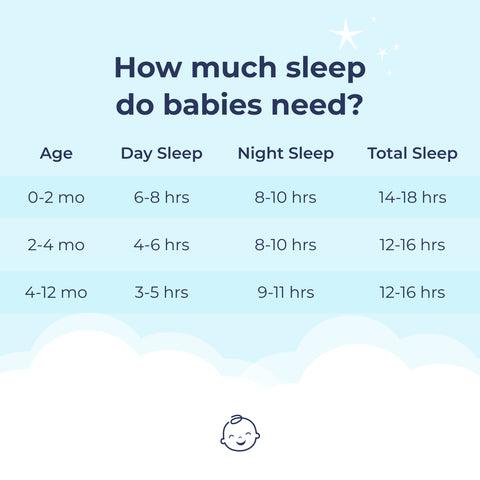
Sample baby sleep schedule by age chart
This simple chart can help you compare what is typical at each stage. Use it as a starting point, then adjust for your baby’s needs.
| Age | Total Sleep in 24 Hours | Naps | Wake Window | Notes |
|---|---|---|---|---|
| 0 to 8 weeks | 14 to 17 hours | 5 to 7 | 45 to 60 min | Very short sleep cycles |
| 2 to 3 months | 14 to 16 hours | 4 to 5 | 60 to 90 min | More day-night rhythm |
| 4 to 6 months | 12 to 15 hours | 3 to 4 | 1.5 to 2.5 hours | Possible sleep regression |
| 6 to 9 months | 12 to 14 hours | 2 to 3 | 2.5 to 3.5 hours | More stable schedule |
| 9 to 12 months | 12 to 14 hours | 2 | 3 to 4 hours | Bedtime often steadier |
This chart reflects common sleep ranges seen in pediatric sleep guidance and infant development research. Still, normal can vary a lot from baby to baby. Growth spurts, illness, teething, and development can all shift the pattern for a while.
How to build a baby sleep schedule that actually works
A good baby sleep schedule by age should fit your baby, not fight them. The goal is a rhythm that supports sleep, feeds, and family life without turning your home into a clock-driven battlefield.
Start with these basics:
- Use wake windows, not just the clock.
- Offer naps before your baby gets overtired.
- Keep bedtime earlier when naps are short.
- Make mornings fairly consistent.
- Protect the sleep space with low light and less noise.
A simple routine can look like this:
- Wake and feed.
- Play or tummy time.
- Watch sleepy cues.
- Start nap routine.
- Repeat through the day.
- Keep bedtime calm and predictable.
One thing I learned the hard way is that trying to force a long wake window too early usually backfires. A baby who is exhausted may fall asleep fast, but the nap is often short and the night can get rough. Small timing changes can work better than big ones.
Common sleep problems by age
Sleep struggles are normal, and they often line up with age-based changes. Knowing what is common can save a lot of worry.
Frequent night waking
This is common in newborns and young babies because they need night feeds. It can also happen later from habit, teething, illness, or developmental leaps.
What helps:
- Feed when needed
- Keep nighttime interactions quiet
- Avoid turning every waking into playtime
Short naps
Short naps are very common in the first months of life. Many babies have not yet learned how to link sleep cycles.
What helps:
- Check wake windows
- Try nap routines
- Use a sleep-friendly room
Early morning waking
Babies often wake early if bedtime is too late, naps are off, or the room gets bright too soon.
What helps:
- Move bedtime earlier
- Use blackout curtains
- Keep the first morning feed calm and boring
False starts at bedtime
A baby falls asleep, then wakes up 30 to 60 minutes later. This can happen when the baby is overtired or under tired.
What helps:
- Adjust the last wake window
- Make bedtime routine shorter and calmer
- Watch nap balance during the day
What the experts usually recommend
Most pediatric sleep guidance agrees on a few core ideas. Babies need age-appropriate sleep totals, safe sleep practices, and steady routines. The American Academy of Pediatrics also stresses safe sleep on a firm, flat surface, with no loose blankets, pillows, or toys.
Other trusted sleep principles include:
- Newborns need flexible care, not rigid schedules.
- Sleep needs change fast during the first year.
- Consistency helps babies learn when it is time to sleep.
The exact schedule depends on the baby, but the pattern is clear: more naps early, fewer naps later, and longer wake windows over time. That is the heart of a healthy baby sleep schedule by age.
When to talk to a pediatrician
Most sleep changes are normal, but sometimes it is smart to ask for help. You should contact your pediatrician if your baby:
- Snores loudly or has pauses in breathing
- Has major trouble feeding or gaining weight
- Seems unusually sleepy or hard to wake
- Has frequent vomiting or signs of reflux discomfort
- Sleeps much less or much more than expected for age
Trust your instincts here. If something feels off, it is always okay to ask. A good schedule should support your baby’s health, not just solve bedtime.

Frequently Asked Questions of baby sleep schedule by age
How much sleep does a baby need by age?
Sleep needs change quickly in the first year. Newborns often need 14 to 17 hours in 24 hours, while older babies usually need about 12 to 14 hours total.
When should a baby start a sleep schedule?
You can start gentle patterns right away, but a true routine usually becomes more useful around 6 to 8 weeks. Before that, focus on feeding, soothing, and short awake windows.
How many naps should a baby take by age?
Most newborns take many short naps, while older babies gradually drop to 2 naps by around 9 to 12 months. The exact number depends on age, wake windows, and how well nighttime sleep is going.
What is the best bedtime for a baby?
Many babies do well with bedtime between 6:30 and 8:00 p.m., but the best time depends on age and naps. An earlier bedtime often helps when naps are short or the baby is overtired.
Why does my baby sleep well one week and poorly the next?
This is very common. Growth spurts, teething, illness, new skills, and changes in naps can all affect sleep from week to week.
Conclusion
A baby sleep schedule by age works best when it matches your baby’s stage, not someone else’s idea of perfect sleep. As your baby grows, sleep needs shift from many short naps to fewer, longer stretches, and small schedule changes can make a big difference.
If you remember just one thing, let it be this: watch your baby’s cues, adjust wake windows as they grow, and keep routines simple and steady. Start with the age range that fits your baby today, then tweak it gently as needed. If this guide helped, save it, share it, or leave a comment with your baby’s age and sleep challenge.