Baby developmental leaps are short bursts of rapid brain growth that can change sleep, mood, and skills.
If you have ever felt like your baby changed overnight, you are not imagining it. Baby developmental leaps guide articles matter because these phases can help you understand why your little one suddenly wants more comfort, wakes more at night, or seems eager to learn new skills. I have seen many parents feel calmer once they realize these shifts are often part of normal development, not a sign that something is wrong. This baby developmental leaps guide will walk you through what leaps are, what they look like, how to support your baby, and when to ask for help.

What baby developmental leaps are
A baby developmental leap is a period when your baby’s brain is working hard to learn new things. During these times, babies often seem fussier, clingier, or more tired than usual. Then, almost like a light switch, a new skill starts to show up.
These leaps are linked to brain growth, sensory awareness, and new ways of thinking. A baby developmental leaps guide is useful because it helps you connect the dots between behavior and development. Instead of guessing, you can better understand what may be happening under the surface.
Common changes during a leap can include:
- More crying or fussiness
- Shorter naps or broken sleep
- Wanting to be held more often
- New skills like rolling, babbling, or reaching
- Bigger interest in faces, sounds, and movement
In my experience, the biggest relief for parents comes from knowing that a hard week does not always mean a bad pattern. Sometimes it is just a developmental stretch. That mindset can make the season feel less stressful and more manageable.

Why baby developmental leaps happen
Babies grow fast in the first year, and their brains are building connections at a remarkable speed. These new connections help them understand the world in fresh ways. That is why a baby developmental leaps guide often focuses on both behavior and milestones.
Several things can trigger a leap:
- Maturing brain pathways that support thinking and memory
- Better body control, like lifting the head or sitting up
- Stronger sensory awareness of light, sound, touch, and movement
- Growing curiosity about people, objects, and patterns
Research on early brain development shows that babies learn through repeated experiences and responsive care. That is why comfort, routine, and connection matter so much during leaps. The more safe and predictable a baby feels, the easier it is for them to practice new skills.
Signs your baby may be in a developmental leap
Every baby is different, but there are common clues. A baby developmental leaps guide should help you notice patterns without making you panic over every fussy day.
Look for these signs:
- More need for cuddles and reassurance
- Changes in sleep, such as more night waking
- Mood swings or more crying than usual
- New interest in faces, hands, or toys
- Extra practice of a new skill, even if it is clumsy at first
It can help to look at the whole picture, not just one bad nap or one hard evening. If your baby is also gaining a skill, such as turning toward sounds or grabbing objects, a leap may be part of the story. Still, if symptoms feel severe or unusual, trust your instincts and speak with a pediatrician.
Common baby developmental leaps by age
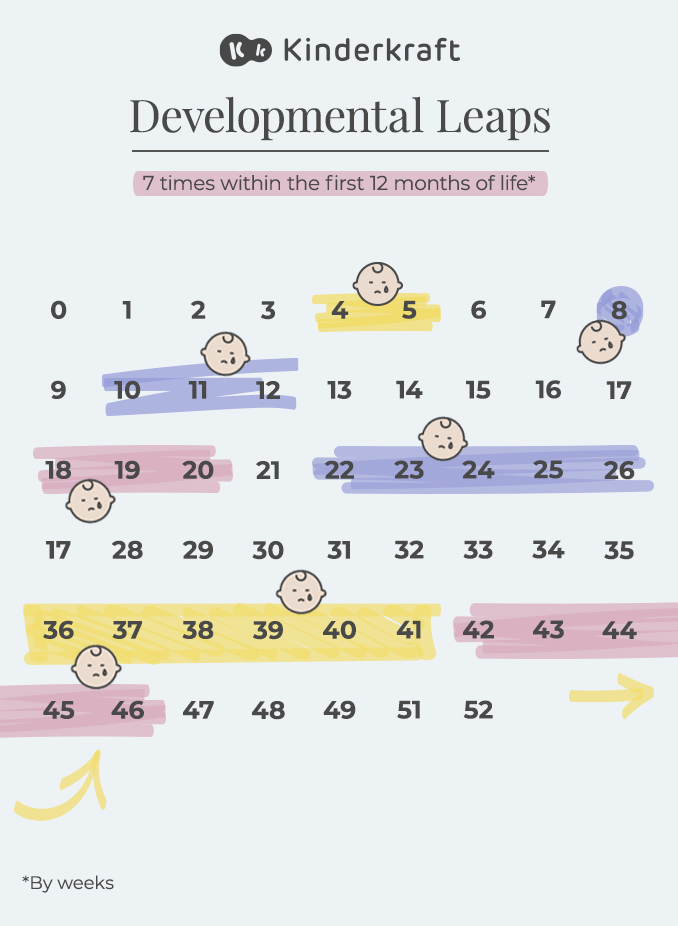
Many parents search for a baby developmental leaps guide because they want to know what to expect at different ages. While not every baby follows the same schedule, there are broad patterns in the first year.
Around 4 to 6 weeks
Babies often become more alert and begin noticing the world more clearly. You may see more eye contact, more startle responses, and more need for soothing. Sleep can also feel a little less settled.
Around 8 to 12 weeks
Your baby may start paying closer attention to voices, faces, and movement. This is often when cooing, smiling, and social engagement grow. Some babies become more sensitive to stimulation during this stage.
Around 3 to 4 months
This is a big time for coordination and awareness. Babies may begin reaching, batting at objects, or rolling with more intent. Many parents notice changes in naps and nighttime sleep here.
Around 5 to 7 months
Babies often become more mobile and more curious. They may sit with support, transfer toys between hands, or react strongly when you leave the room. Separation awareness can make this period feel intense.
Around 8 to 10 months
Crawling, pulling up, and stronger object play may show up. Babies may cling more and become selective about familiar people. They are also learning that people and things can move away and come back.
Around 11 to 12 months
This stage often brings imitation, problem-solving, and early communication. You may see first words, gestures, pointing, and a strong drive to explore. Your baby may also test boundaries more often.
A baby developmental leaps guide should always remind you that ages are estimates, not rules. Some babies leap earlier or later, and that can still be normal.
How to support your baby during a leap
The best support is simple, warm, and steady. You do not need a perfect schedule or a fancy system. A good baby developmental leaps guide usually comes back to the basics: comfort, routine, and patience.
Try these practical tips:
- Offer extra cuddles and calm contact
- Keep routines simple and predictable
- Reduce noise, bright lights, and over stimulation
- Give short periods for floor play and practice
- Feed on cue and watch for hunger signs
- Use soothing repetition, like singing or rocking
One mistake I see often is trying to “fix” the leap instead of riding it out. Babies are not broken during these phases. They are learning, and your job is to be the steady place they can return to.
If sleep gets messy, keep the environment boring and calm at night. If feeding seems frequent, that may be comfort seeking as much as hunger. Follow your baby’s cues while keeping your limits gentle and consistent.
Baby developmental leaps guide and sleep changes
Sleep changes are one of the most common reasons parents start looking for a baby developmental leaps guide. A leap can make a baby wake more often, fight naps, or need more help falling asleep. This is usually temporary, though it can feel endless in the middle of it.
Why sleep changes happen:
- Brain activity is higher during new learning
- Babies may be more alert and harder to settle
- Some babies need extra reassurance before sleep
- Big motor skills can interrupt rest
What helps most:
- Keep bedtime routines short and calm
- Use the same sleep cues every night
- Avoid adding too many new sleep habits at once
- Offer comfort without turning the night into a long play session
In real life, I have seen families get stuck because they changed five things at once. That often made babies more confused. The better path is usually one small change at a time, with plenty of patience.
Feeding, mood, and behavior during leaps
A leap can affect more than sleep. Some babies want to nurse or bottle feed more often, while others get distracted easily. Mood can also shift quickly from happy to upset, almost like a tiny storm passing through.
During this time, focus on:
- Responsive feeding
- Calm and unhurried mealtimes
- Watching for overtiredness
- Offering a safe place to reset
If your baby seems extra clingy, it does not mean you are spoiling them. Comfort at this stage builds trust. A baby developmental leaps guide should always support connection, not guilt.
What a baby developmental leaps guide cannot tell you
It is important to be honest here. A baby developmental leaps guide can help explain many normal changes, but it cannot diagnose medical issues. Not every sleep problem, feeding change, or cranky day is a leap.
Possible reasons for similar symptoms include:
- Teething
- Illness
- Reflux or feeding issues
- Allergies or sensitivities
- Growth spurts
- Over tiredness
That is why context matters. If your baby has a fever, poor weight gain, breathing trouble, or seems unusually sleepy or hard to wake, get medical advice quickly. Trusted guidance is helpful, but it should never replace care from a pediatric professional when something feels off.
How to track your baby’s patterns
Tracking can make the baby developmental leaps guide much more useful. You do not need a detailed spreadsheet unless you enjoy that kind of thing. A simple note on your phone can be enough.
Track these items:
- Sleep start and wake times
- Feeding times
- Mood changes
- New skills
- Trigger moments, like busy days or visitors
After a week or two, patterns often become clearer. Maybe your baby always gets fussier after a day full of errands. Maybe the sleep trouble lines up with a burst of new movement. That kind of insight can help you respond with less stress.
When to call the pediatrician
A baby developmental leaps guide should also tell you when not to wait it out. Call your pediatrician if you notice anything that feels unusual, severe, or persistent.
Seek advice if your baby:
- Has a fever, poor feeding, or dehydration signs
- Seems floppy, weak, or hard to wake
- Stops making eye contact or responding like usual
- Is not gaining weight well
- Has breathing trouble
- Loses skills they had already learned
Trust matters here. Parents often know when something feels different. If your gut says something is not right, it is worth asking.
Frequently Asked Questions of baby developmental leaps guide
What is the difference between a developmental leap and a growth spurt?
A growth spurt is mostly about physical growth, like getting bigger and hungrier. A developmental leap is about brain growth and new skills, such as better focus, rolling, or babbling.
How long do baby developmental leaps last?
They can last a few days to a few weeks, depending on the baby and the stage. Some babies move through them quickly, while others seem to stay unsettled longer.
Do all babies go through developmental leaps?
Most babies show periods of rapid development, but the timing and intensity vary. Some babies are very obvious about it, while others seem to shift more quietly.
Can a developmental leap affect sleep?
Yes, sleep changes are very common during a leap. Babies may wake more often, resist naps, or need extra help settling because their brains are busy learning.
Should I follow a baby developmental leaps guide exactly?
Use it as a helpful map, not a strict rulebook. Babies develop at their own pace, so the best approach is to watch your child’s cues and adjust as needed.
Conclusion
A baby developmental leaps guide can make the early months feel a lot less mysterious. When you understand that fussiness, sleep changes, and clinginess may be tied to fast brain growth, it is easier to respond with calm and confidence. The main idea is simple: support your baby with routine, comfort, and patience while keeping an eye on anything that feels unusual.
If this stage feels hard right now, remember that it is often temporary and full of growth on the other side. Keep observing your baby, trust your instincts, and lean on your pediatrician when you need reassurance. If you found this guide helpful, explore more newborn and baby sleep resources, subscribe for updates, or leave a comment about what leap you are navigating right now.