Most babies can leave contact naps with a slow, gentle plan that protects sleep, comfort, and safe rest.
A baby transition from contact naps can feel emotional for both of you. Contact naps often begin as the easiest way to help a newborn sleep, but your baby may later need practice sleeping in a crib or bassinet. This guide explains when to start, how to make the change, what mistakes to avoid, and how to keep sleep safe and calm.

What Are Contact Naps?
A contact nap is a nap taken while your baby sleeps on or close to your body. Your baby may sleep on your chest, in your arms, or against you in a carrier while you stay awake and watch closely.
Contact naps are common in the newborn months. Babies often sleep better with warmth, movement, smell, and the sound of a caregiver’s heartbeat. These cues can help a tired baby settle when a crib feels too open or still.
Contact naps are not a sign that you have created a bad habit. Newborns need help with sleep because their nervous systems are still growing. Holding your baby can also support bonding and help you learn your baby’s early sleep signs.
Still, contact naps can become hard to manage. You may need both hands, more rest, or a safer and more reliable nap space. That is when a baby transition from contact naps may begin to make sense.

When Should You Start the Baby Transition From Contact Naps?
There is no single perfect age for a baby transition from contact naps. Some babies begin to accept crib naps around 8 to 16 weeks. Others need more time, especially if they were premature, have reflux symptoms, or are going through a major change.
Look at your baby’s behavior instead of relying only on age. Your baby may be ready to try when:
• Your baby can sometimes settle without full-body movement or constant holding.
• Your baby has a fairly steady nap pattern.
• Your baby can sleep for a short time after being placed down.
• Contact naps are becoming tiring or hard to fit into your day.
• Your baby seems comfortable in a bassinet or crib while awake.
Readiness does not mean your baby will sleep alone right away. It means your baby may be able to practice a new sleep setting. Think of it as learning a new route, not passing a test.
If your baby becomes very upset, pause and try again later. A baby transition from contact naps should be flexible. It should not involve leaving your baby in distress for long periods.

Why Babies Prefer Contact Naps
Babies often choose contact naps because your body gives them several sleep cues at once. Your warmth, scent, breathing, and gentle movement can feel like a familiar shelter.
A crib offers fewer cues. It is flat, quiet, and still. That change can feel large to a young baby, even when the crib is comfortable and safe.
Common reasons babies resist crib naps include:
• A strong startle reflex that wakes them during the transfer.
• Hunger or a need for more frequent feeds.
• Gas, reflux, a wet diaper, or another physical discomfort.
• An overtired state caused by missing the best nap window.
• A need for close contact during a growth spurt or developmental change.
• A sleep association with rocking, feeding, or being held.
Sleep associations are not always a problem. They become difficult only when your baby needs one specific condition for every nap and that condition no longer works for your family.
In my experience with families working on a baby transition from contact naps, the biggest issue is often timing. Parents may try the crib after the baby is already overtired. A calm, early attempt usually works better than a rushed transfer after a long struggle.

How to Prepare for a Baby Transition From Contact Naps
Preparation can make the change feel less sudden. Start by making the sleep space familiar while your baby is awake and content.
Use the same short routine before one nap each day. For example:
-
Change your baby’s diaper.
-
Close the curtains or lower the light.
-
Use a sleep sack that fits correctly.
-
Read one short book or sing a quiet song.
-
Place your baby on their back in the crib while calm or drowsy.
Keep the routine simple. A long routine may tire your baby before sleep begins.
You can also offer short periods in the crib during the day. Let your baby look around, kick, and play while you stay nearby. This helps the crib become a familiar place instead of a space that appears only when you leave.
Use steady sleep cues. White noise can help block household sounds, but keep it low and place the machine away from the crib. A dark room may support sleep, but you do not need a perfect nursery. Babies can learn to nap in normal homes with ordinary sounds.
The goal of a baby transition from contact naps is not to remove comfort. It is to move some comfort into the routine and sleep space.

A Gentle Step-by-Step Plan
A gradual plan often feels easier for babies and parents. You can adjust each step based on your baby’s response.
Step 1: Choose One Nap
Begin with the first nap of the day. Many babies are less tired and less overstimulated in the morning. Keep later naps as contact naps if needed.
Starting with one nap protects your baby’s total sleep. It also gives you a chance to learn what works without changing the whole day.
Step 2: Practice a Calm transfer
Hold or rock your baby until calm and sleepy. Then place your baby on their back in the crib. Lower the bottom and legs first, followed by the shoulders and head.
Keep one hand gently on your baby’s chest for a few breaths. You can use a quiet voice or soft pat. If your baby wakes, pause before picking them up unless they are crying hard or need care.
Step 3: Try “Drowsy but Awake” When Ready
Some babies can fall asleep in the crib when drowsy but awake. Others become more upset with this approach. It is one option, not a rule.
If your baby cries right away, return to a more supported transfer. You can try placing your baby down calm but awake for just a few seconds, then offer more help.
Step 4: Use a Pick-Up and Try-Again Method
If your baby becomes very upset, pick them up and calm them. Once their breathing and body relax, try the crib again. Repeat only a few times before finishing the nap another way.
This method teaches that the crib is safe while still offering support. It also prevents a nap from becoming a long battle.
Step 5: Increase Slowly
When one nap improves, try another nap on a different day. Progress may look like:
• Sleeping in the crib for 10 minutes.
• Accepting the first part of a nap in the crib.
• Needing less rocking before the transfer.
• Returning to sleep with a brief pat instead of a full contact nap.
A baby transition from contact naps can move forward and backward. Illness, teething, travel, and new skills can all cause temporary changes.
Safe Sleep During the Transition
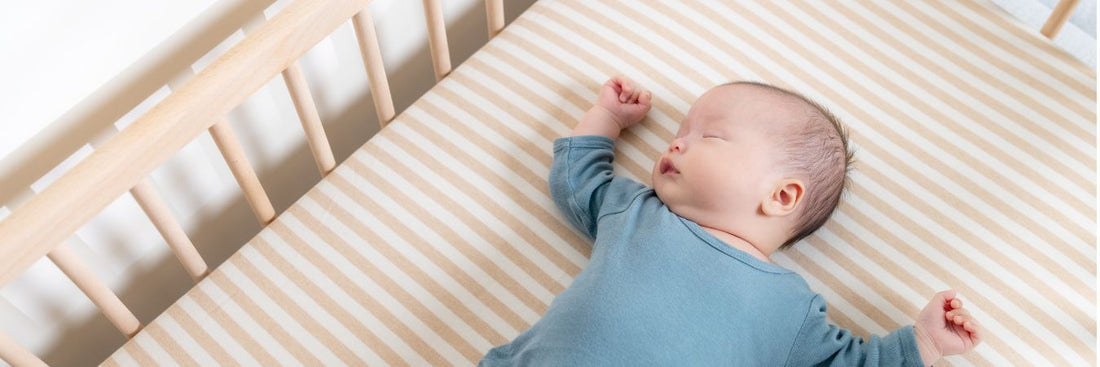
Safety matters more than a successful transfer. The American Academy of Pediatrics recommends that babies sleep on their backs on a firm, flat, noninclined surface made for infant sleep.
Keep the crib, bassinet, or play yard free of:
• Pillows
• Loose blankets
• Stuffed toys
• Bumpers
• Positioners
• Weighted sleep products
A fitted sheet on a firm mattress is usually all the sleep space needs. Use a wearable blanket if your baby needs warmth. Stop swaddling when your baby shows signs of rolling, and never use a swaddle that restricts the hips or allows the baby to roll.
Contact naps also need attention to safety. If you might fall asleep, move your baby to a safe sleep space. Sofas, recliners, and adult beds carry a serious suffocation risk for sleeping infants. Babywearing also requires careful attention to airway position, with the face visible and the chin lifted away from the chest.
Room sharing without bed sharing is recommended for at least the first six months when possible. Avoid smoke exposure, alcohol, and sedating medicines around infant sleep.
Safe sleep guidance can vary for babies with medical needs. Ask your pediatrician for individual advice if your baby was premature or has breathing, feeding, or growth concerns.

Common Problems and Practical Fixes
Your Baby Wakes as Soon as You Put Them Down
This often happens during a light sleep stage or when the transfer feels too sudden. Try waiting a little longer until your baby’s arms feel relaxed and breathing is steady.
Warm the mattress only by allowing it to reach room temperature. Do not use heating pads, hot water bottles, or electric blankets in the crib.
Your Baby Sleeps for Only 20 Minutes
Short naps are normal for many young babies. A baby may complete one sleep cycle and wake without knowing how to return to sleep.
Give your baby a brief chance to resettle if they are calm. If the nap ends, offer an earlier next nap so overtiredness does not build.
Your Baby Cries in the Crib
Crying is communication. Check hunger, temperature, diaper needs, illness, and discomfort first. Then decide whether your baby needs more soothing or whether you want to try again later.
Do not measure success by a quiet crib alone. A calm attempt that lasts two minutes is still useful practice.
Your Baby Takes Better Contact Naps Than Night Sleep
This is common. Daytime sleep can be more sensitive to light, noise, and overtiredness. You can work on naps while keeping a bedtime routine that already works.
There is no need to change every sleep period at once. A slower baby transition from contact naps may protect nighttime sleep.
You Feel Tired or Frustrated
Your well-being matters. Ask a partner, family member, or trusted friend to help with meals, chores, or a supervised contact nap while you rest.
If you feel angry, overwhelmed, or worried that you may fall asleep while holding your baby, place your baby in a safe sleep space and step away for a few minutes. Contact a health professional if you need ongoing support.

Mistakes to Avoid
A gentle plan can fail when the timing or expectations are too strict. Avoid these common mistakes:
• Changing every nap and bedtime on the same day.
• Waiting until your baby is extremely tired.
• Expecting a long crib nap on the first attempt.
• Using loose items, pillows, or weighted products to make the crib feel cozy.
• Repeating transfers for an hour without a break.
• Comparing your baby with another child.
• Treating one difficult day as proof that the plan does not work.
One mistake I often see is removing contact naps too quickly. Parents may feel pressure to create independent sleep at once, then become discouraged when the baby protests. Keeping one or two supported naps can make the process more manageable.
Another mistake is ignoring the parent’s needs. The right plan is not the one that looks perfect online. It is the one that gives your baby safe sleep and gives your family enough rest to function.

How Long Does the Transition Take?
A baby transition from contact naps may take a few days, several weeks, or longer. The time depends on age, temperament, sleep needs, feeding patterns, and how much support your baby wants.
Some babies accept one crib nap quickly but resist the rest. Others need many small attempts before they settle. Both patterns can be normal.
Track simple details for three to five days:
• Nap start time
• How your baby fell asleep
• Transfer time
• How long your baby slept
• Mood after waking
This record can show patterns. You may find that your baby sleeps best after 90 minutes awake rather than two hours. You may also notice that a feed, burp, or earlier wind-down makes the transfer smoother.
Do not focus only on nap length. A successful transition may mean less holding, a calmer transfer, or a safe crib nap that lasts 15 minutes. Small steps often become a strong habit over time.
When to Call the Pediatrician
Most nap resistance is a normal sleep challenge, but some signs need medical attention. Call your pediatrician if your baby has trouble breathing, poor feeding, fewer wet diapers, repeated vomiting, a fever, unusual sleepiness, or poor weight gain.
Also ask for help if your baby seems to have pain when lying flat. Reflux, congestion, eczema, ear problems, and other conditions can affect sleep. Do not raise the crib mattress or use an inclined sleeper unless a qualified medical professional gives specific advice.
A pediatrician can also help if sleep problems are exhausting your household or if you are unsure whether your baby is ready for a new routine. Medical advice is especially important for premature babies and infants with known health conditions.
Frequently Asked Questions About Baby Transition From Contact Naps
What is the best age for a baby transition from contact naps?
There is no universal best age. Many babies begin accepting crib naps between 8 and 16 weeks, but readiness varies. Start when your baby is healthy, your routine is fairly stable, and you feel ready to practice.
How do I stop contact naps without making my baby cry?
Change one nap at a time and offer plenty of soothing before and after the transfer. If your baby becomes very upset, pick them up, calm them, and try again later rather than forcing the attempt.
Should I put my baby down awake or asleep?
Both approaches can work. Start with a calm, sleepy transfer if your baby needs more support, then practice placing your baby down awake for short periods as they become comfortable.
Are contact naps bad for babies?
Contact naps are not automatically bad when the caregiver is awake and the baby’s airway is clear. The main risk is an adult falling asleep with a baby on a sofa, recliner, or other unsafe surface, so move the baby to a firm, flat sleep space if you feel drowsy.
Why does my baby wake during every crib transfer?
Your baby may wake from the change in movement, temperature, pressure, or sleep stage. Try an earlier nap, a slower transfer, and a brief hand on the chest after placement.
Can I keep some contact naps?
Yes. You do not need to remove every contact nap. Keeping some contact naps can provide comfort while you build safe, flexible sleep skills in the crib.
Conclusion
A baby transition from contact naps works best as a gradual change, not a sudden separation. Start with one nap, use a short routine, transfer your baby gently, and keep the sleep space firm, flat, and clear. Expect uneven progress, and remember that comfort and safe sleep can exist together.
Your baby does not need to master independent naps overnight. Choose one small step today, watch your baby’s cues, and adjust with patience. If you found this guide helpful, explore more evidence-based infant sleep resources or share your own transition experience in the comments.