Tummy time builds neck, shoulder, arm, and trunk strength while supporting early movement and brain development.
The newborn tummy-time developmental purpose is more than helping a baby lift the head. It gives your baby safe practice with the muscles, balance, body control, and sensory skills needed for rolling, sitting, crawling, and later movement. This guide explains how tummy time works, when to begin, how to make it comfortable, and when to ask for help.
What Is the Newborn Tummy-Time Developmental Purpose?
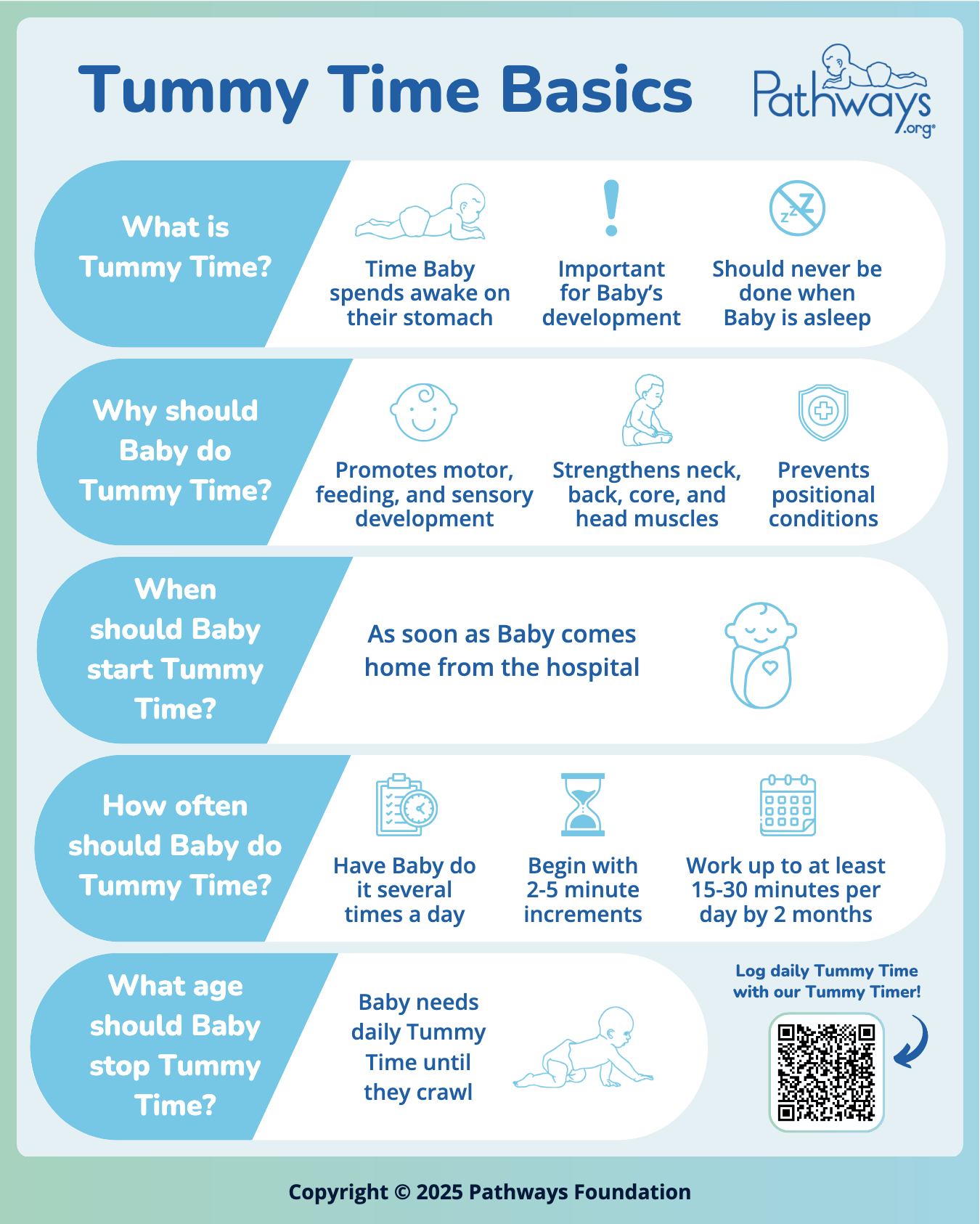
The newborn tummy-time developmental purpose is to help babies build strength and control while they are awake and closely watched. During tummy time, a baby works against gravity. This small effort helps develop the neck, shoulders, upper back, arms, chest, belly, and hips.
Tummy time also gives a baby a new view of the world. Instead of looking at the ceiling, your baby sees faces, toys, lights, and movement from a different angle. This supports early visual tracking and helps connect movement with learning.
The main developmental goals include:
• Building head and neck control
• Strengthening the shoulders and upper back
• Preparing the arms for pushing and reaching
• Supporting balance and body awareness
• Reducing long periods of pressure on the back of the head
• Preparing the body for rolling, sitting, crawling, and walking
• Supporting early sensory and brain development
Think of tummy time as a gentle workout for a growing body. It should not feel like a test. A newborn may only lift the head for a moment at first, and that small effort still counts.
Why Tummy Time Matters for Newborn Development
Newborns have limited muscle control. Their heads are heavy compared with their bodies, so lifting and turning the head takes real effort. Tummy time lets babies practice this skill in short, safe bursts.
The newborn tummy-time developmental purpose also includes learning how to shift weight. A baby slowly learns to move the head, place weight on the arms, and turn toward a sound or face. These early actions form the base for later motor skills.
Tummy time may support:
• Gross motor skills, such as lifting the head and rolling
• Fine motor skills, such as reaching for a toy
• Visual skills, such as focusing and tracking
• Social skills, such as looking at a caregiver and smiling
• Spatial awareness, or learning where the body is in space
Experts from the American Academy of Pediatrics recommend placing babies on their backs for every sleep. Tummy time is different because it happens only when the baby is awake and supervised. This distinction is vital: back sleeping lowers the risk of sleep-related death, while awake tummy time supports movement development.
A baby does not need to enjoy tummy time right away. Many newborns fuss because the position feels new. In most cases, calm practice helps the baby become more comfortable over time.
When Should Newborns Start Tummy Time?
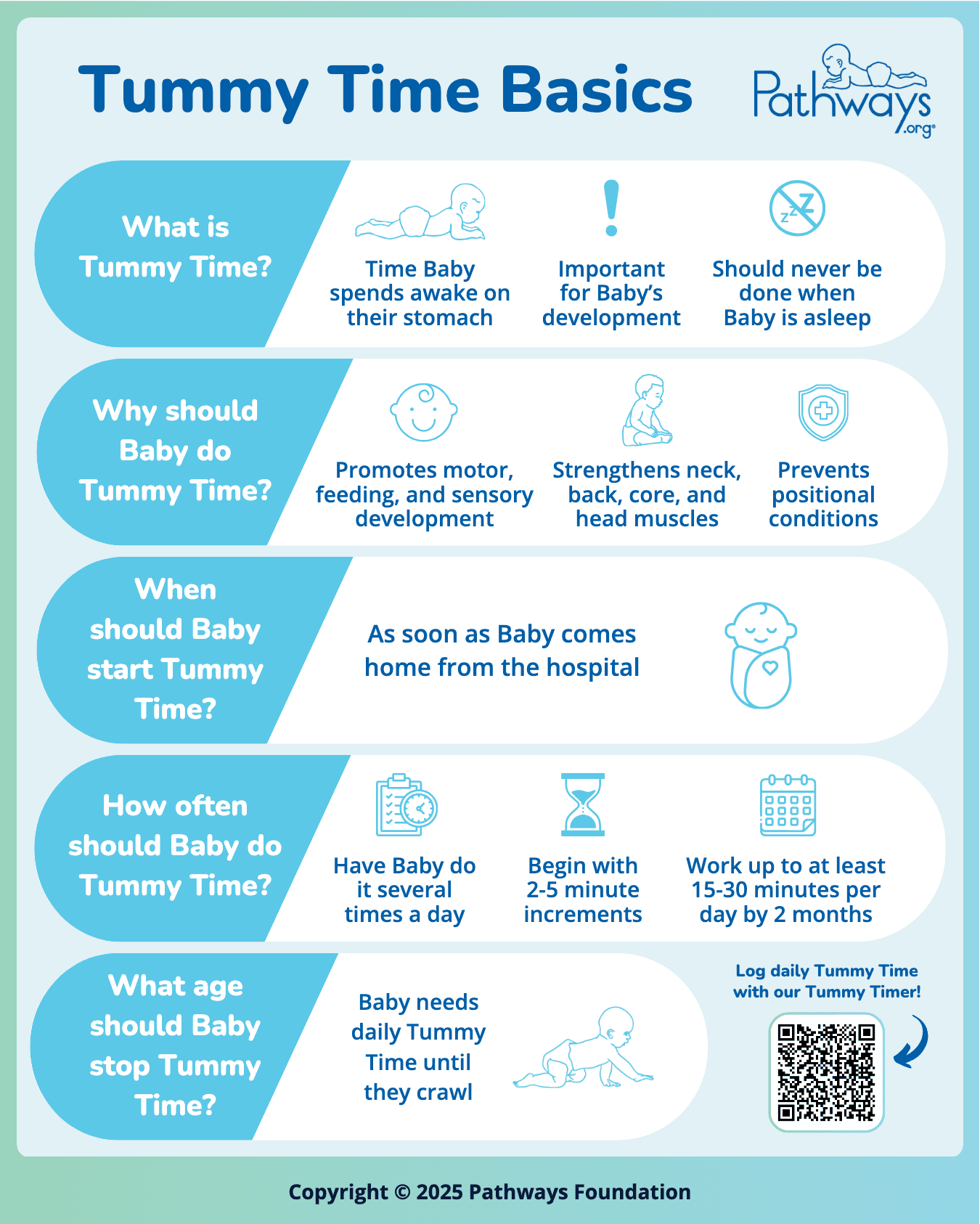
Healthy newborns can usually begin tummy time soon after coming home from the hospital. The American Academy of Pediatrics supports short, supervised sessions from the early days of life.
Start with a few minutes at a time. You can repeat the practice two or three times each day. As your baby grows stronger, slowly add more time.
A simple progression may look like this:
- Begin with one to three minutes.
- Repeat the session when your baby is calm and awake.
- Add short sessions instead of forcing one long session.
- Work toward about 15 to 30 total minutes each day by around 7 weeks, if your baby tolerates it.
- Keep adding small amounts as your baby grows and becomes stronger.
These numbers are general guides, not strict rules. Some babies need more time to adjust. Premature babies, babies with medical needs, or babies with low muscle tone may need an individualized plan from a pediatrician or physical therapist.
The newborn tummy-time developmental purpose remains the same for most babies, but the best starting point may differ. Ask your child’s health care provider if your baby was born early, has breathing concerns, or has difficulty moving one side of the body.

Safe Ways to Practice Tummy Time
Safety is the most important part of the newborn tummy-time developmental purpose. Use a firm, flat surface, and stay within arm’s reach at all times.
Good places for tummy time include:
• A firm play mat on the floor
• A clean blanket placed on the floor
• Your chest while you are awake and alert
• Your lap while you provide full support
• A firm changing pad only when you are holding and watching your baby closely
Never leave a baby alone on a bed, couch, pillow, or soft surface. A baby can slide, roll, or press the face into fabric within seconds.
Follow these safety rules:
• Practice only when your baby is awake.
• Stay close and watch your baby’s face and breathing.
• Stop if your baby falls asleep, then place the baby on the back in a crib or bassinet.
• Keep pillows, blankets, stuffed toys, and loose items away from the face.
• Do not use inclined sleepers for tummy time or sleep.
• Avoid tummy time right after a full feeding.
A useful rule is “awake, aware, and nearby.” If you need to step away, end the session.

Best Newborn Tummy-Time Positions
The floor is not the only way to support tummy time. Changing positions can make the experience easier and help your baby use different muscles.
Chest-to-chest tummy time
Lie back in a semi-reclined position while fully awake. Place your baby on your chest, with the baby’s head turned to one side. Speak softly so your baby has a reason to look up.
This position often feels warm and comforting. It can be a helpful first step for babies who dislike the floor.
Lap tummy time
Place your baby across your lap on the belly. Support the head and chest as needed. A gentle hand on the lower back can help your baby feel steady.
Floor tummy time
Place your baby on a firm mat. Get down at eye level. Your face is often more interesting than a toy, especially during the first weeks.
Rolled-towel support
Place a small, firm towel roll under the upper chest and arms. Keep the baby’s face clear, and stay close. This support can make it easier to lift the head.
Remove the towel when the session ends. Do not use loose towels, pillows, or positioning items during sleep.

How to Make Tummy Time Easier
Many parents worry that their baby “hates” tummy time. Fussing is common, but it does not mean tummy time is harmful or useless. It often means the baby is tired, hungry, cold, or still learning how to move.
Try these practical ideas:
• Choose a time when your baby is calm and alert.
• Wait a little after feeding to reduce spit-up.
• Use your face, voice, or a high-contrast toy for motivation.
• Keep sessions short and repeat them often.
• Place a mirror nearby, but keep it safely out of reach.
• Sing, smile, and talk during the session.
• Try chest-to-chest practice before floor practice.
• End with comfort before your baby becomes very upset.
A common mistake is waiting for a perfect, quiet time. Newborn life rarely offers one. A one-minute session after a diaper change can still support the newborn tummy-time developmental purpose.
Another mistake is forcing a baby to stay in the position for too long. More time is not always better. Frequent, calm practice usually works better than one stressful session.

What Skills Does Tummy Time Prepare?
The newborn tummy-time developmental purpose becomes clearer when you look at the skills that follow. Early head lifting may seem small, but it is the first step in a long chain of movement.
Head control
At first, a baby may lift the head briefly or turn it from side to side. Over time, the baby gains better control and can hold the head up for longer.
Reaching and pushing
As the shoulders and arms grow stronger, babies begin to push against the floor. Later, they may reach for a toy while keeping the chest lifted.
Rolling
Tummy time supports the trunk strength and weight shifting needed for rolling from the belly to the back and, later, from the back to the belly.
Sitting
Babies need strong trunk muscles and good balance to sit. Tummy time does not teach sitting by itself, but it helps build the body foundation for it.
Crawling
Some babies crawl, scoot, or move in other ways. Tummy time helps strengthen the arms, shoulders, back, and belly involved in these movements.
Development is not a race. Babies reach skills in different ways and at different times. Tummy time supports progress, but it does not guarantee a specific movement pattern.

Tummy Time and Flat Head Prevention
Newborn skull bones are soft and still developing. Spending long periods with the head in one position can contribute to positional plagiocephaly, often called flat head syndrome.
Supervised tummy time reduces the amount of awake pressure on the back of the head. It also encourages babies to turn the head and use both sides of the neck.
You can support balanced head movement by:
• Placing toys on both sides of the baby
• Changing which end of the crib you use for supervised awake play
• Holding the baby on different arms
• Limiting long stretches in car seats, swings, and bouncers when not traveling
• Giving the baby daily floor play on the back and belly while awake
Tummy time is not a treatment for every head-shape concern. If your baby strongly favors one side, has a stiff neck, or develops a noticeable flat area, speak with a pediatrician. Early guidance can help identify torticollis or another condition that may need treatment.

Signs Your Baby May Need Extra Support
Most babies improve with gentle practice. Still, some signs deserve medical attention.
Contact your pediatrician if your baby:
• Rarely moves the arms or legs
• Always turns the head to one side
• Seems unusually stiff or very floppy
• Cannot lift or turn the head at all by the expected age
• Uses one side much more than the other
• Cries intensely during every attempt
• Has trouble breathing or changes color
• Loses a skill already learned
Milestones are helpful guides, not exact deadlines. The Centers for Disease Control and Prevention offers age-based milestone information, but your pediatrician can interpret your baby’s development in context.
If your baby was premature, use corrected age when discussing some milestones. Your health care provider can explain how to track progress based on birth history and medical needs.

A Simple Daily Tummy-Time Plan
A flexible plan can make the newborn tummy-time developmental purpose easier to use in real life.
Try this example:
- After a morning diaper change, practice for one to three minutes on the floor.
- During the day, use chest-to-chest tummy time for a few minutes.
- Before an evening nap, try another short floor session.
- Talk, smile, or place a high-contrast toy at eye level.
- Stop when your baby becomes very tired or upset.
- Record progress by noticing stronger head lifts, not just total minutes.
You do not need expensive gear. A clean mat, your face, and your voice are enough. The most useful “equipment” is steady attention.
In everyday caregiving, small routines often work best. Linking tummy time to diaper changes or family play can make it feel natural instead of adding another task to a busy day.
Frequently Asked Questions About Newborn Tummy-Time Developmental Purpose
What is the main newborn tummy-time developmental purpose?
The main purpose is to build strength and body control while supporting early motor, visual, and sensory development. It prepares the muscles and movement skills needed for rolling, sitting, crawling, and other milestones.
How long should a newborn do tummy time?
Start with short sessions of one to three minutes and repeat them throughout the day. Gradually increase the total time as your baby becomes more comfortable, while following your pediatrician’s advice.
Should a newborn sleep on the tummy after tummy time?
No. Babies should be placed on their backs for every sleep, including naps, on a firm and clear sleep surface. Tummy time is only for awake periods with close supervision.
What if my newborn cries during tummy time?
Try a shorter session, chest-to-chest practice, or a different time of day. Crying is common at first, but stop and comfort your baby if the distress continues or seems unusual.
Can tummy time help prevent a flat head?
Supervised tummy time can reduce time spent resting on the back of the head during awake periods. It may help lower the chance of positional flattening, but it cannot prevent or treat every head-shape problem.
Is tummy time safe for premature babies?
Many premature babies can practice tummy time, but their plan may need to reflect their corrected age, breathing status, and muscle tone. Ask the neonatal or pediatric care team for advice before starting if your baby has medical concerns.
When should I call a pediatrician about tummy time?
Call if your baby has trouble breathing, becomes blue or unusually pale, moves one side much less, seems very stiff or floppy, or never improves with practice. Also ask for help if your baby consistently favors one head position.
Conclusion
The newborn tummy-time developmental purpose is to build the strength, balance, body awareness, and early movement skills that support healthy development. Short, supervised sessions can help your baby practice lifting the head, using the arms, turning toward people, and exploring the world from a new view.
Start gently, use positions that feel comfortable, and focus on steady practice rather than perfect performance. Keep every sleep session on the back, watch your baby closely, and contact your pediatrician when something does not feel right. For more support, explore trusted pediatric resources, discuss milestones at well-child visits, and share your family’s tummy-time experience in the comments.