Newborn crying is an early communication system that signals needs before babies can use words.
Newborn crying as early communication can feel confusing at first, but it is not random noise. It is a baby’s first way to share hunger, discomfort, tiredness, fear, and the need for closeness. By learning the patterns around each cry, you can respond with more calm and confidence.
What newborn crying means
Newborn crying as early communication is a normal part of early development. A newborn has few ways to affect the world, so crying works like a simple alarm, message, and call for help.
Crying may tell you that your baby:
• Needs food
• Has a wet or dirty diaper
• Feels too hot or too cold
• Needs to burp
• Is tired or overstimulated
• Wants to be held
• Feels pain or illness
A cry does not always have one clear meaning. Babies can cry from hunger and tiredness at the same time. They may also keep crying after you solve the first problem because they need time to settle.
Newborn crying as early communication also supports bonding. When you respond, your baby learns that their signals matter and that a trusted adult will help. This does not “spoil” a newborn. Responsive care helps build a sense of safety.
The American Academy of Pediatrics explains that crying often increases during the first weeks of life. It may peak around the second month and then slowly improve. Every baby is different, so use this pattern as a guide, not a strict rule.
Why newborns cry before they can talk
Newborn brains and bodies are still developing. Babies cannot yet point, speak, or move toward what they need. Crying is one of the few strong signals they can control.
Newborn crying as early communication begins with body sensations. Hunger creates discomfort. A cold diaper feels unpleasant. Bright light, loud sounds, or too much handling can overload a young nervous system.
A newborn may also cry because of:
• Gas or the need to burp
• Reflux symptoms
• A tight swaddle or uncomfortable clothing
• A sudden change in position
• Separation from a caregiver
• A need for sleep
• Normal evening fussiness
Crying is not always a sign of a serious problem. In many healthy babies, the cause remains unclear even after feeding, burping, changing, and holding. That uncertainty can feel hard, but it does not mean you are doing something wrong.
Think of a newborn’s nervous system as a small cup. Each sound, touch, hunger signal, and tired feeling fills the cup. When it overflows, crying may be the only way your baby can release the strain.

Common newborn cry cues to notice
Parents often ask whether different cries have different sounds. Some babies do develop repeated patterns, but no sound system can identify a need with perfect accuracy. Context matters more than the cry alone.
Newborn crying as early communication becomes easier to understand when you watch the whole baby. Notice the face, hands, body, timing, and events before the cry.
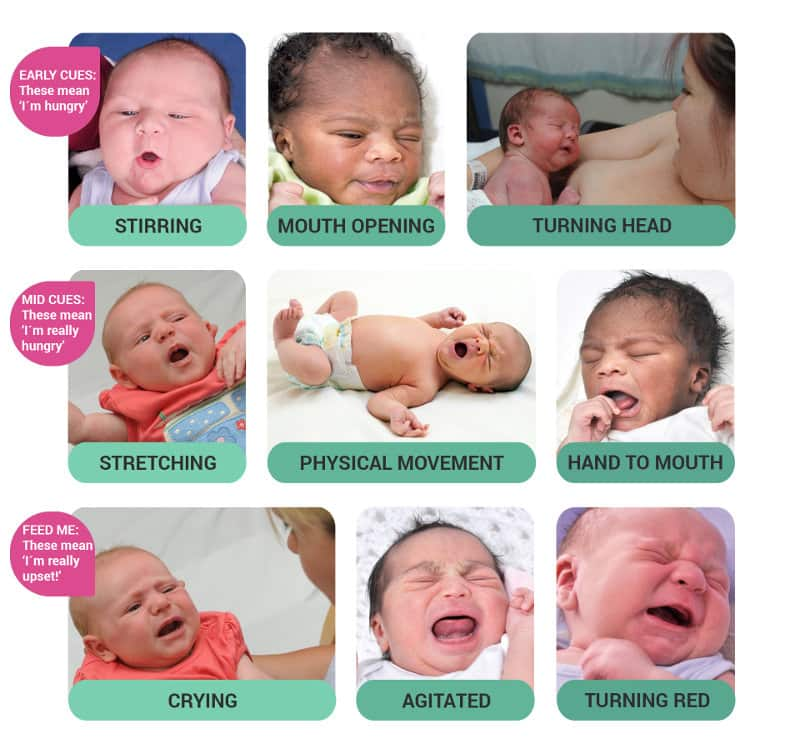
Hunger cues
Early hunger signs often appear before strong crying. Look for:
• Turning toward a breast or bottle
• Opening the mouth
• Bringing hands to the mouth
• Licking or smacking the lips
• Waking and moving more
A hungry cry may begin softly and become louder if feeding does not start. Waiting until a baby is very upset can make feeding harder because the baby may struggle to latch or coordinate sucking.
Tired cues
A tired baby may yawn, stare away, rub the face, or become fussy. Some newborns become quiet before they cry, while others move quickly from calm to intense distress.
Short awake periods are common in the first weeks. If your baby has been awake for a while and has already eaten, tiredness may be the next likely need.
Discomfort cues
A discomfort cry may sound sharp, strained, or sudden. Check the diaper, clothing, room temperature, hair wrapped around a toe, and the baby’s position.
Gas can cause squirming, drawing up the legs, or a red face. These signs are not proof of gas, but they can guide your next gentle step.
Overstimulation cues
Some babies cry after visitors, bright lights, loud television, or a busy day. They may turn away, stiffen, wave their arms, or struggle to settle.
Lowering the lights, reducing noise, and holding the baby close may help. Newborns often need a quiet reset, much like adults need a calm room after a tiring day.

How to respond to newborn crying
The best response is calm, simple, and safe. You do not need to solve every cry within seconds. Start with a short check, then try one soothing method at a time.
Newborn crying as early communication is easier to read when your response follows a routine.
-
Pause and take one slow breath. A calm adult voice and steady movement can help reduce stress for both of you.
-
Check basic needs. Look at feeding, diapering, temperature, clothing, and the need to burp.
-
Look for pain or illness. Check the baby’s skin, breathing, movement, and general behavior.
-
Hold the baby close. Skin-to-skin contact, gentle rocking, or quiet singing may help.
-
Reduce stimulation. Dim the lights and limit noise or passing the baby from person to person.
-
Allow a little time. Some babies need several minutes to settle after a need has been met.
Safe soothing options may include:
• Swaddling, when done correctly and stopped when the baby shows signs of rolling
• A pacifier, if appropriate for your feeding plan
• Slow walking while holding the baby securely
• White noise at a safe, low volume and distance
• A calm voice and gentle touch
Never shake, hit, toss, or jerk a baby. If you feel overwhelmed, place the baby on their back in a clear crib and step away for a few minutes. Ask another trusted adult for help. Taking a safe break protects both you and your baby.

Learning your baby’s crying patterns
You do not need to memorize every sound. A simple note can help you see patterns over time.
Write down:
• When the crying starts
• The last feeding and amount taken
• Wet and dirty diapers
• Sleep periods
• What happened before the crying
• What helped, if anything
Newborn crying as early communication often follows daily rhythms. A baby may cry more before feeds, after long awake periods, or in the late afternoon. A pattern can suggest what to try first, but it should not replace medical advice.
Pay attention to your baby’s usual behavior. A change matters. A baby who suddenly cries in a new way, eats less, sleeps far more, or seems difficult to wake may need prompt evaluation.
One common mistake is trying too many soothing methods at once. Rapidly changing positions, sounds, and feeds can add more stimulation. Try one approach for a short time, then reassess.
Another mistake is assuming every cry means hunger. Feeding is important, but frequent extra feeds may lead to discomfort or make it harder to notice another need. If feeding feels difficult, ask a pediatrician or lactation professional for support.

When newborn crying may need medical help
Most crying is normal, but some signs need quick attention. Contact a health professional if your baby has:
• A fever of 100.4°F (38°C) or higher if younger than 3 months
• Trouble breathing, grunting, or blue, gray, or pale skin
• Repeated vomiting, especially green or bloody vomit
• Poor feeding or much fewer wet diapers
• Extreme sleepiness, weakness, or difficulty waking
• A swollen belly or blood in the stool
• A high-pitched cry that is unusual for your baby
• Crying after a fall or injury
• A cry that remains intense and cannot be soothed, especially with other symptoms
Newborn crying as early communication can signal pain, but crying alone cannot diagnose the cause. Do not rely on online cry charts or sound-based apps to decide whether a baby is ill.
If you are in the United States and think your baby has an emergency, call 911. For urgent but non-life-threatening concerns, contact the baby’s pediatric office or an approved nurse advice line.
Trust your instincts. Parents often notice subtle changes before they can explain them. A health professional can help you sort out normal newborn behavior from a problem that needs care.

Supporting the caregiver
Caring for a crying newborn can bring love, worry, anger, and exhaustion in the same hour. Those feelings do not make you a bad parent. Sleep loss can make normal crying feel much louder and harder to manage.
Newborn crying as early communication is a shared task, not a test that one person must pass alone. Create a small support plan before you need it.
• Tell a trusted person when you need a break.
• Keep water and a snack near your usual feeding spot.
• Trade shifts when possible.
• Accept practical help, such as meals or laundry.
• Ask your pediatrician about persistent crying.
In my experience of reviewing infant-care guidance and parent stories, the most useful lesson is simple: do not chase perfection. Parents often worry that they must identify the exact meaning of every cry. In reality, safe, loving, repeated responses matter more than perfect guessing.
The goal is not to stop every cry. The goal is to stay present, check for needs, protect safety, and learn your baby’s individual signals over time.
Limits of reading a newborn’s cry
Newborn crying as early communication is helpful, but it is not a precise language with one fixed dictionary. The same baby may use a similar cry for hunger, tiredness, discomfort, or the need for contact.
Research on infant crying suggests that adults can sometimes notice broad differences, such as hunger versus pain. Still, even trained listeners cannot identify every cause by sound alone. A baby’s age, health, feeding method, temperament, and surroundings all affect crying.
Cultural expectations can also shape how adults interpret and respond to cries. Some families use more holding, some use more swaddling, and some follow different sleep or feeding routines. Safe care should respect family values while following medical guidance.
Use crying as one clue among many. Combine it with body movements, feeding patterns, sleep, diaper output, temperature, and your baby’s usual behavior.
Frequently asked questions about newborn crying as early communication
Is newborn crying a form of communication?
Yes. Newborn crying is an early communication signal that can express hunger, discomfort, tiredness, pain, or a need for closeness. It is not a complete language, so caregivers should also watch the baby’s body and behavior.
Can parents learn what each newborn cry means?
Parents often learn patterns in timing, tone, and body movements. However, no parent can identify every need from sound alone, and many cries have more than one possible cause.
Should I pick up my baby every time they cry?
Responding to a newborn does not spoil the baby. Holding, feeding, and comforting help the baby feel safe, while safe sleep still means placing the baby on their back in a clear, separate sleep space.
How can I calm a crying newborn?
Check feeding, the diaper, temperature, burping, clothing, and signs of illness first. Then try one calm method, such as holding, swaddling safely, quiet movement, skin-to-skin contact, or reducing noise and light.
When is newborn crying a medical concern?
Seek prompt medical advice for fever in a baby under 3 months, breathing trouble, poor feeding, unusual sleepiness, repeated vomiting, injury, or a sudden cry that seems different. Trust your concern and contact a pediatric professional when something feels wrong.
Can a newborn cry too much?
Some newborns have long periods of crying even when they are healthy, especially in the first months. Persistent or worsening crying should still be discussed with a pediatrician so feeding, reflux, illness, and caregiver stress can be reviewed.
Conclusion
Newborn crying as early communication is a baby’s first way to send a message. It may point to hunger, tiredness, discomfort, overstimulation, pain, or a need for connection, but the sound alone rarely gives the full answer.
Watch the whole baby, respond with calm steps, track useful patterns, and ask for help when crying feels unusual or overwhelming. With time, you will become more familiar with your baby’s signals without expecting yourself to understand every cry perfectly.
Keep learning from trusted pediatric resources, share this guide with another new caregiver, and talk with your baby’s health professional when you have concerns.