Newborn motor development sequence moves from reflexive movements to head control, rolling, sitting, crawling, and early walking.
The newborn motor development sequence is not a race. It is a gradual pattern shaped by the brain, muscles, senses, and daily movement practice. In child development work, I have seen how much worry can come from comparing babies too closely. This guide explains what usually happens, what supports healthy progress, and which signs deserve a call to your child’s health care provider.

What Is the Newborn Motor Development Sequence?
The newborn motor development sequence is the typical order in which a baby gains control over the body. It begins with automatic reflexes and random movements. Over time, a baby gains strength, balance, coordination, and control.
Motor development has two main parts:
• Gross motor skills use the large muscles. Examples include lifting the head, rolling, sitting, crawling, and walking.
• Fine motor skills use the small muscles. Examples include opening the hands, reaching, grasping, transferring a toy, and using a pincer grasp.
The sequence matters more than an exact calendar date. Most babies follow a similar order, but the pace varies. One baby may crawl early, while another may roll, scoot, or move straight to standing.
A newborn’s movements can look jerky or uneven. This is normal in the early weeks because the nervous system is still organizing signals between the brain and muscles. A newborn motor development sequence often looks less like a straight line and more like a winding path.
The Main Stages of Newborn Motor Development
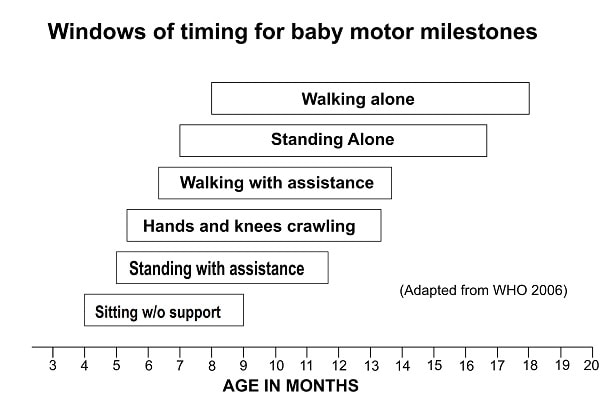
The newborn motor development sequence starts with simple body control. Each stage builds a base for the next one.
Birth to 2 months: Reflexes and early control
Newborns rely heavily on reflexes. These automatic actions help them feed, respond, and stay safe.
Common newborn reflexes include:
• Rooting, which helps a baby find the breast or bottle
• Sucking, which supports feeding
• Moro, or the startle reflex
• Palmar grasp, which causes the fingers to close around an object
• Stepping, which may appear when the feet touch a firm surface
A baby may briefly lift the head during tummy time. The head may wobble, and the arms and legs may move in bursts. Hands often stay closed, but they may open for short periods.
Supervised tummy time is useful from the first days at home. Begin with short periods while the baby is awake. A parent’s chest, lap, or a firm floor surface can work well.
2 to 4 months: Better head and shoulder control
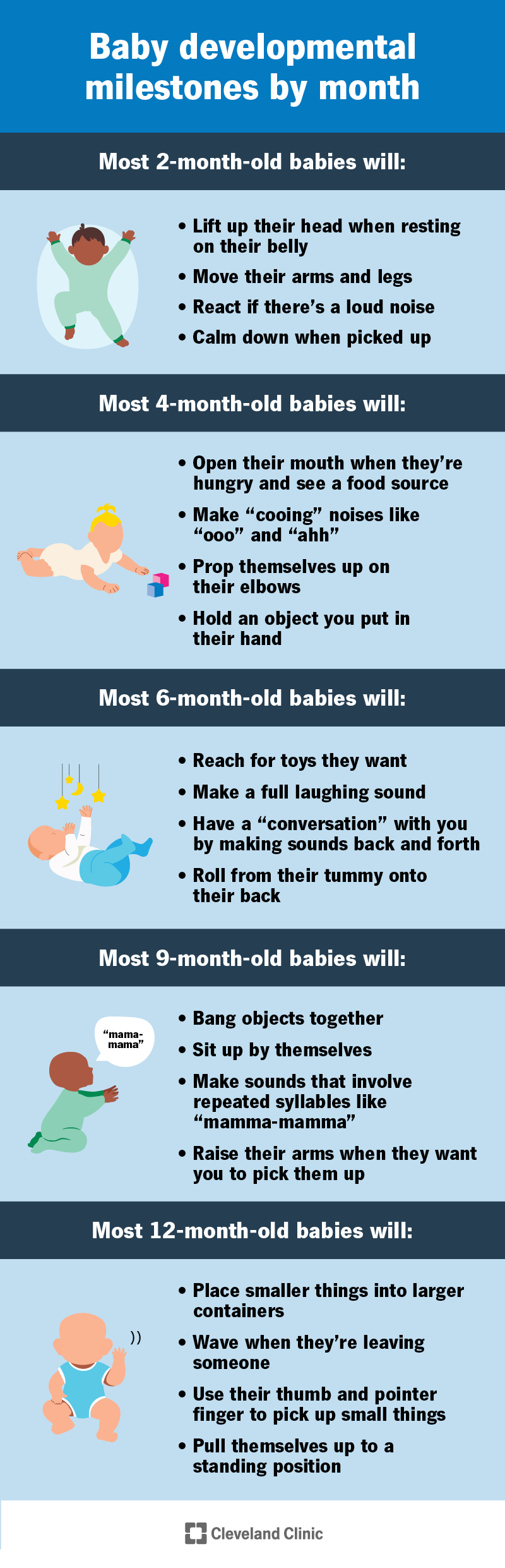
At this stage, many babies hold the head more steadily. During tummy time, they may lift the head and chest while resting on the forearms.
You may also notice:
• More open hands
• Hands moving toward the mouth
• Better control of arm and leg movements
• Stronger kicks
• More interest in faces and toys
A baby may begin to swipe at toys but may not grasp them well yet. This is an important step in the newborn motor development sequence because vision and movement start working together.
4 to 6 months: Rolling and reaching
Many babies roll from tummy to back first. Some roll from back to tummy later, while others learn both directions close together.
Babies often begin to:
• Reach for toys
• Hold objects briefly
• Bring objects to the mouth
• Push up on straight arms
• Sit with support
• Bear weight through the legs when held upright
Rolling can happen suddenly. Once a baby shows signs of rolling, never leave the baby alone on a bed, sofa, or changing table.
6 to 9 months: Sitting, moving, and using the hands
Many babies sit without support during this period. Some move by crawling on hands and knees. Others belly crawl, roll, pivot, or scoot on the bottom.
Hand skills also improve. Babies may:
• Pass a toy from one hand to the other
• Bang two objects together
• Pick up small items with the whole hand
• Reach across the body
• Use both hands during play
Crawling is common, but it is not required. The American Academy of Pediatrics notes that babies use many movement styles. A baby who does not crawl but moves in another safe way may still develop normally.
9 to 12 months: Pulling up and cruising
Many babies pull to stand while holding furniture. They may bend the knees, lower themselves, and move sideways along a couch. This is called cruising.
Other common skills include:
• Moving from sitting to the floor
• Crawling quickly or using another form of movement
• Picking up food with the thumb and finger
• Clapping or waving
• Releasing objects on purpose
• Standing briefly without support
Some babies take their first steps near the end of the first year. Others need more time. Early walking is not proof of better development, and later walking does not automatically mean a problem.
How the Sequence Moves From Reflexes to Voluntary Skills
The newborn motor development sequence follows a broad pattern of control. Babies usually gain control from the head downward. This is called cephalocaudal development.
They also gain control from the center of the body outward. This is called proximodistal development. In simple terms, babies usually control the shoulders before the hands and the arms before the fingers.
A typical pattern looks like this:
-
Reflex movements appear at birth.
-
The baby gains short periods of head control.
-
The baby lifts the chest and supports the upper body.
-
The baby reaches, grasps, and brings objects to the mouth.
-
The baby rolls and sits.
-
The baby moves across the floor.
-
The baby pulls up, cruises, and may walk.
This order is useful, but it is not a strict rulebook. Developmental milestones describe skills that many babies can do by a certain age. They do not predict the exact day a skill will appear.
A premature baby may follow a different timeline. Health professionals often use corrected age during the first two years. Corrected age accounts for how early the baby was born.

How to Support Healthy Motor Development at Home
Simple daily activities can support the newborn motor development sequence. Babies do not need expensive equipment or formal lessons. They need safe space, responsive care, and regular chances to move.
Offer daily tummy time
Place your baby on the tummy only when awake and watched. Start with a few minutes several times a day. Increase the time as your baby grows stronger.
If your baby dislikes the floor, try:
• Lying back while your baby rests on your chest
• Placing a rolled towel under the upper chest
• Getting down face to face
• Using a toy or mirror for interest
Tummy time strengthens the neck, shoulder, arm, and trunk muscles. It also helps prevent too much pressure on the back of the head.
Give babies time on the floor
A firm floor gives babies room to turn, reach, roll, and shift weight. Limit long periods in swings, bouncy seats, and other containers when your baby is awake.
Car seats are important for travel. However, they are not designed for routine sleep or extended play outside the car.
Use simple toys
A soft rattle, cloth book, or colorful ball can encourage reaching. Place the toy close enough for success, then move it slightly to one side. This invites your baby to turn the head and shift weight.
Do not place toys far away for long periods. Early practice should feel rewarding, not frustrating.
Respond to your baby’s signals
Some babies need short practice periods. Others enjoy longer play. Stop when your baby cries, turns away, becomes very tired, or shows stress.
A helpful lesson for parents is that more practice is not always better. Short, calm practice repeated each day often works better than one long session.
Keep sleep safe
Always place a baby on the back for every sleep. Use a firm, flat sleep surface with a fitted sheet. Keep pillows, loose blankets, bumper pads, and stuffed toys out of the sleep space.
Tummy time supports motor skills when the baby is awake. Back sleeping remains the safest sleep position.

Factors That Can Affect Motor Development
Many factors can influence the newborn motor development sequence. A difference does not always mean a disorder.
Possible influences include:
• Premature birth
• Low muscle tone or high muscle tone
• Vision or hearing differences
• Feeding problems
• Limited floor play
• Illness or hospitalization
• Genetic conditions
• Neurologic conditions
• Differences in the home environment
Temperament also matters. Some babies are eager movers. Others watch for a long time before trying a new skill.
Culture and family routines can shape movement, too. For example, babies who spend more time on the floor may have more chances to practice rolling and crawling. This does not mean one culture raises babies “better.” It shows why milestones should be viewed in context.
A health care provider may assess muscle tone, posture, symmetry, reflexes, strength, and movement quality. A physical or occupational therapist may help create a practical home plan when needed.

Signs That May Need Medical Attention
Parents should contact a pediatrician if a baby loses a skill already learned. Loss of skills is more concerning than simply reaching a milestone later than expected.
It is also wise to seek advice if a baby:
• Seems very stiff or very floppy
• Uses one side of the body much more than the other
• Keeps one hand fisted most of the time after the early newborn period
• Does not seem to move both arms and legs
• Has trouble holding the head steady by around 4 months
• Does not roll in either direction by around 6 months
• Cannot sit without support by around 9 months
• Does not bear weight through the legs when held by around 9 months
• Shows little interest in movement or nearby objects
These are general guideposts, not a diagnosis. A baby may have a different pattern and still be healthy. The best step is to share specific observations with a qualified professional.
When speaking with a clinician, describe what you see. Instead of saying, “My baby seems delayed,” say, “My baby reaches with the left hand but rarely uses the right.” Clear examples make assessment easier.
Common Mistakes Parents Should Avoid
Parents often receive too much advice about baby milestones. Some tips are helpful, while others can create stress or safety risks.
Avoid these common mistakes:
• Comparing your baby with siblings, friends, or social media babies
• Forcing a position before the baby has the needed strength
• Using walkers, which can increase injury risk and do not teach safe walking
• Leaving a rolling baby on a high surface
• Practicing standing for long periods
• Treating crawling as a required milestone
• Ignoring a clear loss of skills
• Using sleep positioners or soft products that increase suffocation risk
One mistake I often see in milestone discussions is focusing only on age. Movement quality matters, too. A baby who moves with both sides of the body, gains skills over time, and engages with people may show healthy progress even if the exact dates differ.
How Professionals Assess Motor Skills
A developmental assessment looks at more than one action. A clinician may watch how the baby:
• Moves the head and trunk
• Uses the arms and legs
• Reaches for a toy
• Bears weight
• Changes position
• Responds to sound and visual cues
• Uses both sides of the body
Professionals may use standardized screening tools. The Centers for Disease Control and Prevention offers milestone guidance for families and clinicians. The American Academy of Pediatrics recommends regular developmental surveillance and screening during well-child care.
Screening is not the same as diagnosis. A screening result may show that more assessment is useful. It does not prove that a child has a condition.
Parents should trust their observations. If something feels different, bring it up. Early support can help a child practice skills and can also reassure families when development is within a broad normal range.
Newborn Motor Development Sequence: Practical Example
Imagine a 3-month-old named Maya. During tummy time, she lifts her head for a few seconds but rests her face down when tired. She opens her hands, kicks strongly, and watches a toy move from side to side.
These actions show early head, shoulder, visual, and hand control. Maya is not expected to sit or crawl yet. Her family can support her by offering short tummy time sessions and placing safe toys within easy reach.
Now imagine a 7-month-old named Leo. He rolls both ways, sits with his hands nearby for balance, and reaches for toys. He does not crawl yet, but he pivots in a circle and pushes backward on his tummy.
Leo’s movement fits a broad newborn motor development sequence. Crawling may come later, or he may choose another way to move. What matters is continued progress, active exploration, and balanced use of the body.
Frequently Asked Questions About Newborn Motor Development Sequence
What is the normal newborn motor development sequence?
The usual pattern begins with reflex movements, followed by head control, reaching, rolling, sitting, floor movement, pulling to stand, and walking. The exact timing varies widely among healthy babies.
When should a newborn start tummy time?
Tummy time can begin from the first days at home when the baby is awake and supervised. Start with short sessions on a firm surface, then slowly increase the total time as the baby becomes comfortable.
Is crawling required for normal motor development?
No. Some babies crawl on hands and knees, while others belly crawl, scoot, roll, or move straight to standing. A pediatrician should assess a baby who shows little movement, loses skills, or has clear weakness on one side.
Should I worry if my baby reaches milestones late?
A late milestone does not always mean a problem, especially if the baby is premature or is making steady progress. Discuss your concerns with a pediatrician if progress stops, skills are lost, or several milestones are missing.
Why does my baby seem stiff or floppy?
Babies can look stiff when upset and relaxed when sleepy, so one moment does not tell the whole story. Persistent stiffness, unusual floppiness, poor movement, or difficulty holding the head up deserves medical advice.
Can baby walkers improve motor development?
Baby walkers do not teach safe walking and may increase the risk of falls and other injuries. Safe floor play, supervised standing, and stable push toys used at the right stage are better choices.
Conclusion
The newborn motor development sequence usually moves from reflexes to head control, reaching, rolling, sitting, moving across the floor, standing, and walking. The order offers a helpful guide, but babies do not follow a strict schedule.
Give your baby safe floor time, daily supervised tummy time, simple toys, and plenty of encouragement. Watch for steady progress rather than perfect timing, and contact a pediatrician if skills are lost or movement seems unusually stiff, floppy, weak, or uneven. For more trusted child development guidance, explore reliable pediatric resources and share your questions with your baby’s health care team.