Teething pain can be eased with cold comfort, gentle gum massage, and safe soothing techniques.
If you’ve ever held a cranky, drooly baby at 2 a.m. and wondered what on earth helps, you’re not alone. Knowing how to soothe a teething baby is part comfort, part timing, and part safety. The good news is that most babies can be helped with simple, gentle methods that calm sore gums without adding risk.
What teething is and why it feels so hard
Teething happens when a baby’s first teeth move up through the gums. That pressure can make the gums swollen, tender, and itchy. For many babies, the discomfort comes and goes in waves, which is why one minute they seem fine and the next they are fussy again.
Common signs of teething include:
- Drooling more than usual
- Chewing on hands, toys, or clothing
- Swollen or red gums
- Mild fussiness
- Trouble sleeping for short stretches
- A slight drop in appetite
It helps to know that teething usually starts around 6 months, but some babies begin earlier or later. Every baby follows their own timeline, so a late start is usually not a problem. When I’ve seen parents get the best results, it’s usually because they focused on comfort first, not on trying to “fix” every cranky moment.
The key thing to remember is this: teething can make a baby miserable, but it should not cause severe illness. If your baby has a high fever, vomiting, diarrhea, or seems very unwell, that is not typical teething and should be checked by a pediatrician.

How to soothe a teething baby at home
The best way to soothe a teething baby is to use safe, simple comfort measures that reduce gum pressure. Think of the gums like a sore muscle after a workout: gentle relief works better than rough handling. A cool, calm approach often makes the biggest difference.
Here are the most effective home methods:
-
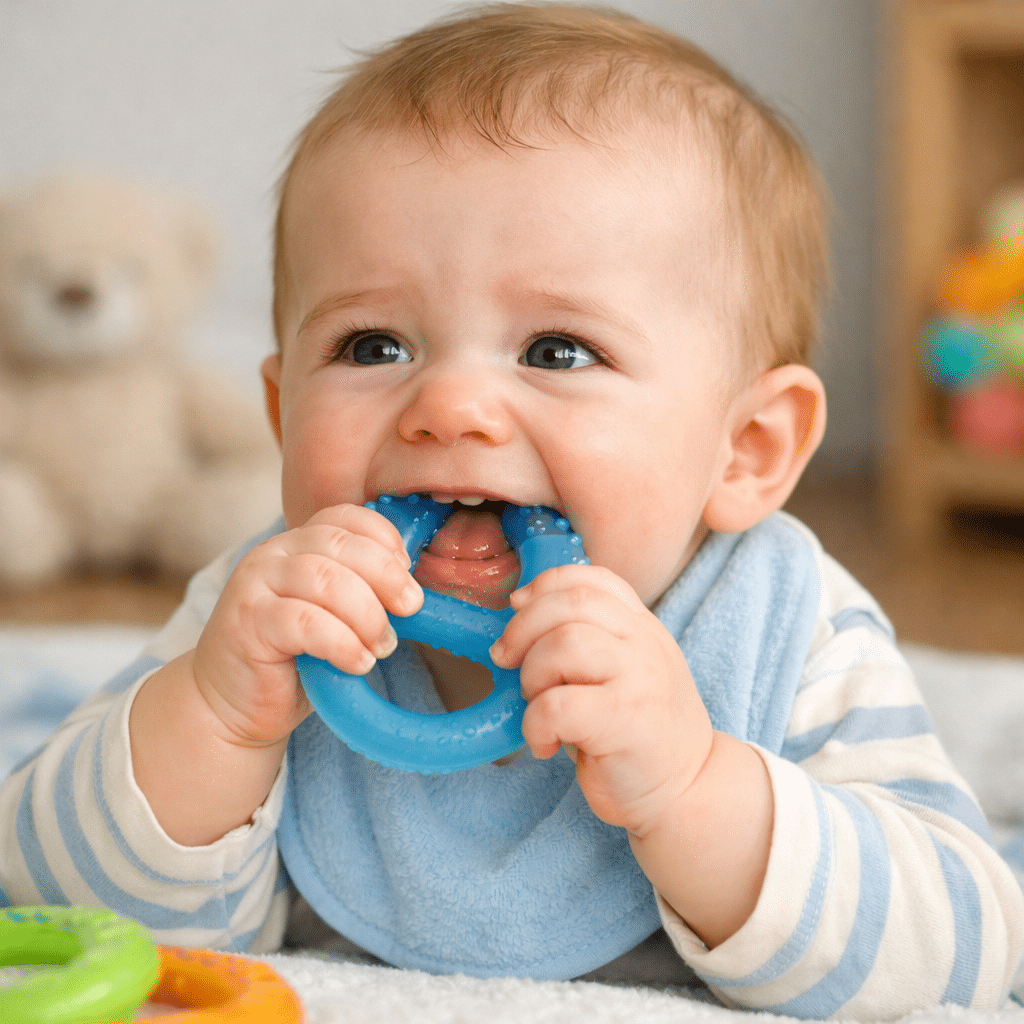
Offer a chilled teething ring
A firm teether stored in the refrigerator can ease sore gums. Make sure it is not frozen solid, since very hard items can hurt delicate gums. -
Let your baby chew a cold washcloth
Wet a clean washcloth, twist it, chill it, and let your baby mouth it under supervision. The texture and coolness can be very soothing. -
Rub the gums with a clean finger
A gentle gum massage can reduce pressure for a little while. Many babies like the steady feeling because it gives them something to focus on. -
Use a teething toy with a safe design
Choose one that is large enough not to be a choking risk and easy to wash. Silicone teethers are often a good choice because they are soft and durable. -
Offer extra cuddles and calm
Sometimes teething pain is made worse by tiredness or overstimulation. A quieter room, more holding, and a soothing voice can help your baby settle. -
Keep feeding routines flexible
Some babies want to nurse or bottle-feed more often when teething. Others want shorter feeds because their gums are sore, so small, frequent feeds may work better.
From experience, the biggest mistake many families make is jumping to too many remedies at once. Babies usually do best with one or two calming methods used consistently. When I’ve worked with parents, the combination that came up again and again was chilled teething gear plus a gentle gum rub.

Safe remedies that actually help
When people search for how to soothe a teething baby, they often want something that works fast. The safest choices are the ones that cool, distract, or gently pressure the gums without harming the baby. Safety matters just as much as comfort.
Good options include:
- Refrigerated teething toys, not frozen ones
- Clean, cool spoons for brief gum soothing
- Breastfeeding or bottle-feeding, if your baby wants it
- Age-appropriate solid foods for babies already eating solids, such as cool applesauce or yogurt if your pediatrician says it is okay
- Extra skin-to-skin comfort and rocking
A few remedies have limitations. For example, not every baby likes cold items, and some may reject teething toys completely. That does not mean teething is not the issue; it just means your baby may prefer pressure, movement, or cuddling over cold relief.
It is also worth noting that over-the-counter homeopathic teething tablets or gels are not recommended by many pediatric experts because of safety concerns and weak evidence. The American Academy of Pediatrics has long advised parents to avoid benzocaine teething gels in young children. If a product promises instant relief, read the label carefully and check with your pediatrician first.
What to avoid when soothing teething pain
Some old teething advice is still floating around, but not all of it is safe. When learning how to soothe a teething baby, it helps to know what not to use. A little caution now can prevent a much bigger problem later.
Avoid these:
-
Teething necklaces or amber beads
These can pose choking and strangulation risks. -
Numbing gels with benzocaine
These are not recommended for infants because of possible serious side effects. -
Frozen teething items
Very cold objects can stick to gums and cause injury. -
Hard biscuits or foods that can break apart
These can be choking hazards, especially before a baby has strong chewing skills. -
Alcohol, aspirin, or adult pain relievers
These are unsafe for babies and should never be used for teething. -
Rubbing alcohol on the gums
This is dangerous and has no place in baby care.
I always tell parents to think of teething help like baby-proofing a room. If something seems powerful, trendy, or “natural” but has risk, it is usually not worth it. The safest relief is often the simplest relief.

When medicine may be appropriate
Most babies do not need medicine for teething, but some may need a pediatrician’s guidance if discomfort is affecting sleep or feeding. If your doctor recommends it, infant acetaminophen or ibuprofen may be used based on age and weight. Never guess the dose.
A few important points:
- Use medicine only if your pediatrician says it is appropriate
- Follow weight-based dosing exactly
- Do not give ibuprofen to babies under 6 months unless a doctor tells you to
- Do not combine medicines unless your pediatrician instructs you to do so
I’ve seen families feel guilty about even asking about medicine, but there is no shame in wanting your baby comfortable. The goal is not to medicate every fussy moment. The goal is to use the right tool when home comfort is not enough.
Signs it may not be teething
Teething gets blamed for a lot, but not every symptom comes from new teeth. Babies can be fussy for many reasons, including growth spurts, ear infections, congestion, hunger, overtiredness, or illness. Knowing the difference helps you respond the right way.
Call your pediatrician if your baby has:
- A fever over 100.4°F in a baby under 3 months
- High fever or fever that lasts
- Diarrhea or vomiting
- Rash
- Strong crying that does not settle
- Trouble breathing
- Ear pulling with fever or severe pain
- Refusal to drink for a long time
- Very few wet diapers
A good rule of thumb is this: teething can make a baby cranky, but it should not make them look truly sick. If your gut says something feels off, trust it. Parents often notice the difference before anyone else does.

Practical daily tips that make teething easier
The best results often come from building a calm routine around the hard moments. Teething pain can spike at bedtime, during naps, or when your baby is already tired. A few small changes can make the day feel less rocky.
Try these tips:
- Keep teething toys in the refrigerator so they are ready
- Offer comfort before naps and bedtime
- Use a clean finger gum massage after feeding
- Wipe drool often to help prevent skin irritation
- Dress your baby in soft, breathable clothes
- Keep favorite comfort items nearby, if age appropriate
- Give extra patience during growth spurts and sleep changes
One lesson I’ve seen over and over is that teething is not just about the gums. It affects mood, sleep, feeding, and the whole household rhythm. When parents plan for the rough patches instead of reacting to them, the stress usually drops fast.
Frequently Asked Questions of how to soothe a teething baby
How can I soothe a teething baby at night?
A cold teether before bed, a gentle gum rub, and a calm bedtime routine can help. If your baby wakes upset, try brief soothing first before assuming they need food or medicine.
What is the safest thing for a teething baby to chew on?
A firm, baby-safe teething toy that has been chilled in the refrigerator is one of the safest choices. Make sure it is large enough to avoid choking and easy to clean.
Can teething cause fever?
Teething may cause a slight rise in temperature, but it does not usually cause a true fever. If your baby has a fever, especially a high one, contact your pediatrician.
Do teething babies want to eat less?
Yes, some babies eat less for a short time because sucking or chewing feels uncomfortable. Offering smaller, more frequent feeds can help, but if your baby refuses most feeds, call your doctor.
How long does teething discomfort last?
Teething discomfort often comes in short waves over several days when a tooth is close to breaking through. Some babies seem bothered only a little, while others have more noticeable fussiness.
Should I use teething gels for my baby?
Most teething gels are not recommended for infants, especially products with benzocaine. Safer comfort methods like chilled teethers and gum massage are usually better choices.
Conclusion
Learning how to soothe a teething baby is really about mixing comfort, safety, and patience. Chilled teething toys, gentle gum massage, extra cuddles, and calm routines can go a long way, while risky products are best left out. If your baby seems unusually sick or the symptoms do not fit teething, checking with a pediatrician is always the smart move.
The good news is that teething does pass, and these difficult days usually come in waves, not forever. Try one or two safe methods first, stay consistent, and watch what your baby responds to best. If this guide helped you, save it for later, share it with another parent, or leave a comment with the teething trick that worked in your home.