Newborn digestion and gastrointestinal development mature gradually, shaping feeding, stools, comfort, and early nutrition.
Newborn digestion and gastrointestinal development involve major changes from the first feed through the first year. The gut must learn to move milk, absorb nutrients, build helpful microbes, and support the immune system. Knowing what is normal can ease worry and help parents spot signs that need medical care.
How newborn digestion and gastrointestinal development begin
A newborn’s digestive system is ready to handle breast milk or infant formula, but it is still developing. The stomach is small, the muscles that control digestion are immature, and the gut is learning how to coordinate sucking, swallowing, and breathing.
At birth, a baby’s digestive tract is not empty of microbes. During birth and early feeding, the gut microbiome begins to change. Breast milk, skin contact, birth method, antibiotics, and the home environment can all affect this process.
Newborn digestion and gastrointestinal development are not a straight line. Some babies feed smoothly from day one. Others need time to improve their latch, burp often, or settle after feeds. Mild spit-up, gas, and changing stool patterns are common while the system adjusts.

The newborn stomach and feeding capacity
A newborn stomach grows quickly during the first weeks. On the first day, it may hold only a small amount at a time. It then expands as feeding becomes more regular.
Approximate stomach capacity is often described as:
• Day 1: about 1 to 2 teaspoons per feed
• Day 3: about 1 to 2 tablespoons per feed
• Around 1 week: about 1.5 to 2 ounces per feed
• By 1 month: about 2.5 to 4 ounces per feed
These figures are general estimates, not strict targets. Babies vary, and feeding volume depends on age, weight, feeding method, and medical needs.
Because the stomach is small, newborns usually feed often. Breastfed babies may feed 8 to 12 times in 24 hours. Formula-fed babies may also feed often, though the exact schedule can vary.
A common mistake is encouraging a baby to finish a bottle even after showing signs of fullness. Watch for relaxed hands, turning away, slower sucking, or falling asleep. These cues can help prevent overfeeding and discomfort.

How milk moves through the newborn digestive tract
Digestion starts in the mouth. A newborn uses the tongue, lips, cheeks, and jaw to create a seal and move milk toward the throat. Sucking, swallowing, and breathing must work together, which takes practice.
Milk then passes through the esophagus into the stomach. The muscle between the esophagus and stomach is still weak in many newborns. This is one reason milk may flow back up as spit-up.
In the stomach, milk mixes with acid and digestive enzymes. Human milk contains enzymes and protective factors that support digestion. Infant formula provides complete nutrition, but it may move through the stomach at a different pace.
The small intestine does most nutrient absorption. It takes in carbohydrates, proteins, fats, vitamins, minerals, and water. The large intestine absorbs more water and helps form stool.
Newborn digestion and gastrointestinal development also include improved gut movement. Early bowel patterns can seem irregular because the nerves and muscles of the digestive tract are still learning to work as a team.

Breast milk, formula, and newborn digestion
Breast milk is designed for human infants. It contains lactose, fats, proteins, vitamins, immune factors, and special carbohydrates called human milk oligosaccharides. These carbohydrates are not mainly used as fuel. They help feed beneficial gut bacteria and may help limit the growth of some harmful microbes.
Formula is also a safe and nutritious option when prepared correctly. Most standard formulas contain milk-based proteins, lactose or other carbohydrates, fats, vitamins, and minerals. Some babies need a special formula due to allergy, poor growth, or another medical condition.
Newborn digestion and gastrointestinal development can look different with breast milk and formula. Breastfed babies often have soft, yellow stools. Formula-fed babies may have stools that are firmer and darker. Neither pattern alone proves that one feeding method is better.
Important formula safety steps include:
• Wash hands before preparation.
• Follow the label’s water-to-powder ratio.
• Use safe water as advised by local health officials.
• Do not dilute formula to make it last longer.
• Discard leftover formula from a used bottle.
• Ask a pediatrician before changing formula for gas or spit-up.
Never add cereal, juice, water, or medication to a newborn’s bottle unless a health professional specifically advises it.

Newborn stool patterns and what they mean
Stool changes are a visible part of newborn digestion and gastrointestinal development. The first stool is called meconium. It is thick, sticky, and dark green or black. Most babies pass it during the first day or two.
After meconium, stools usually become lighter. Transitional stools may look greenish or yellowish. By about day four or five, many breastfed babies have loose, yellow stools with small seed-like pieces.
Formula-fed babies often have tan, yellow, or green stools. Their stools may be thicker, but they should not usually be hard like adult stool.
Normal patterns vary widely. Some newborns stool after most feeds. Others may go a day or more between stools, especially after the first several weeks. The baby’s comfort, feeding, wet diapers, and growth matter more than one stool count.
Call a health professional promptly about:
• White, gray, or very pale stools
• Red blood in the stool
• Black stools after the meconium stage
• Repeated watery diarrhea
• Hard, pellet-like stools with distress
• A swollen belly with vomiting or poor feeding
Pale stools can signal a liver or bile flow problem and should not be ignored.
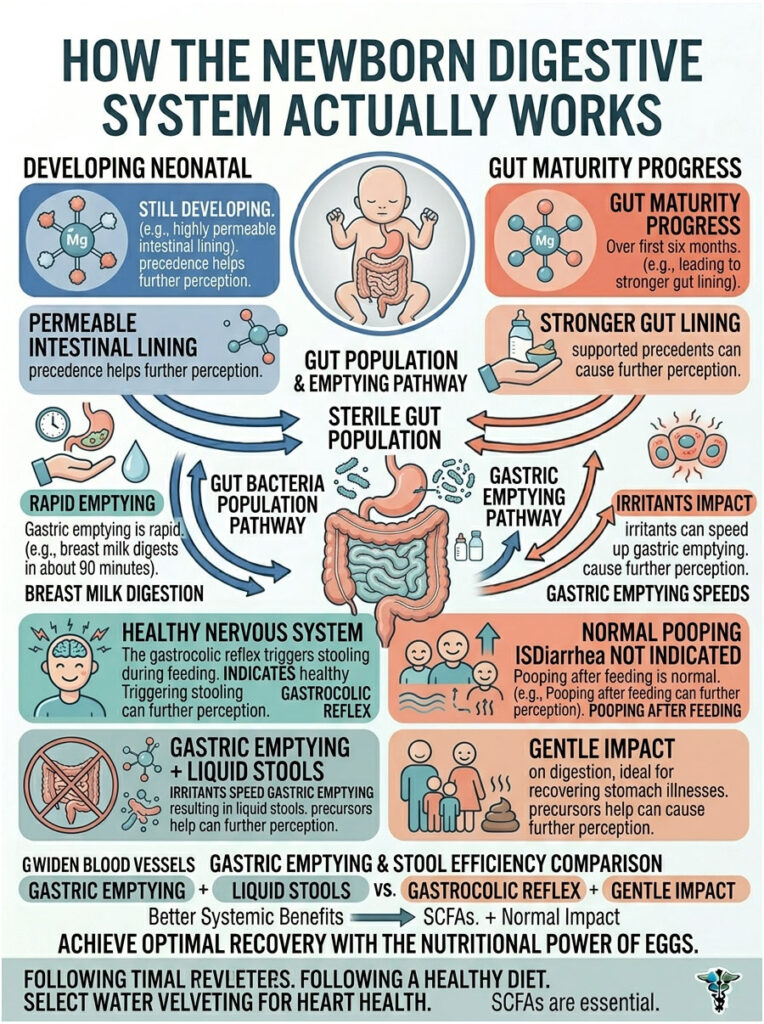
Gas, burping, spit-up, and reflux
Gas is common because newborns may swallow air while crying, feeding, or changing from breast to bottle. Their digestive muscles are also immature. A baby may grunt, draw up the legs, or strain while passing normal soft stool.
Burping during and after a feed may help some babies. Hold the baby upright and gently pat or rub the back. Not every baby burps every time, and forcing a burp can make a baby more upset.
Spit-up is the easy flow of milk from the stomach into the mouth. It is common when the muscle at the top of the stomach is still developing. Small amounts after feeds are usually harmless if the baby is comfortable and gaining weight.
Helpful steps include:
• Keep the baby upright for about 20 to 30 minutes after feeding.
• Offer smaller, more frequent feeds if advised by a clinician.
• Avoid tight clothing or pressure on the belly.
• Check bottle flow if the baby gulps, coughs, or swallows a lot of air.
• Always place the baby flat on the back for sleep.
Do not use sleep positioners, inclined sleepers, or stomach sleeping to manage reflux. Safe sleep guidance from the American Academy of Pediatrics recommends a firm, flat sleep surface with no loose bedding.
Seek urgent care for green or bloody vomit, forceful vomiting, breathing trouble, a swollen abdomen, dehydration, or poor feeding. Projectile vomiting in a young infant needs prompt medical assessment.

Gut bacteria and early immune development
The newborn gut microbiome is a community of bacteria and other microbes. It changes quickly during the first months of life. This microbiome helps break down certain food components and interacts with the developing immune system.
Breast milk supports bacteria such as Bifidobacteria through its natural oligosaccharides. Formula-fed babies also develop a normal microbiome, although its pattern may differ. These differences do not mean that one baby is healthy and another is not.
Antibiotics can alter gut bacteria. They can be essential and life-saving, but they should be used only when prescribed. Parents should not give leftover antibiotics or stop a prescribed course without medical advice.
Newborn digestion and gastrointestinal development are influenced by many factors, including:
• Gestational age at birth
• Birth method
• Human milk or formula feeding
• Antibiotic exposure
• Family health history
• Infection or medical conditions
• Growth and feeding difficulties
Research on probiotics is still developing. Some products may help specific problems in certain infants, but products differ by strain and dose. Ask a pediatrician before giving a probiotic to a newborn, especially if the baby was premature or medically fragile.

How digestion develops during the first year
Newborn digestion and gastrointestinal development continue well beyond the first weeks. The gut becomes better at moving food, absorbing nutrients, and managing a wider range of textures.
A simple timeline looks like this:
- During the first days, the baby passes meconium and shifts to milk stools.
- During the first month, feeding patterns and stomach capacity become more stable.
- Around 4 to 6 months, many babies show readiness for complementary foods, but readiness is individual.
- Around 6 months, solid foods may be introduced while breast milk or formula remains the main source of nutrition.
- Between 6 and 12 months, the baby learns to manage thicker textures, new flavors, and finger foods.
Signs of readiness for solid foods may include sitting with support, good head control, bringing objects to the mouth, and reduced tongue-thrusting. A baby should not begin solids only because of age, large appetite, or pressure from family members.
Introduce one new food at a time when practical. Common allergens such as peanut and egg may be introduced in safe forms when the baby is developmentally ready, unless a clinician recommends another plan. Early introduction may reduce allergy risk for some children, but families should seek advice when the baby has severe eczema, an existing food allergy, or another risk factor.
Avoid honey before 12 months because of the risk of infant botulism. Avoid cow’s milk as the main drink before 12 months, choking hazards such as whole grapes and nuts, and foods with high added sugar or salt.
Supporting healthy newborn digestion at home
Parents cannot rush newborn digestion and gastrointestinal development, but they can support it with calm, safe routines. Feeding should be responsive rather than forced. Watch the baby, not just the clock.
Practical habits include:
• Feed when the baby shows early hunger cues, such as stirring, rooting, or bringing hands to the mouth.
• Pause when the baby shows fullness cues.
• Keep feeding equipment clean.
• Track wet diapers and feeding concerns when the baby is very young.
• Follow weight checks recommended by the pediatrician.
• Hold and comfort the baby during feeds.
• Ask for lactation or feeding support early if feeding hurts or feels difficult.
A useful lesson shared by many newborn nurses and feeding specialists is that small changes matter. A slower bottle nipple, better latch, or more upright position can sometimes reduce swallowed air. However, persistent symptoms should not be treated only with home remedies.
Avoid gripe water, herbal products, thickened feeds, or over-the-counter acid medicines unless a pediatric clinician recommends them. “Natural” does not always mean safe for a newborn, and some products have limited evidence or inconsistent ingredients.
When newborn digestive problems need medical care
Most newborn digestive symptoms are mild, but newborns can become ill quickly. A parent’s concern deserves attention, especially when feeding or behavior changes suddenly.
Contact a pediatrician about poor feeding, fewer wet diapers, slow weight gain, ongoing diarrhea, constipation with pain, or frequent vomiting. A newborn younger than 3 months with a rectal temperature of 100.4°F (38°C) or higher needs urgent medical advice.
Emergency signs include:
• Trouble breathing or blue lips
• Extreme sleepiness or difficulty waking
• Green vomit or blood in vomit
• A firm or greatly swollen belly
• Signs of dehydration, such as very few wet diapers, a dry mouth, or no tears when crying
• Blood in the stool
• Repeated forceful vomiting
• Yellow skin that is worsening or spreading after the early newborn period
Health professionals may assess feeding technique, hydration, weight gain, stool appearance, allergies, infection, reflux, or less common conditions. A symptom such as crying after feeds can have many causes, so diagnosis should not rely on a single sign.
A practical way to monitor digestion
A short record can help parents and clinicians see patterns. For the first weeks, note feeding times, wet diapers, stools, vomiting or spit-up, and unusual behavior.
Do not measure every detail forever. A simple record for a few days is often enough to show whether a concern is linked to feed size, bottle flow, time of day, or stool changes.
When speaking with a clinician, share:
• The baby’s age and birth history
• Breast milk, formula, or both
• Typical feeding amounts and frequency
• Number of wet diapers
• Stool color and texture
• Vomiting details, including color and force
• Any fever, rash, breathing change, or poor weight gain
This information makes care more accurate and can prevent unnecessary formula changes or medicines. It also helps families feel more in control during a tiring stage.
Frequently Asked Questions About Newborn Digestion and Gastrointestinal Development
How long does newborn digestion take to mature?
Newborn digestion improves quickly during the first months, but gastrointestinal development continues throughout the first year and beyond. Feeding skills, gut movement, stool patterns, and tolerance of textures develop at different rates.
Is gas normal in a newborn?
Yes, gas is common because babies swallow air and have immature digestive muscles. Seek medical advice if gas comes with poor feeding, repeated vomiting, a swollen belly, blood in the stool, fever, or poor growth.
How often should a newborn poop?
There is a wide normal range. Many breastfed babies stool several times a day early on, while some older newborns may stool less often; soft stool, good feeding, wet diapers, and normal growth are important signs.
What does newborn spit-up mean?
Small, effortless amounts of milk coming back up are often normal reflux. Forceful vomiting, green vomit, bloody vomit, dehydration, breathing problems, or poor weight gain requires prompt medical evaluation.
Can I give water to a newborn?
Newborns usually do not need extra water because breast milk or properly prepared formula provides needed fluid. Do not give water unless a pediatric clinician specifically advises it.
When can a baby start solid foods?
Many babies are ready around 6 months, when they can sit with support, control their head, bring food to the mouth, and swallow rather than push food out. Breast milk or formula remains the main nutrition source during the early stage of solids.
Should I change formula because my baby is fussy?
Not usually without guidance. Fussiness has many possible causes, and frequent formula changes may make it harder to identify the real problem; discuss ongoing symptoms with a pediatrician.
Conclusion
Newborn digestion and gastrointestinal development are gradual processes shaped by feeding, growth, gut microbes, and the steady maturation of the stomach and intestines. Small spit-ups, gas, and changing stools are often normal, but color changes, dehydration, forceful vomiting, blood, fever, or poor feeding need medical attention.
Feed responsively, follow safe preparation and sleep practices, track concerns briefly, and trust your observations. Use reliable guidance from your pediatrician, and explore trusted newborn feeding resources or share your questions with a qualified health professional.