Baby sun safety tips are simple: shade, clothing, and sunscreen protect delicate skin best.
As a parent or caregiver, I’ve learned that baby sun safety tips are not just about avoiding sunburn. They are about protecting a baby’s thin, sensitive skin, keeping them cool, and making outdoor time feel calm and safe. In this guide, I’ll walk you through practical baby sun safety tips that work in real life, from stroller shade and the right clothes to sunscreen rules, timing, and common mistakes to avoid.
Why baby sun safety matters
Babies have skin that is much more delicate than adult skin. Their bodies also overheat faster, which means sun exposure can become a safety issue even on days that feel only “warm” and not extreme.
In my experience, the biggest mistake new parents make is thinking a short walk or a cloudy day is harmless. UV rays can still reach a baby’s skin through clouds, and reflected light from water, sand, pavement, and even snow can make exposure worse. That is why baby sun safety tips should be part of every outdoor plan, even for quick errands.
The goal is not to keep babies indoors all the time. The goal is to build a few easy habits that lower risk and make family time outside more comfortable.
How babies are affected by sun exposure
Baby skin is thinner than adult skin, so it burns more easily. Babies also cannot tell you when they are getting too hot, and they may not show clear signs until they are already uncomfortable.
A sunburn in infancy is more than a temporary red patch. It can lead to pain, fussiness, peeling skin, and dehydration if the baby also gets overheated. Over time, repeated sun damage is linked to a higher risk of skin problems later in life, which is why baby sun safety tips matter from the start.
Here are the main risks to keep in mind:
- Sunburn can happen fast, even with short exposure.
- Heat stress can build before you notice it.
- UV exposure can affect any skin tone, though burns may appear differently.
- Eyes can also be sensitive to bright sunlight.
Best baby sun safety tips for everyday protection
The safest plan uses layers of protection instead of relying on just one thing. Think of it like building a little shield around your baby.
1. Use shade first
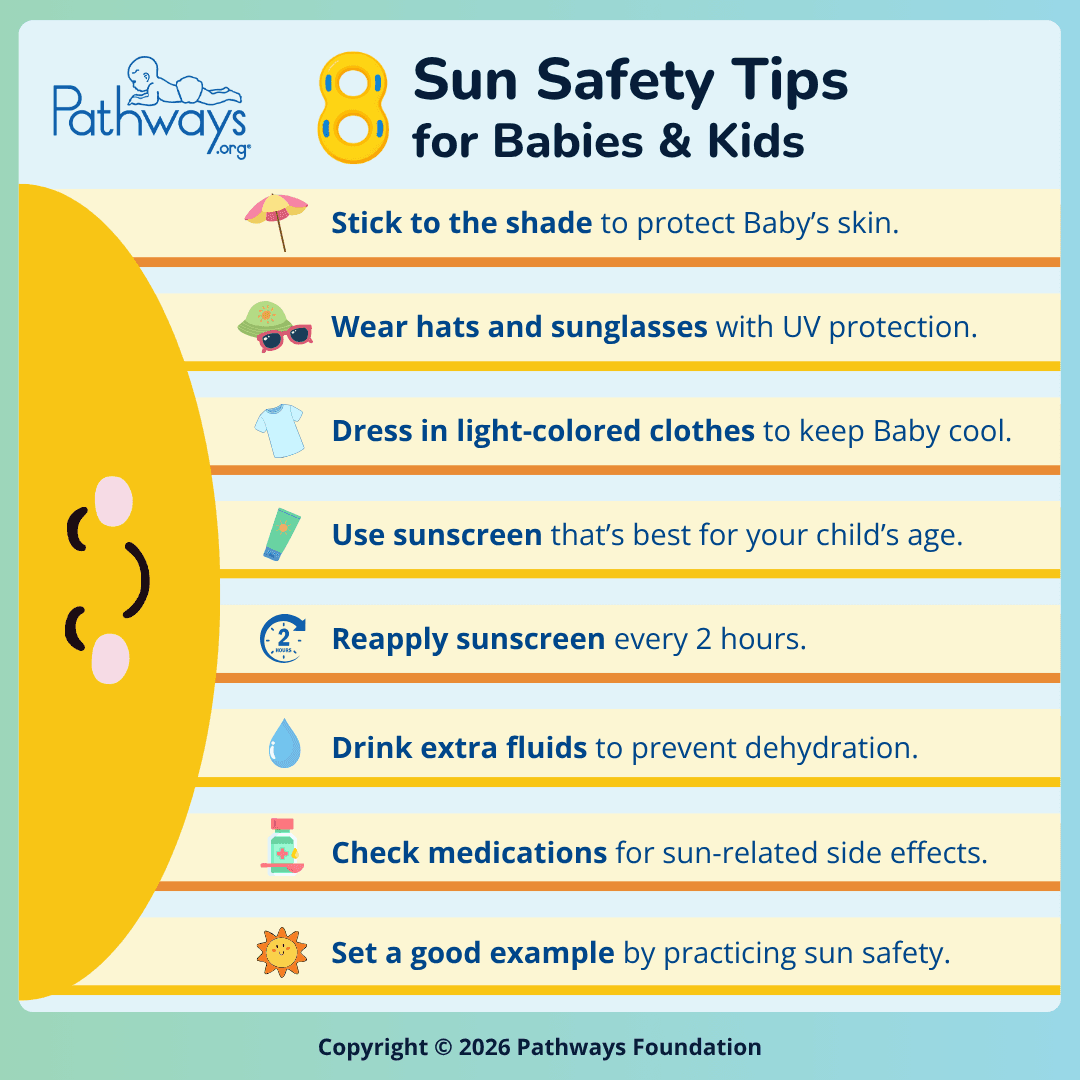
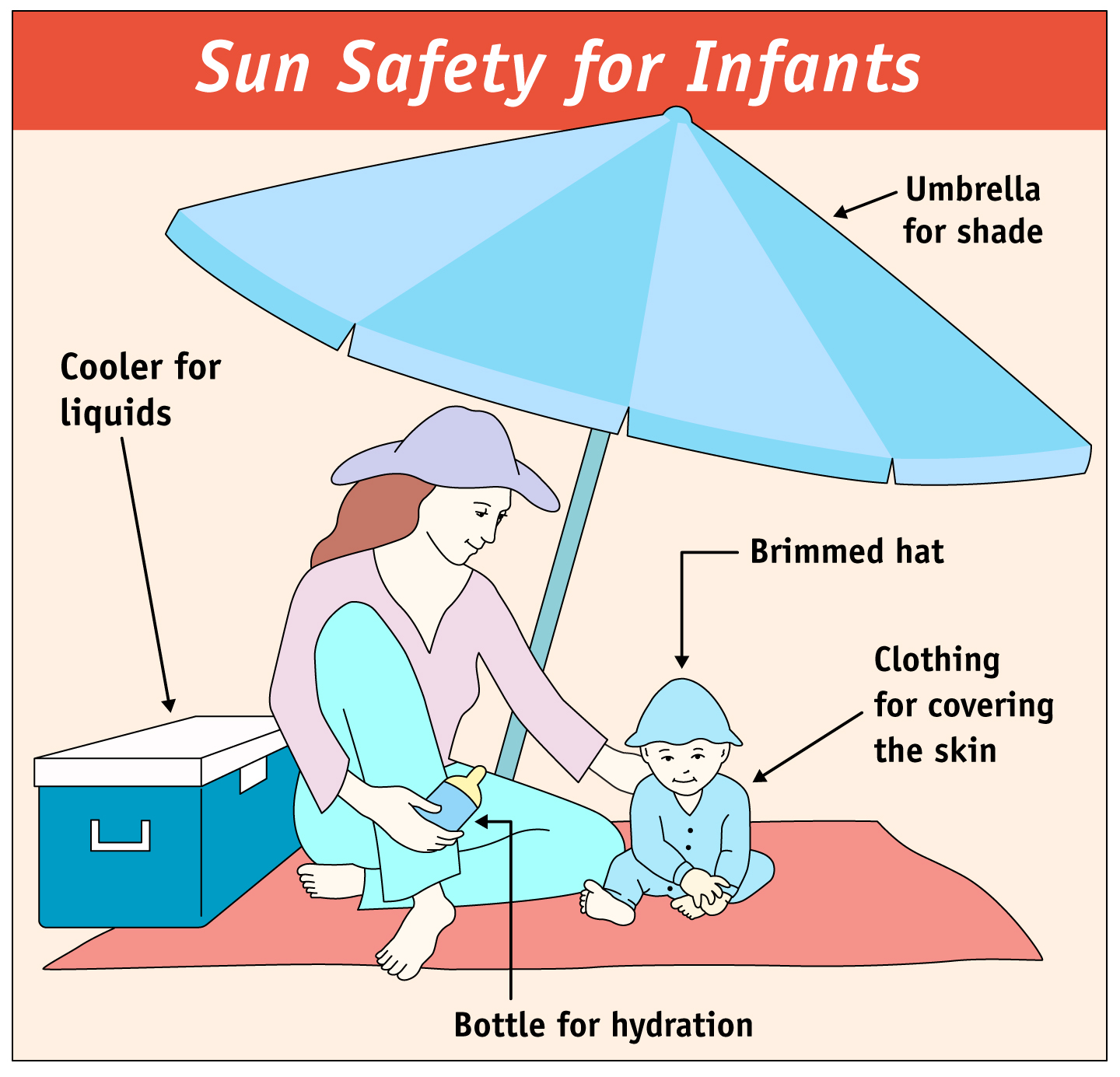
Shade should be your first line of defense. A tree, umbrella, stroller canopy, or pop-up shade can lower direct exposure and help keep your baby cooler.
I always tell parents to treat shade like the main ingredient and everything else like support. If the shade disappears, the risk rises quickly. On hot days, I’ve seen babies get cranky much sooner when the stroller was parked in direct sun, even for just a few minutes.
Good shade habits include:
- Choosing shaded paths for walks
- Using a wide stroller canopy
- Parking strollers away from direct afternoon sun
- Setting up under a tree, tent, or umbrella at the beach or park
2. Dress your baby in protective clothing
Clothing is one of the easiest baby sun safety tips to use every day. Light, breathable fabrics can help cover the skin without making the baby too hot.
Long sleeves and long pants may sound warm, but lightweight cotton or UPF-rated clothing can be very comfortable. Look for clothes that are loose, soft, and light in color if the weather is hot.
Helpful clothing choices include:
- Long-sleeve tops made from breathable fabric
- Pants or rompers that cover the legs
- Wide-brimmed hats that shade the face, ears, and neck
- Sunglasses made for babies or toddlers when approved by the manufacturer
3. Choose the right hat
A hat can make a huge difference. The best baby sun safety tips always include head coverage because the face, scalp, ears, and neck are common burn spots.
A wide-brimmed hat is better than a cap because it offers more coverage. Make sure it fits well, stays on securely, and does not block your baby’s vision.
4. Use sunscreen correctly
Sunscreen is helpful, but it should be used properly. For babies under 6 months, many experts recommend avoiding direct sun rather than relying on sunscreen as the main protection. For older babies, a broad-spectrum, water-resistant sunscreen with SPF 30 or higher is usually recommended.
Apply sunscreen to small exposed areas such as the face, ears, hands, and feet if clothing and shade do not fully cover them. Use enough to create a thin, even layer, and reapply as directed, especially after sweating or water play.
A few practical sunscreen tips I’ve learned:
- Test a small area first if your baby has sensitive skin
- Apply 15 minutes before going outside
- Don’t forget the tops of ears and the back of the neck
- Use mineral sunscreens with zinc oxide or titanium dioxide if your child’s skin reacts easily
5. Avoid peak sun hours when possible
One of the smartest baby sun safety tips is timing. UV rays are usually strongest between late morning and midafternoon, so shorter outdoor trips in the early morning or later afternoon are often easier on babies.
This is not always possible, and that is okay. If you must be outside during peak hours, use layered protection and keep outings brief.
6. Keep your baby cool and hydrated
Sun safety and heat safety go together. Babies can overheat quickly, especially in a stroller, car seat, or carrier.
Offer frequent feeds if your baby is breastfed or formula-fed. For older babies who have started solids, offer small sips of water if your pediatrician says it is appropriate. Also check the back of the neck or chest to see if your baby feels too warm.
Signs your baby may be overheating include:
- Flushed skin
- Fussiness
- Rapid breathing
- Damp hair or sweating
- Unusual sleepiness
7. Be extra careful around reflective surfaces
Water, sand, concrete, and snow can bounce sunlight back onto the skin. That means a baby can still get too much sun even in the shade.
I learned this the hard way during a beach day. The stroller was under an umbrella, but the reflected light still made my baby’s cheeks pink by afternoon. Since then, I’ve treated reflective surfaces as a hidden risk and added extra coverage every time.
Baby sun safety tips for newborns and young infants
Newborns need special care because their skin is especially sensitive. For babies under 6 months, the best strategy is usually to avoid direct sun as much as possible.
Here is what works best:
- Keep newborns in full shade when outdoors
- Use stroller covers or canopies that allow airflow
- Dress them in lightweight, full-coverage clothing
- Use hats with neck coverage
- Keep outings short and planned
If sunscreen is being considered for a very young infant, check with your pediatrician first. In general, physical protection is preferred for this age group.
Baby sun safety tips for the beach, pool, and park
Outdoor fun is part of childhood, and it does not have to stop because of sun safety. The trick is to prepare a little more when you know exposure will be longer.
For the beach or pool:
- Bring a shade tent or umbrella
- Use water-resistant sunscreen on exposed skin
- Reapply sunscreen after swimming or wiping with a towel
- Choose UV-protective clothing that dries quickly
- Keep drinks and feeds close by
For the park:
- Plan for a shaded picnic spot
- Bring a hat that stays on
- Use a stroller shade if your baby naps outside
- Take breaks indoors or in the car with climate control if needed
Common mistakes parents make with baby sun safety
I’ve seen a few recurring mistakes over the years, and most are easy to fix once you notice them.
Relying on clouds
Cloud cover can be misleading. UV rays can still pass through, so cloudy weather is not a free pass.
Forgetting ears, feet, and the back of the neck
These areas get missed often. They burn quickly because they are small and easy to overlook.
Using too little sunscreen
A tiny dab is not enough. You need even coverage on all exposed skin.
Thinking shade means zero risk
Shade reduces exposure, but it does not always block all UV rays. Clothing, hats, and sunscreen still matter.
Leaving babies in hot strollers or cars
A stroller in the sun can become hot fast. A parked car is never safe for a baby, even for a few minutes.
How to build a simple baby sun safety routine
A routine makes safety easier. You do not need a perfect system; you just need one that is easy to repeat.
Try this simple checklist before going outside:
- Check the weather and UV index if available.
- Choose shade or a shorter outing time.
- Dress your baby in protective clothing.
- Add a hat.
- Apply sunscreen to exposed skin if age-appropriate.
- Bring water or feeds, plus extra layers if the temperature changes.
- Recheck your baby often for heat or discomfort.
The best baby sun safety tips are the ones you can follow without stress. If a routine feels too complicated, simplify it until it fits your family life.
When to call a doctor
Most mild sun exposure can be managed at home, but some signs need medical attention. If your baby has severe redness, blisters, fever, unusual sleepiness, vomiting, or signs of dehydration, contact a healthcare professional right away.
You should also reach out if your baby seems very hard to wake, has trouble breathing, or shows signs of heat illness. With babies, it is always better to be cautious.
Frequently Asked Questions of baby sun safety tips
Can babies go outside in the sun at all?
Yes, babies can go outside as long as they are well protected. Shade, clothing, and limited exposure time are the safest approach, especially for babies under 6 months.
Is sunscreen safe for babies?
For babies under 6 months, many experts prefer avoiding direct sun rather than using sunscreen as the main defense. For older babies, use a broad-spectrum sunscreen and follow the label directions, but check with your pediatrician if your child has sensitive skin.
What is the best hat for baby sun protection?
A wide-brimmed hat is usually best because it shades the face, ears, and neck. Look for a soft, secure fit so it stays on without bothering your baby.
Do cloudy days still need baby sun safety tips?
Yes, they do. UV rays can still reach your baby’s skin on cloudy days, so shade and clothing still matter. Many sunburns happen when parents underestimate overcast weather.
How do I know if my baby is too hot?
Watch for flushed skin, fussiness, rapid breathing, sweating, or unusual sleepiness. If your baby seems too warm, move to shade or a cool place and offer feeds right away.
Conclusion
Baby sun safety tips are not complicated, but they do need to be consistent. Shade, protective clothing, a good hat, age-appropriate sunscreen, and smart timing can make a real difference in keeping your baby safe and comfortable outdoors.
The most helpful mindset is simple: protect early, check often, and adjust as needed. If you make these habits part of your routine, outdoor time can stay joyful instead of stressful. Take what fits your family, put it into practice, and keep learning as your baby grows.