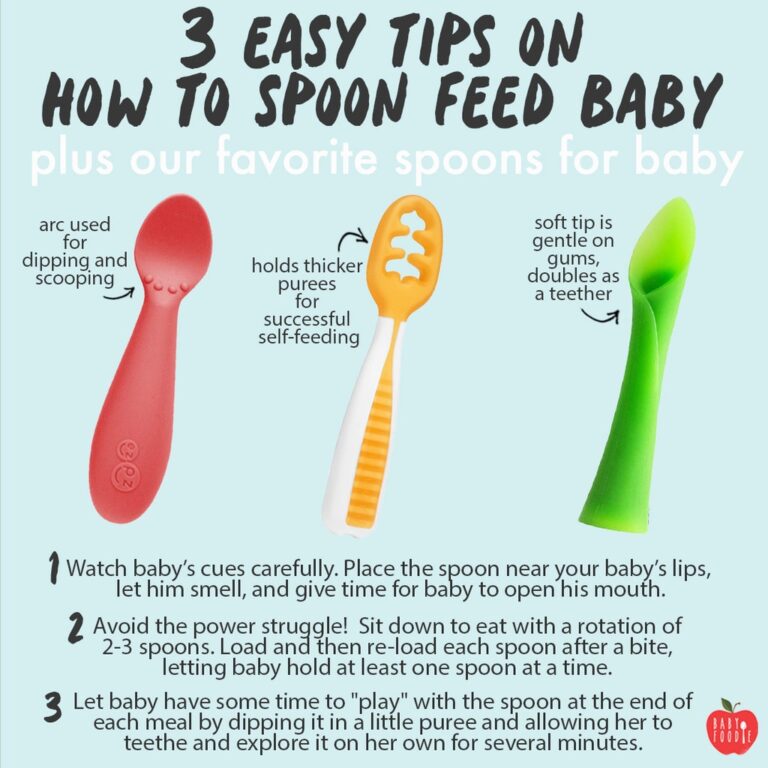
Newborn oral-motor feeding development helps babies coordinate sucking, swallowing, breathing, and early feeding skills.
Newborn oral-motor feeding development is a step-by-step process, not a race. A baby must learn to control the lips, tongue, jaw, cheeks, and breathing pattern while taking milk safely. Understanding these early skills can help parents notice normal progress, support comfortable feeds, and seek help when something seems wrong.

What Is Newborn Oral-Motor Feeding Development?
Newborn oral-motor feeding development is the growth of the movements needed for breast or bottle feeding. These movements include rooting, latching, sucking, swallowing, and breathing in a steady rhythm.
A newborn’s mouth works like a small team. The lips help create a seal. The tongue moves milk toward the back of the mouth. The jaw supports the suck. The baby must also pause to breathe.
Good feeding is more than “getting milk in.” It also includes comfort, safety, stamina, and the ability to stop when full. Newborn oral-motor feeding development changes quickly during the first weeks of life.
Most healthy full-term babies are born with feeding reflexes. Still, feeding is a learned skill. A baby may have the right reflexes but need time, support, and practice to use them well.

Key Oral-Motor Skills in the Newborn Period
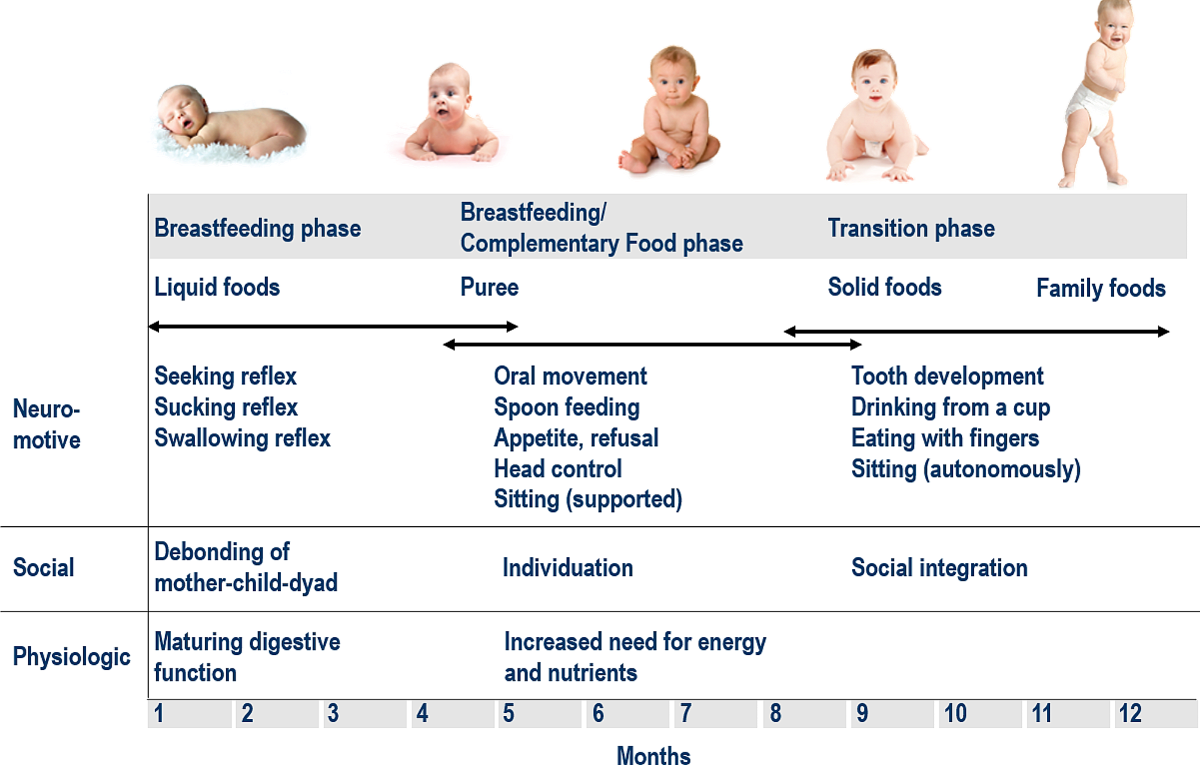
Newborn oral-motor feeding development depends on several reflexes and movements. Each one has a clear role during feeding.
Rooting
The rooting reflex helps a baby find the breast or bottle. When the cheek or corner of the mouth is touched, the baby may turn toward the touch and open the mouth.
Rooting is often strongest during the first few months. Hunger, tiredness, and illness can affect how strongly a baby roots.
Sucking
Sucking creates pressure that draws milk into the mouth. A mature suck has a steady pattern, with pauses that allow the baby to breathe.
Some babies suck in short bursts. Others take longer bursts with fewer pauses. What matters most is whether the baby stays comfortable, feeds safely, and gains weight.
Swallowing
Swallowing moves milk from the mouth into the throat and then the stomach. A safe swallow usually occurs without repeated coughing, choking, or distress.
Newborns are still learning how to control milk flow. A fast bottle nipple or a strong milk letdown can overwhelm a baby who is still developing this skill.
Breathing
A baby must coordinate sucking, swallowing, and breathing. This pattern is often called suck, swallow, breathe.
This rhythm is not always smooth at first. Newborn oral-motor feeding development includes learning when to pause, rest, and breathe without losing the latch.
Lip and Tongue Movement
The lips help the baby stay attached to the breast or bottle. The tongue helps shape the nipple and move milk backward.
A baby may have trouble feeding if the tongue has limited movement, the lips cannot seal well, or the jaw tires quickly. These concerns need an individual assessment rather than a quick guess.

Newborn Oral-Motor Feeding Development Milestones
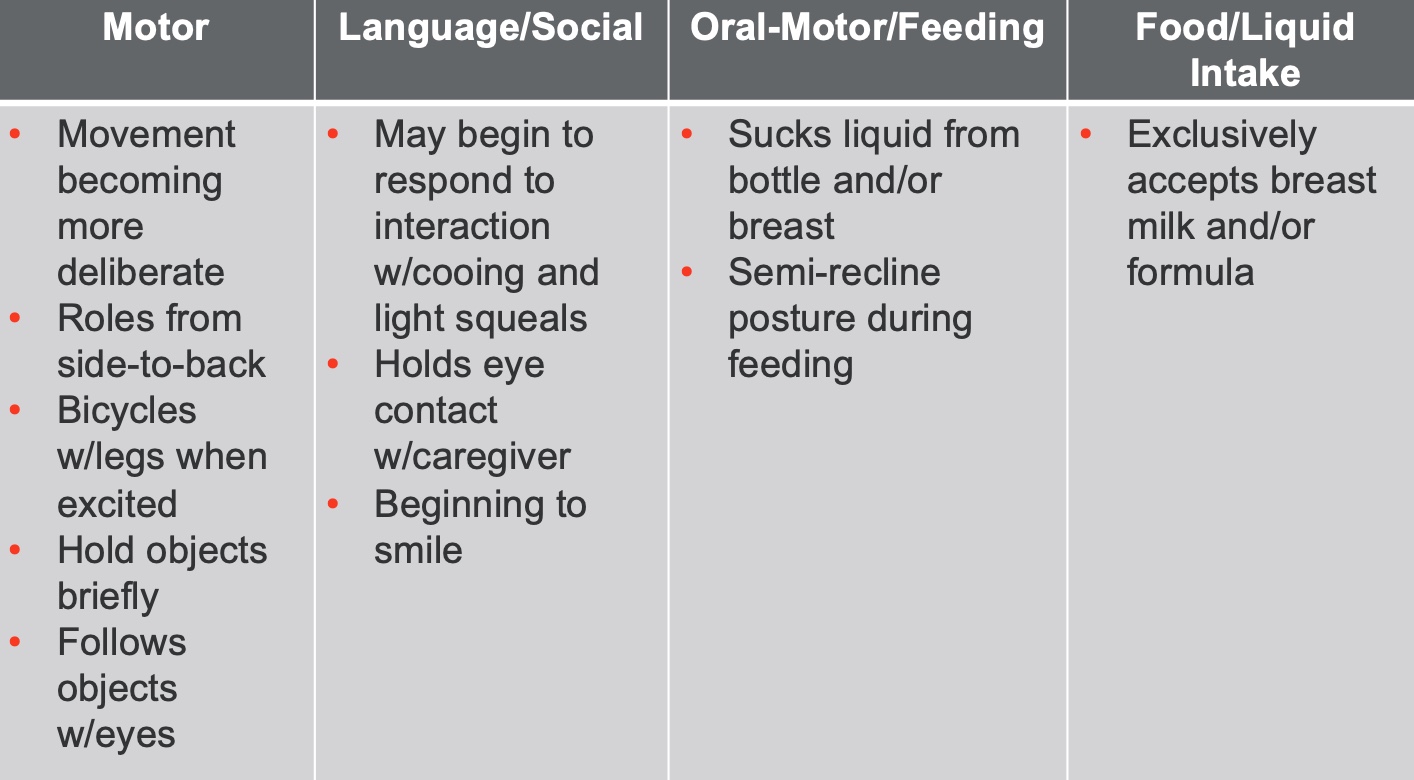
Every baby develops at a different pace. The milestones below are general patterns, not strict deadlines.
Birth to 1 Month
During the first month, many babies:
• Search for the breast or bottle when hungry
• Open the mouth during rooting
• Use a rhythmic suck for short periods
• Take frequent pauses
• Become tired during long feeds
• Need help with positioning and a deep latch
A newborn may feed eight to twelve times in 24 hours, though feeding patterns vary. The number of wet diapers, stool changes, weight gain, and overall behavior provide more useful information than one feed alone.
1 to 2 Months
During this period, many babies show more organized feeding. They may latch more quickly and maintain a steadier suck.
Some babies still need breaks. They may feed better in a quiet room with fewer sounds, lights, and movements. Newborn oral-motor feeding development can slow during growth spurts, illness, or periods of poor sleep.
2 to 3 Months
By this stage, many babies have better control of their lips, tongue, and jaw. Feeding may become shorter because the baby can transfer milk more efficiently.
This does not mean every feed should be fast. A baby who finishes quickly but coughs, gulps, or remains hungry may still need feeding support.
Preterm Babies
Premature babies may develop feeding skills more slowly because their breathing, muscle tone, and nervous system are still maturing. Some need tube feeding or special bottle support before they can safely take full feeds by mouth.
Corrected age is important when tracking newborn oral-motor feeding development in a preterm baby. A neonatal feeding specialist can help set realistic goals.
How Breastfeeding Supports Oral-Motor Skills
Breastfeeding gives a baby a flexible breast shape that changes with the mouth. The baby must use the tongue, lips, jaw, and cheeks to draw out milk.
A deep latch can support efficient milk transfer. Signs of a deep latch may include:
• The baby’s mouth opens wide
• More of the areola is visible above the upper lip than below the lower lip
• The chin touches or nearly touches the breast
• The lips turn outward
• The parent feels pulling rather than sharp pain
• The baby shows steady swallowing
Pain, clicking sounds, slipping off the breast, or very long feeds may suggest a latch or milk transfer concern. These signs do not prove one specific cause. A lactation professional, pediatrician, or feeding therapist can assess the full picture.
Strong milk flow can also affect newborn oral-motor feeding development. If the baby coughs or pulls away during letdown, a more upright position or brief pause may help. Ask a qualified professional before making major feeding changes.

How Bottle Feeding Supports Oral-Motor Skills
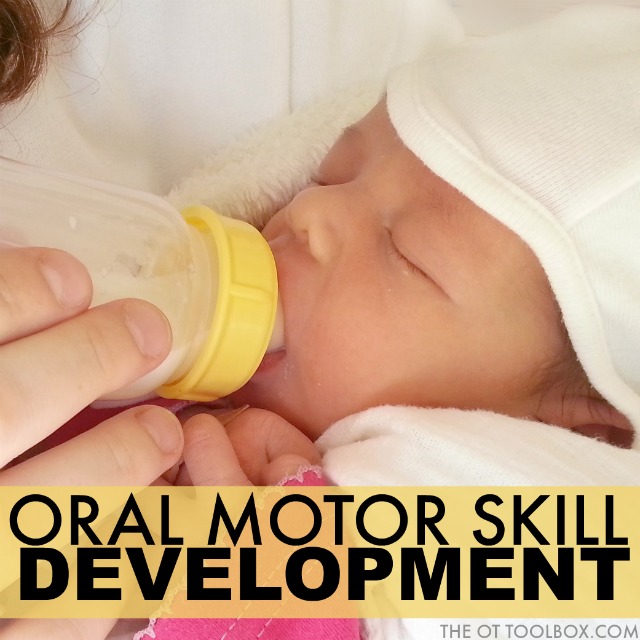
Bottle feeding also requires careful coordination. The nipple shape, flow rate, bottle angle, and feeding position can change how hard a baby must work.
Responsive bottle feeding can help protect newborn oral-motor feeding development. Helpful steps include:
-
Hold the baby in a supported, semi-upright position.
-
Keep the bottle more level instead of pointing it straight down.
-
Let the baby open the mouth and accept the nipple.
-
Watch for pauses and signs of stress.
-
Remove or lower the bottle when the baby needs a break.
-
Stop when the baby shows fullness, even if milk remains.
Signs that the bottle flow may be too fast include coughing, gulping, milk leaking from the mouth, wide eyes, or pulling away. A flow that is too slow may cause frustration, long feeds, or early fatigue.
Do not automatically switch to the fastest nipple. Faster flow is not always better. Newborn oral-motor feeding development is best supported by a nipple that matches the baby’s skill, breathing, and medical needs.
Signs of Healthy Feeding Progress
Healthy feeding can look different from baby to baby. Look for patterns over time rather than judging one difficult feed.
Common signs of progress include:
• The baby wakes for some feeds
• The baby latches or accepts the bottle
• Sucking becomes more organized
• Breathing remains comfortable
• The baby has regular wet diapers
• The baby relaxes after feeding
• Weight follows the expected growth pattern
• Feeding takes a reasonable amount of time for that baby
A baby may become sleepy after feeding, but extreme sleepiness during most feeds deserves attention. Newborn oral-motor feeding development should be considered alongside weight, hydration, alertness, and medical history.

Common Challenges That Affect Feeding
Many feeding problems have more than one cause. A baby may struggle because of oral skills, body position, milk flow, breathing, discomfort, or low energy.
Poor Latch or Seal
A shallow latch can cause pain and poor milk transfer. With bottle feeding, a weak lip seal may lead to leaking and extra effort.
Supportive positioning may help, but persistent problems need an evaluation. Do not assume that every latch problem is caused by a tongue-tie.
Fatigue
Newborns have small energy reserves. Premature babies, babies with heart or lung conditions, and babies with jaundice may tire quickly.
A tired baby may suck less, fall asleep, or need many pauses. Frequent fatigue can affect growth and should be discussed with the baby’s health care team.
Reflux and Discomfort
Spitting up is common in infants. However, pain, repeated arching, poor weight gain, or distress during feeds may signal a medical concern.
Reflux symptoms can look like an oral-motor problem. A pediatric evaluation can help separate feeding skill concerns from digestive or medical issues.
Oral Restrictions
Some babies have a tight frenulum under the tongue or lip. The effect varies widely. An oral structure should not be treated based on appearance alone.
A skilled assessment should examine tongue function, latch, milk transfer, parent comfort, and infant growth. Newborn oral-motor feeding development is about function, not just anatomy.
Sensory or Positioning Issues
Some babies become upset with certain positions, textures, or handling. A quiet space, steady support, and slower pace may help.
Never force a baby to continue feeding. Stress can make feeding less organized and may create negative associations.

Simple Ways to Support Newborn Oral-Motor Feeding Development
Parents do not need to perform complex mouth exercises with a healthy newborn. Safe, calm feeding support is usually more helpful.
Try these practical steps:
• Feed when the baby shows early hunger cues, such as hand-to-mouth movements, stirring, or lip smacking.
• Keep the baby’s head, neck, and body in a straight line.
• Support the shoulders and upper body without pressing on the back of the head.
• Give the baby time to open the mouth before offering the breast or bottle.
• Use slow pauses when the baby shows stress.
• Burp as needed, especially if the baby swallows extra air.
• Keep feeds calm and limit distractions.
• Track wet diapers and feeding patterns when advised by the pediatrician.
• Follow weight checks for babies with feeding concerns.
One lesson often shared by feeding specialists is that “more effort” does not always mean better development. A baby who works very hard for every ounce may need a slower plan, a different position, or professional support.
Avoid putting fingers, pacifiers, or objects in a newborn’s mouth to “strengthen” the mouth unless a qualified clinician recommends it. Some exercises can cause stress or interfere with feeding.
When to Seek Feeding Help
Contact a pediatrician or feeding professional if a baby has repeated difficulty feeding. Early support can prevent a small concern from becoming a larger one.
Seek prompt medical advice if the baby:
• Coughs, chokes, or turns blue during feeds
• Has noisy, labored, or irregular breathing
• Sweats during feeding
• Takes most feeds for an unusually long time
• Has fewer wet diapers than expected
• Loses weight or does not gain as expected
• Frequently refuses the breast or bottle
• Has repeated vomiting
• Becomes too sleepy to feed
• Shows signs of dehydration
Breathing trouble, blue or gray lips, severe weakness, or unresponsiveness requires emergency care. Feeding concerns should never be managed by changing formula, nipple flow, or feeding position alone when serious symptoms are present.
A feeding team may include a pediatrician, lactation consultant, speech-language pathologist, occupational therapist, nurse, or registered dietitian. The right professional depends on the concern and the baby’s medical needs.
How Professionals Assess Feeding Skills
A feeding evaluation looks at the whole feeding process. It does not focus on the mouth alone.
A clinician may observe:
• Alertness before and during the feed
• Breathing and color
• Oral reflexes
• Lip seal and tongue movement
• Suck strength and rhythm
• Swallowing sounds
• Coughing or stress signals
• Feeding position
• Milk flow
• Amount taken and time needed
• Weight and hydration
In some cases, a specialist may recommend an instrumental swallow study. This test can show whether milk enters the airway. It is not needed for every baby, and the decision should be based on symptoms and clinical findings.
Newborn oral-motor feeding development is complex. A short office observation may not show every issue, so caregivers should describe what happens during feeds at home.
Common Mistakes to Avoid
Well-meaning advice can sometimes make feeding harder. Avoid these common mistakes:
Waiting for Crying
Crying is a late hunger cue. A very upset baby may have trouble organizing the mouth and body for feeding.
Offer the breast or bottle when early cues appear. This can make the start of the feed calmer.
Pushing the Nipple Into the Mouth
Forcing a nipple can cause gagging, refusal, or stress. Touch the nipple to the lips and allow the baby to open.
Chasing a Set Amount
Babies do not all take the same amount at every feed. Growth, age, milk type, and feeding method affect intake.
Use medical guidance for intake goals. Also watch the baby’s cues and growth rather than forcing the last ounce.
Changing Equipment Often
Frequent bottle or nipple changes can make it hard to understand what helps. Change one factor at a time when possible and ask a professional for guidance.
Treating Internet Advice as a Diagnosis
Online videos and parent groups can offer useful ideas, but they cannot assess breathing, swallowing, growth, or anatomy. Use them for questions, not final answers.
Research-Based Perspective and Limits
Infant feeding research supports responsive feeding, safe positioning, careful observation, and early evaluation of swallowing concerns. Professional groups in pediatrics, lactation, speech-language pathology, and neonatal care all stress that feeding plans should match the individual baby.
Research also has limits. Babies differ by age, health, birth history, culture, feeding method, and family goals. A finding from a premature infant may not apply to a healthy full-term baby.
There is no single timeline that predicts every child’s newborn oral-motor feeding development. Growth and feeding should be reviewed together. If advice conflicts, ask the baby’s pediatric health care team to explain the reason for each recommendation.
Frequently Asked Questions About Newborn Oral-Motor Feeding Development
What is normal newborn oral-motor feeding development?
Normal development includes rooting, sucking, swallowing, breathing pauses, and gradual improvement in feeding control. Babies may still need frequent breaks, and feeding speed can vary.
How can I tell if my newborn is feeding safely?
A baby should maintain comfortable breathing and color while feeding. Repeated coughing, choking, wet breathing, blue color, or extreme fatigue needs prompt medical advice.
Does a clicking sound always mean a tongue-tie?
No. Clicking can happen when a baby loses the seal, struggles with positioning, or manages a fast milk flow. A trained professional should assess function before linking the sound to an oral restriction.
Should I use oral-motor exercises with my newborn?
Do not start mouth exercises without guidance. Healthy newborns usually benefit more from calm, responsive feeding than from routine exercises.
How long should a newborn feed?
There is no single correct length. A feed that is consistently very long, exhausting, painful, or linked with poor weight gain should be assessed.
Can bottle feeding affect oral-motor development?
Bottle feeding can support normal oral-motor skills when the nipple flow, position, and pace suit the baby. A very fast flow may make breathing and swallowing harder.
When should I call a feeding specialist?
Call when feeding remains painful, stressful, inefficient, or unsafe, or when weight gain is a concern. Early help can support both the baby and the caregiver.
Conclusion
Newborn oral-motor feeding development involves much more than sucking. Babies must learn to coordinate the lips, tongue, jaw, swallowing, and breathing while staying calm and comfortable.
Support this process with good positioning, responsive pacing, early hunger cues, and close attention to breathing and growth. If feeding feels stressful or unsafe, contact a pediatrician or qualified feeding professional rather than trying to solve the issue alone.
Small changes can make a big difference. Keep learning, trust your observations, and seek expert guidance when needed. Explore trusted infant-feeding resources, discuss concerns at well-baby visits, and share your feeding questions with your health care team.