Newborn language exposure and early communication begin with warm voices, eye contact, and responsive everyday interactions.
Newborn language exposure and early communication shape the first steps toward listening, bonding, and later speech. Babies do not need lessons, flashcards, or perfect words. They need people who talk, sing, pause, listen, and respond.
As a child development writer, I see this topic misunderstood often. Early communication is less about teaching a newborn to talk and more about building a safe, steady exchange. This guide explains how language develops, what parents can do each day, how multilingual homes support babies, and when to seek extra help.
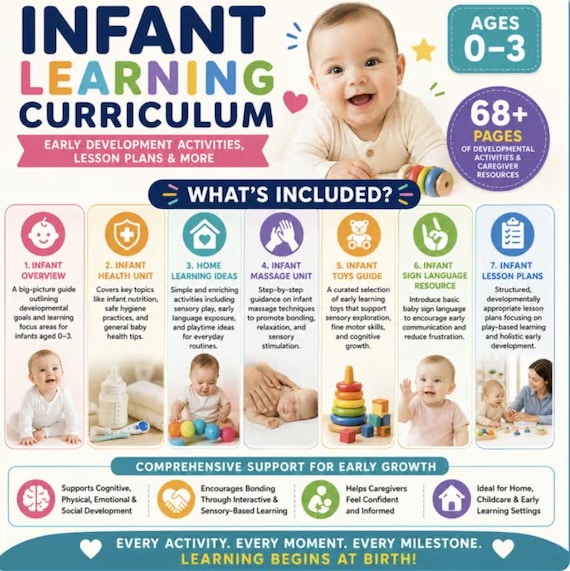
What newborn language exposure and early communication mean
Newborn language exposure is the sound of spoken language that a baby hears during daily life. It includes talking, singing, reading, family conversations, and the natural rhythm of a home. Early communication includes more than words. It also involves crying, eye contact, facial expressions, body movements, cooing, and turn-taking.
A newborn may not understand the meaning of “milk” or “diaper” yet. Still, the baby learns important patterns. These patterns include voice tone, speech rhythm, pauses, and the emotional meaning of a familiar voice.
Think of early communication as building a bridge. At first, the bridge is made of sounds and looks. Over time, it supports gestures, babbles, words, and simple conversations.
Newborn language exposure and early communication do not require constant talking. Quality matters, but simple and regular contact matters most. A calm sentence during a diaper change can be just as useful as a planned reading session.
How a newborn’s brain responds to language
A newborn’s brain is ready to notice human voices from the start. Babies often prefer familiar voices, especially the voice they heard most during pregnancy. They also respond to changes in pitch, rhythm, and volume.
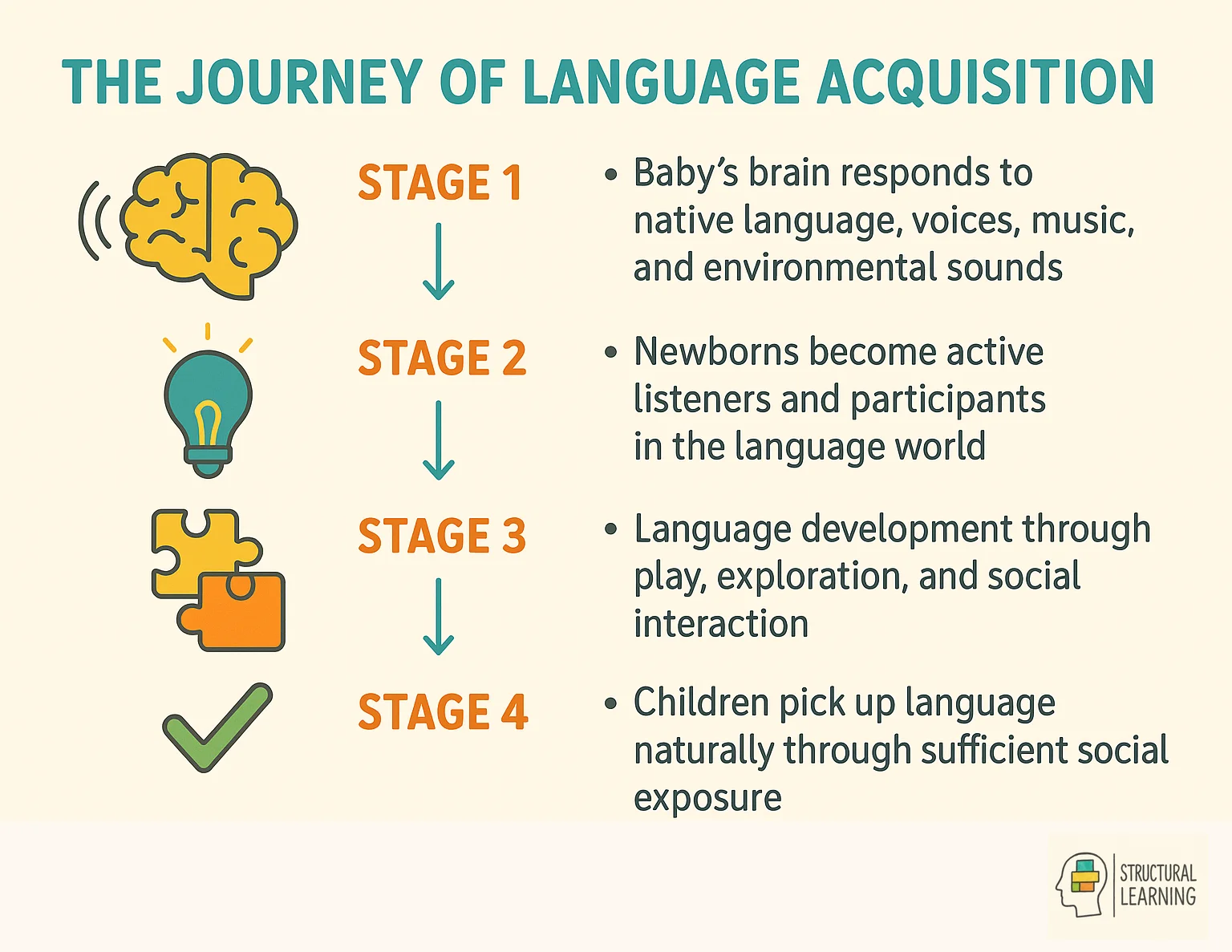
Research on infant development shows that babies learn through repeated social exchanges. A caregiver speaks, the baby looks or moves, and the caregiver responds. This back-and-forth helps the infant connect sounds with people, comfort, and meaning.
Newborns do not learn language through sound alone. They also watch faces and mouths. When you speak close to your baby, your facial expression and voice provide two linked signals.
Newborn language exposure and early communication may support:
• Listening skills and sound awareness
• Secure attachment and emotional comfort
• Early turn-taking
• Recognition of familiar voices
• Interest in faces and social interaction
• Later understanding of words and gestures
These benefits do not mean that more speech is always better. A baby also needs sleep, quiet, feeding breaks, and time to look around without pressure.
The stages of early communication
Every baby develops at a different pace. Developmental milestones offer helpful guideposts, not strict deadlines. Premature birth, hearing differences, medical conditions, and individual temperament can affect the timing of early skills.
Birth to 2 months
A newborn may:
• Startle or quiet after hearing a sound
• Turn toward a familiar voice
• Watch a caregiver’s face
• Make small sounds besides crying
• Use different cries for different needs
• Calm when held, spoken to, or gently sung to
At this stage, your baby may seem to listen more than respond. That listening is still active learning.
Around 2 to 4 months
Many babies begin to:
• Smile in response to a person
• Coo or make vowel-like sounds
• Watch a speaker’s mouth
• Respond to changes in voice tone
• Make sounds to gain attention
• Enjoy simple songs and repeated phrases
Pause after you speak. Your baby may answer with a look, movement, smile, or sound.
Around 4 to 6 months
Babies often become more vocal. They may laugh, squeal, make longer sounds, and experiment with pitch. They may also show more interest in familiar words and routines.
At this point, newborn language exposure and early communication become a lively exchange. Your baby may vocalize, you respond, and the baby vocalizes again. This is an early form of conversation.
Around 6 to 12 months
Many babies begin babbling with sounds such as “ba,” “da,” or “ma.” They may respond to their name, use gestures, imitate sounds, and understand a few familiar words.
Not every early sound is a word. A repeated sound may become meaningful when your baby uses it in the same situation. For example, a sound used while reaching for a bottle may become part of the baby’s personal communication system.
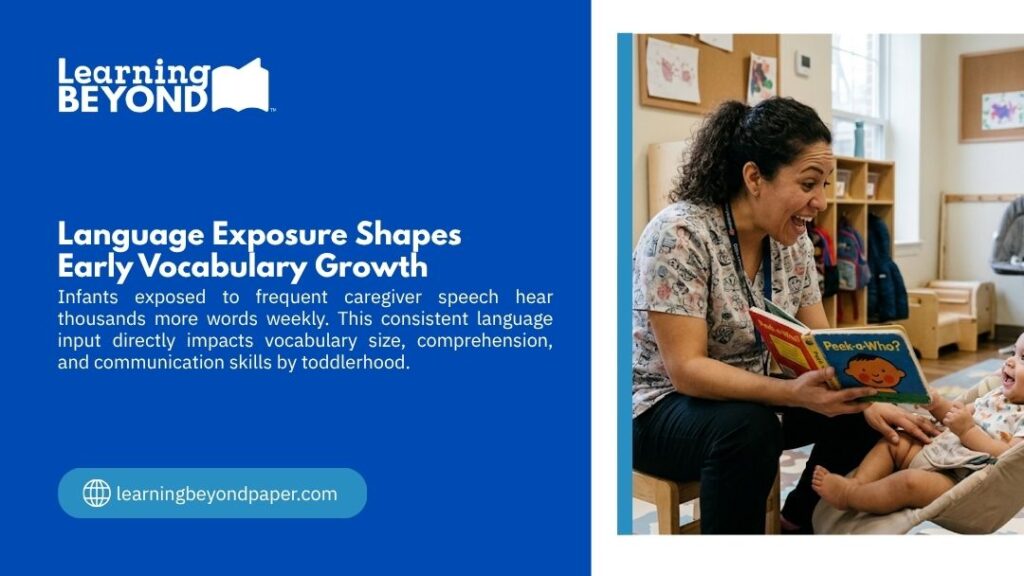
The best ways to support newborn language exposure
The strongest language activities are simple. You can use them while caring for your baby, even on tiring days.
Talk during care routines
Describe what you are doing in a calm voice.
Try phrases such as:
• “I’m changing your diaper.”
• “Now we are putting on your shirt.”
• “The water feels warm.”
• “You are looking at the light.”
Your baby does not need a long speech. Short phrases give language a place in real life.
Follow your baby’s attention
If your baby looks at a lamp, talk about the lamp. If the baby watches your face, smile and speak. Following the baby’s focus makes communication feel meaningful.
This approach works better than forcing eye contact or trying to hold attention. A baby who turns away may need a break, not more stimulation.
Use a warm, natural voice
Many adults naturally use a slightly higher, slower, and more musical voice with babies. This style is sometimes called infant-directed speech. It can help hold a baby’s attention because the sounds are clear and expressive.
You do not need to sound silly or use made-up words all day. A warm voice, clear words, and natural pauses are enough.
Read from the first weeks
Newborns may not follow a story. They can still benefit from hearing your voice, rhythm, and repeated language. Choose books with simple pictures, strong contrast, and short text.
You can also:
• Point to pictures
• Name colors and objects
• Repeat a favorite line
• Change your voice for fun
• Stop when your baby looks tired
Reading is also a bonding routine. The emotional connection matters as much as the words.
Sing and use gentle rhythm
Songs often hold a baby’s attention because they repeat sounds and patterns. You can sing a lullaby, make up a simple song, or sing during bath time.
Family songs can carry culture and memory. A grandparent singing in a heritage language gives the baby both language exposure and a sense of belonging.
Respond to sounds and movements
When your baby coos, answer. When the baby smiles, smile back. When the baby looks away, pause.
This response teaches a key lesson: communication works both ways. The baby’s actions can affect another person.
In parent education, one common lesson is that caregivers often wait for clear words before they respond. That is too late. A newborn’s look, cry, wiggle, and coo are already forms of communication.

Newborn language exposure in bilingual and multilingual homes
Hearing two or more languages does not confuse a baby. Babies can learn that different people, places, and routines use different languages. They may separate languages by speaker or setting over time.
A bilingual child may know fewer words in each single language at one point but have a larger total vocabulary across both languages. Counting only one language can give an incomplete picture.
Parents can support multilingual development by:
• Speaking the language that feels most natural
• Using rich, warm conversation in every language
• Reading and singing in the family’s languages
• Letting relatives speak their strongest language
• Avoiding pressure to translate every sentence
• Keeping language use regular and meaningful
Language mixing is common. A child may use a word from one language in a sentence from another. This does not automatically signal a problem.
The quality of connection matters more than creating a perfect language plan. A parent who speaks with warmth and ease often provides stronger communication than a parent who uses a language with stress or limited comfort.
What newborns learn from back-and-forth interaction
A baby learns more than vocabulary during early exchanges. The baby also learns social timing.
When you pause after a sound, you create space for a response. When you copy a coo, you show that the baby’s sound has value. When you answer a cry with comfort, you teach the baby that communication can bring support.
This process is sometimes called serve and return. It resembles a gentle game of catch. One person sends a signal, and the other sends one back.
Newborn language exposure and early communication are strongest when they include:
• Shared attention
• Emotional warmth
• Short pauses
• Repeated routines
• Face-to-face contact when welcomed
• Responses to the baby’s signals
A screen cannot provide this same exchange. Videos may produce sounds, but they do not notice when a baby looks away or needs comfort. For infants, live human interaction remains the central learning tool.

Common mistakes to avoid
Parents often worry that they are not doing enough. In reality, many small actions already support healthy communication. The goal is not perfection.
Avoid these common mistakes:
• Speaking constantly without allowing pauses
• Forcing eye contact
• Correcting every sound
• Using screens as a substitute for interaction
• Comparing one baby with another
• Assuming quiet behavior means poor learning
• Ignoring hearing or developmental concerns
• Believing one missed day will cause harm
A tired parent may not feel like talking. That is normal. Feeding, holding, smiling, and responding kindly also support communication.
Another mistake is turning language into a test. Asking a newborn to repeat sounds or perform for visitors can create stress. Let communication grow through play and care.
Newborn language exposure and early communication work best when they feel like part of family life. You do not need a special voice, expensive toy, or strict schedule.
A simple daily plan for caregivers
Try this flexible routine:
- Greet your baby after waking. Use the baby’s name and a warm smile.
- Talk during feeding. Describe the taste, smell, or quiet room.
- Pause after your baby makes a sound. Wait a few seconds for a response.
- Read one short book or sing one song.
- Describe one care routine, such as bathing or dressing.
- End with quiet time if your baby looks tired or turns away.
This plan may take only a few minutes at a time. Spread the activities across the day rather than trying to complete them in one session.
Caregivers can share the work. A parent, grandparent, sibling, or trusted adult can talk, sing, and respond to the baby. Different voices add variety, while familiar voices provide comfort.
When to ask about communication development
Most early differences are not emergencies. Still, caregivers should raise concerns with a pediatrician, especially when several signs appear or a skill seems to disappear.
Ask for guidance if your baby:
• Does not seem to react to loud sounds
• Rarely looks toward voices or faces
• Does not make sounds by the expected age
• Does not smile socially by around 3 months
• Stops using a skill already learned
• Seems unusually difficult to engage
• Has repeated ear infections or hearing concerns
Hearing is closely linked to language development. A baby can appear alert and still have mild hearing loss, so hearing checks matter.
The Centers for Disease Control and Prevention recommends tracking developmental milestones and discussing concerns with a health professional. The American Academy of Pediatrics also supports routine developmental surveillance and screening.
Do not rely only on online milestone charts. They are useful for questions, but they cannot assess a child. If your concern feels real, share it. Early support can help, and asking does not mean you are labeling your baby.
Why caregiver well-being matters
A responsive caregiver does not need to be cheerful every minute. Feeding demands, sleep loss, postpartum recovery, and stress can make interaction hard. Your baby benefits from repair, not perfection.
If you miss a cue, return when you can. Say, “I’m here now,” and reconnect with a touch, smile, or calm voice. Babies can experience many healthy moments across the day.
Support for the caregiver supports the baby. Ask family members to handle meals, chores, or rest periods. If you feel persistent sadness, fear, anger, or hopelessness, contact a health professional.
Newborn language exposure and early communication grow within relationships. A cared-for caregiver has more energy to notice signals and respond with patience.

Frequently Asked Questions About Newborn Language Exposure and Early Communication
When should I start talking to my newborn?
Start from birth, or even during pregnancy if you enjoy it. Your baby can hear your voice, learn its rhythm, and connect it with comfort, even before understanding words.
How much should I talk to my newborn each day?
There is no required number of minutes. Talk during normal routines, add a song or book when you can, and include quiet breaks when your baby seems tired.
Can a newborn understand what I say?
Newborns do not understand most word meanings yet. They do notice voice patterns, emotional tone, pauses, and familiar sounds, which prepare the brain for later language learning.
Does speaking two languages delay speech?
Learning two languages does not cause a language delay. Track your baby’s communication across both languages, and discuss concerns with a pediatrician if your baby misses expected social or sound-based milestones.
Should I use educational videos for language learning?
Live interaction is more useful for newborns than videos. Babies learn best when a real person responds to their sounds, movements, attention, and need for breaks.
What if my baby does not look at me while I talk?
Some babies look away because they are tired, overstimulated, or focused on another sound. Try again during a calm moment, and discuss persistent concerns or limited responses with your pediatrician.
Is baby talk helpful?
A warm, musical voice can help capture a newborn’s attention. Keep some real words in your speech too, so your baby hears clear language in a natural setting.
Can singing support early communication?
Yes. Singing provides repeated sounds, rhythm, pitch changes, and emotional connection. It also works well during routines such as feeding, rocking, bathing, or bedtime.
Conclusion
Newborn language exposure and early communication begin with ordinary moments: a calm greeting, a song during a diaper change, a pause after a coo, or a response to a cry. These exchanges help babies learn that voices carry meaning and that their signals matter.
Speak in the language that feels natural. Follow your baby’s attention. Read, sing, pause, and respond without turning connection into a test. If you notice hearing or developmental concerns, contact your pediatrician early.
Start with one warm conversation today, then make it part of daily life. For more practical child development guidance, explore trusted pediatric resources, share this guide with another caregiver, or leave a comment about what works in your home.