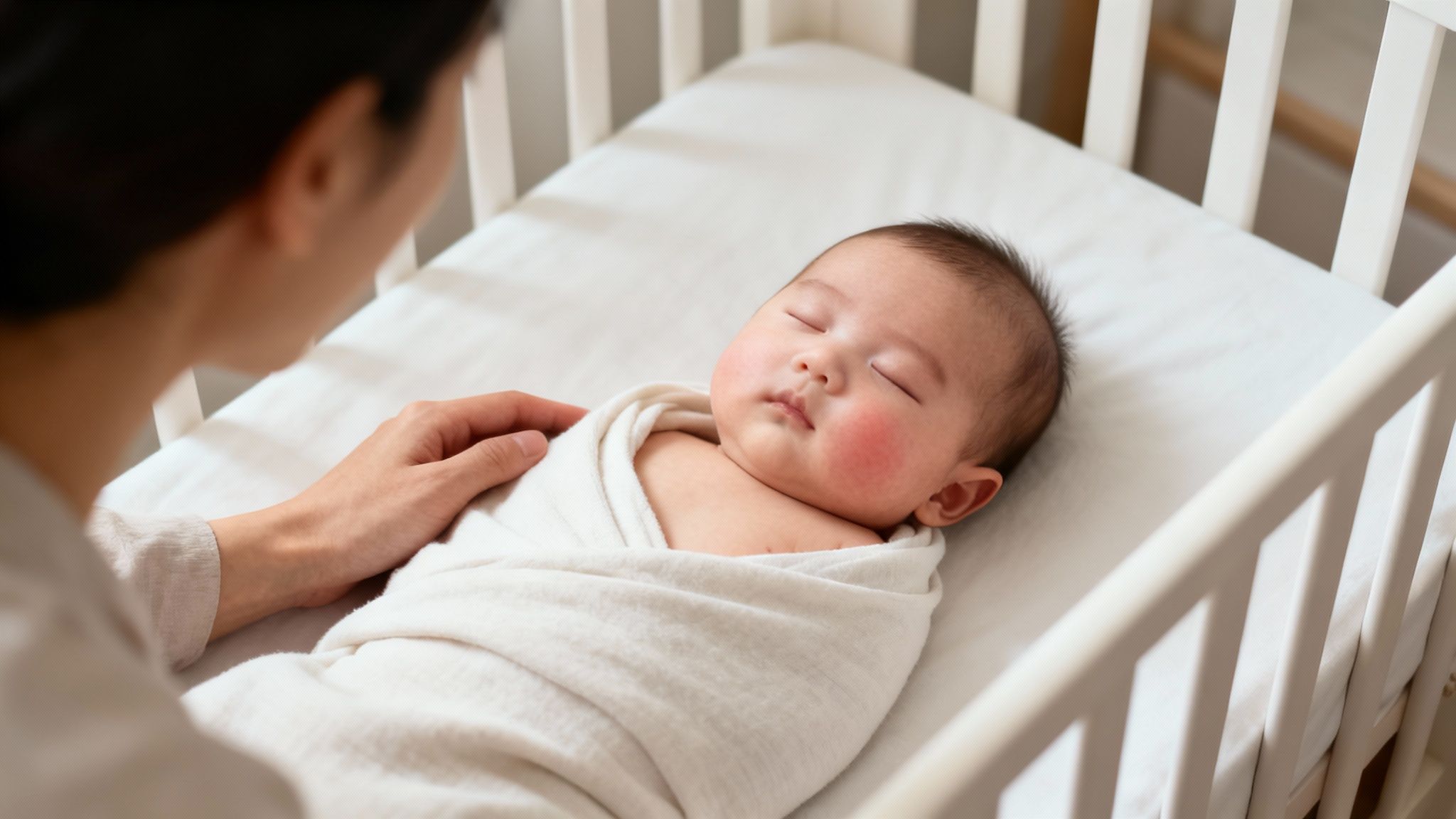
Illness can make babies sleep more, wake often, nap poorly, or change their usual sleep patterns.
Baby sleep changes during illness can worry even calm, experienced parents. A stuffy nose, cough, fever, pain, or upset stomach can turn a steady sleep routine upside down. This guide explains what these changes mean, how to offer comfort safely, and when to call a doctor.
Why illness changes a baby’s sleep
When a baby is sick, sleep may become longer, shorter, or less predictable. The body uses energy to fight infection, so some babies sleep more than usual. Others wake often because they feel hot, congested, sore, hungry, or thirsty.
Baby sleep changes during illness often begin before other signs seem clear. A baby may become fussy at bedtime, take short naps, or need more holding. These changes are not always a sign of a serious problem.
Common reasons include:
• Nasal congestion that makes breathing harder while lying down
• Fever that causes sweating, chills, or discomfort
• Ear pain that worsens when the baby lies flat
• Coughing that interrupts sleep
• Vomiting, diarrhea, or stomach pain
• Teething pain that happens at the same time as a viral illness
• A need for more fluids or feeds
• Fear or stress from feeling unwell
Think of sleep as a soft rhythm. Illness can knock that rhythm off beat for a few days. Most babies return to their usual pattern as they recover.
Common baby sleep changes during illness
Every baby responds differently. Some sleep deeply for extra hours. Others wake every 30 to 60 minutes. Both patterns can happen during a simple cold.
You may notice:
• More daytime sleep
• Shorter naps
• More night waking
• Trouble settling
• Increased need for contact and rocking
• Early morning waking
• Feeding at unusual times
• Crying when placed in the crib
• Sleeping only when held
• A temporary return to newborn-like sleep patterns
A baby who normally sleeps eight hours may wake three or four times during a cold. A baby who usually takes two naps may take four short naps instead. These changes often reflect discomfort, not a lost sleep skill.
Sleeping more than usual
Extra sleep can be normal when a baby has a mild illness. Rest helps the immune system work, and tired babies often need more recovery time.
Still, a baby should wake enough to feed and respond normally when awake. Call a health care professional if your baby is very hard to wake, unusually limp, confused, or not feeding well.
Waking more often
Frequent waking is common with congestion, cough, fever, and pain. Babies have small airways and cannot easily clear mucus on their own.
Offer comfort, fluids, and age-appropriate feeds. Keep the sleep space safe each time you place your baby down, even if illness has made the night difficult.

How to help a sick baby sleep safely
Comfort matters, but safe sleep rules still apply during illness. The American Academy of Pediatrics recommends placing babies on their backs for every sleep, on a firm, flat, noninclined surface.
Keep the crib or bassinet free of:
• Pillows
• Loose blankets
• Quilts
• Stuffed toys
• Bumpers
• Sleep positioners
• Weighted sleep products
Do not raise the mattress with towels, pillows, or wedges. Elevating a baby for congestion can cause sliding or unsafe bending of the neck. A baby may sound congested while breathing normally, but an incline is not a safe treatment.
Helpful steps include:
-
Use saline drops and gentle suction before sleep if your baby has a blocked nose.
-
Offer breast milk or formula more often if your baby wants smaller feeds.
-
Dress your baby in light layers.
-
Keep the room comfortably cool, not hot.
-
Follow the normal bedtime routine when possible.
-
Hold and soothe your baby before placing them on their back.
-
Return your baby to the crib or bassinet once they are calm or asleep.
If you feed or comfort your baby in bed, move the baby back to their own sleep space before you sleep. Couches and armchairs are especially dangerous places to fall asleep with an infant.

Should you keep the usual sleep routine?
A flexible routine is usually better than strict sleep training during illness. Your baby may need extra cuddles, more feeds, or shorter awake periods for a few days.
Try to keep simple parts of the routine:
• Dim the lights
• Change the diaper
• Offer a feed
• Use a calm song
• Give medicine only as directed by a clinician
• Place the baby down safely
You do not need to force naps or keep a sick baby awake to protect nighttime sleep. Rest supports healing. At the same time, you can gently wake a very young baby for feeds if a doctor has advised you to do so.
Baby sleep changes during illness do not mean your routine has failed. They are often temporary. A few nights of extra support will not erase healthy sleep habits.
What about sleep training?
Pause formal sleep training if your baby has a fever, breathing trouble, vomiting, diarrhea, or clear pain. Comfort and medical care should come first.
After recovery, return to your usual approach. Start with the bedtime routine, then restore normal nap times and settling methods. Most babies adjust within several nights.

Managing fever, congestion, and discomfort at night
A fever is a body response, not the illness itself. The number on the thermometer matters, but your baby’s behavior, breathing, feeding, and hydration matter too.
For babies younger than 3 months, a rectal temperature of 100.4°F (38°C) or higher requires prompt medical advice. Do not wait for the fever to pass without speaking with a health care professional.
For older babies:
• Offer regular breast milk or formula.
• Ask a clinician about acetaminophen or ibuprofen dosing.
• Never guess a medicine dose by age alone.
• Do not give ibuprofen to babies younger than 6 months unless a clinician says to use it.
• Never give aspirin to a child.
• Avoid over-the-counter cough and cold medicines for young children unless a doctor specifically recommends them.
• Do not give honey to babies under 12 months.
For congestion, saline drops and a bulb syringe or nasal aspirator may help before feeds and sleep. Use gentle suction. Too much suction can irritate the nose and cause more swelling.
A humidifier may add moisture to dry air. Choose a cool-mist model, clean it often, and keep it out of your baby’s reach. Warm-mist devices can cause burns.

Feeding and hydration during illness
Illness can change both feeding and sleep. A congested baby may stop often during a feed to breathe. A baby with a sore throat may take smaller amounts more often.
Continue breast milk or formula unless your health care professional gives different advice. For babies who eat solid foods, offer soft foods if they want them, but do not force food during a short illness.
Watch for signs of dehydration:
• Fewer wet diapers than usual
• A dry mouth
• Few or no tears when crying
• Sunken eyes
• Unusual sleepiness
• Weak feeding
• Dark urine in an older infant
A baby who cannot keep fluids down, has repeated vomiting, or has clearly fewer wet diapers needs medical advice. Hydration can affect both health and baby sleep changes during illness.
Avoid giving plain water to young infants unless a clinician tells you to do so. Breast milk and formula provide the fluid and nutrients most young babies need.
When baby sleep changes during illness need medical care
Sleep disruption alone is often harmless. The concern rises when sleep changes happen with breathing problems, poor feeding, dehydration, or a change in alertness.
Seek urgent help if your baby:
• Struggles to breathe
• Pulls in under the ribs with each breath
• Has blue, gray, or very pale lips or skin
• Has pauses in breathing
• Is difficult to wake
• Is limp or unusually weak
• Has a seizure
• Cannot keep fluids down
• Has signs of serious dehydration
• Is younger than 3 months with a rectal temperature of 100.4°F (38°C) or higher
Call your pediatrician if symptoms are getting worse, last longer than expected, or simply concern you. Parents often know when their baby’s behavior feels different. That instinct deserves attention.
Keep a short record of temperature, feeds, wet diapers, medicine times, and sleep. This can help a clinician see the full picture and prevents accidental extra doses.

Returning to normal sleep after recovery
Sleep may remain unsettled for a few days after the fever or congestion ends. Your baby may still want extra holding or wake out of habit. This does not mean the illness caused permanent sleep problems.
Return to normal in small steps:
-
Rebuild the usual bedtime routine.
-
Use the normal sleep space for every nap and night sleep.
-
Offer comfort, then allow a chance to settle.
-
Return to regular nap timing as energy improves.
-
Keep morning wake time fairly consistent.
-
Avoid adding new sleep habits you do not want to continue.
A common mistake is changing everything at once. Parents may start late bedtimes, long contact naps, and extra feeds because the baby is sick. Those choices can be reasonable for a short time, but they may make the return to normal harder.
Another mistake is pushing independence too soon. If your baby is still coughing, feverish, or feeding poorly, focus on recovery. Sleep skills can wait.
Practical example: a sick baby’s bedtime
Imagine a 7-month-old with a runny nose and a mild fever. The baby usually sleeps at 7:30 p.m. but now wakes after 40 minutes and cries.
A helpful plan might look like this:
• Check the temperature with a reliable thermometer.
• Assess breathing, feeding, and wet diapers.
• Use saline and gentle suction before the feed.
• Offer breast milk or formula.
• Keep the room comfortable and the baby lightly dressed.
• Cuddle until calm.
• Place the baby on their back in a clear, flat crib.
• Repeat comfort as needed without adding pillows or loose bedding.
If the baby becomes hard to wake, breathes with effort, refuses several feeds, or has fewer wet diapers, contact a medical professional rather than treating the problem as a sleep issue.
Frequently Asked Questions About Baby Sleep Changes During Illness
Is it normal for a sick baby to sleep more?
Yes, many babies sleep more while recovering from an infection. Your baby should still wake for feeds and respond in a fairly normal way when awake. Extreme sleepiness, difficulty waking, or poor feeding needs prompt medical advice.
Can illness cause a baby to wake every hour?
Yes, congestion, fever, cough, pain, and hunger can lead to frequent waking. Offer comfort and fluids, but check for breathing trouble or dehydration if the waking is severe or continues.
Should I wake my baby to feed during illness?
Some babies need scheduled feeds, especially young infants or babies who are not gaining weight well. Ask your pediatrician whether to wake your baby, particularly if your baby is sleeping much longer than usual or taking fewer feeds.
Is it safe to let a congested baby sleep on an incline?
No. Babies should sleep flat on their backs on a firm, level surface. Do not use pillows, wedges, inclined sleepers, or positioners to treat congestion.
Can I use cold medicine to help my baby sleep?
Do not use infant cough or cold medicine unless a health care professional specifically recommends it. These products may cause side effects and are not safe for many young children.
How long do baby sleep changes during illness last?
Many babies improve as symptoms improve, but sleep can stay irregular for several days afterward. If changes last, worsen, or occur with poor feeding, breathing trouble, dehydration, or unusual lethargy, contact your pediatrician.
Should I stop sleep training when my baby is sick?
It is usually sensible to pause formal sleep training during a significant illness. Give comfort and focus on recovery, then slowly return to your usual routine when your baby feels well.
Conclusion
Baby sleep changes during illness are common and usually reflect discomfort, extra tiredness, or a need for more fluids and comfort. Keep safe sleep habits in place, offer age-appropriate care, watch feeding and wet diapers, and avoid unsafe sleep products or unapproved medicines.
Trust your observations. If your baby has breathing trouble, serious sleepiness, dehydration, or a fever at a very young age, seek medical advice promptly. Save this guide for the next sick day, share it with another parent, and discuss any concerns with your child’s health care professional.