Newborn hip development depends on stable joint growth, healthy movement, and early checks for hip dysplasia.
Newborn hip development begins before birth and continues quickly during the first months of life. The hip is a ball-and-socket joint, but in a newborn, the socket is still soft and shallow. This makes gentle care, safe swaddling, routine exams, and timely follow-up especially important. This guide explains what healthy newborn hip development looks like, what can affect it, and when to seek help.
What Is Newborn Hip Development?
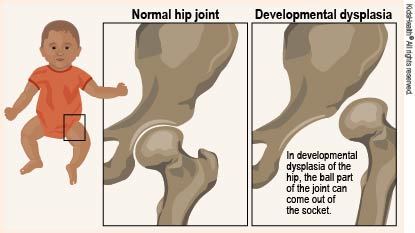
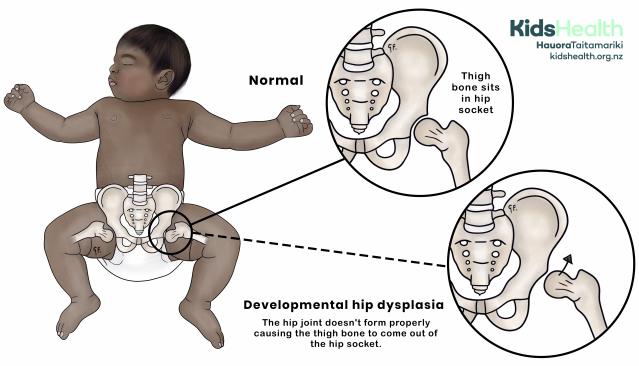
Newborn hip development is the process by which the hip joint grows stronger and more stable after birth. The top of the thigh bone, called the femoral head, should rest securely inside the hip socket, known as the acetabulum.
At birth, much of the hip is made of soft cartilage. Over time, the socket deepens and the surrounding muscles and ligaments become stronger. Normal movement helps the hip joint shape itself, much like a soft mold taking form.
Healthy newborn hip development allows your baby to:
• Move both legs freely
• Bend the hips and knees
• Kick and stretch
• Develop equal strength on both sides
• Reach later movement skills, such as rolling, sitting, and crawling
Some babies develop a hip problem called developmental dysplasia of the hip, or DDH. This means the hip may be loose, partly out of place, or fully dislocated. DDH can be present at birth or develop during the first year.
How the Newborn Hip Joint Grows
A newborn’s hip joint is flexible by design. This flexibility helps during birth, but it also means the joint can be affected by position and pressure.
The femoral head should fit inside the acetabulum like a ball resting in a cup. When the ball stays centered, it puts gentle pressure on the socket. That pressure supports normal newborn hip development and helps the socket become deeper.
If the hip stays out of place for a long time, the socket may not deepen as it should. This can lead to an unstable joint, limited movement, or later walking problems.
Several tissues support the hip:
• The femoral head forms the ball of the joint.
• The acetabulum forms the socket.
• Ligaments help hold the joint together.
• Muscles around the pelvis and thigh support movement.
• Cartilage provides a smooth, flexible surface for growth.
Newborn hip development does not happen at one fixed speed. Some babies mature quickly, while others need monitoring for several months. A normal early exam is reassuring, but it does not always rule out a later change.

Signs of Healthy Newborn Hip Development
Most babies with healthy hips show normal movement during daily care. You may notice that your baby bends both knees, kicks with both legs, and moves freely during diaper changes.
Common signs include:
• Equal movement in both legs
• Similar thigh and buttock creases
• Hips that open comfortably during diaper changes
• No clear difference in leg length
• No clicking that repeats with movement
• Smooth, relaxed kicking
Skin folds alone are not a reliable test. Many healthy babies have uneven creases. A medical professional must assess hip stability with a physical exam and, when needed, imaging.
Parents often worry about a soft click. Some clicks come from tendons or normal movement and are not harmful. A strong clunk, repeated slipping feeling, reduced hip movement, or leg-length difference deserves medical attention.
A useful daily habit is to watch your baby during relaxed moments. Do not force the legs open or try to test the hips yourself. Simply notice whether one leg seems harder to move than the other.

Risk Factors for Developmental Hip Dysplasia
DDH can affect any baby, including babies without known risk factors. Still, some situations increase the chance of hip instability.
Important risk factors include:
• Breech position late in pregnancy
• A close family member with DDH
• Female sex, due partly to hormone sensitivity
• First pregnancy
• Tight swaddling that holds the legs straight
• Limited space in the uterus, such as with low amniotic fluid
• Certain foot or leg positioning conditions
Breech birth is one of the strongest known risk factors. Many care teams recommend an ultrasound for babies who were breech, even when the newborn hip exam feels normal.
Family history also matters. Tell your baby’s pediatrician if a parent, sibling, or close relative needed treatment for a hip problem as an infant or child.
Risk factors do not confirm DDH. They simply help clinicians decide whether your baby needs closer monitoring or an ultrasound.

Newborn Hip Screening and Diagnosis
Hip screening usually begins with a physical exam soon after birth. The clinician gently checks whether the hips feel stable and whether the legs move equally.
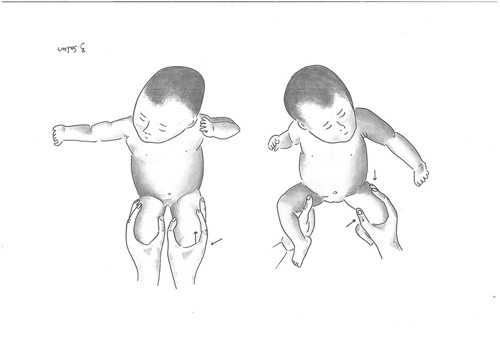
During the exam, a trained professional may use gentle maneuvers to detect a hip that slips out of position. These movements should be careful and brief. Parents should never copy them at home.
Ultrasound is often used for young infants because the hip is still mostly cartilage. It can show the position and shape of the joint without radiation. Many clinicians perform screening ultrasound around 4 to 6 weeks for babies with risk factors, because scans done too early may show temporary immaturity.
An X-ray becomes more useful as the bones develop, often after about 4 to 6 months. The exact timing depends on the baby’s age, exam findings, risk factors, and local medical guidance.
Screening has limits. A normal scan or exam lowers concern, but it cannot predict every later hip problem. Keep routine visits, and report new changes in movement or leg position.

How to Support Healthy Newborn Hip Development
Daily care can support normal newborn hip development without special exercises. The main goal is to allow the hips and legs to move naturally.
Use hip-healthy swaddling
If you swaddle, keep enough room for your baby to bend the hips and knees. The legs should be able to move up and out, like a frog’s relaxed position.
Avoid wrapping the legs tightly together or pressing them straight down. A properly designed sleep sack can be a safer option than a tight blanket wrap.
The American Academy of Pediatrics also advises stopping swaddling when a baby shows signs of trying to roll. Always place a swaddled baby on the back for sleep, and keep the crib free of loose items.
Choose supportive baby carriers
A carrier should support the thighs and allow the knees to sit higher than the bottom. The legs should form a gentle “M” shape, with the hips spread comfortably.
Avoid carriers that let the legs hang straight down for long periods. Check the product instructions and make sure your baby’s face stays visible and clear.
Allow free movement
Give your baby supervised time to move on a safe, firm surface. Kicking and stretching help the legs and hips move through a natural range.
Do not force stretches, pull on the legs, or use devices that hold the hips in one position unless prescribed by a medical professional.
Common Mistakes That May Affect Hip Position
Many parents want to do everything right, yet simple habits can place the hips in a less healthy position. The most common mistake is tight swaddling around the legs.
Other habits to avoid include:
• Wrapping the legs straight and tightly together
• Using an infant carrier without thigh support
• Pulling firmly on the legs during dressing
• Trying to “pop” or test a hip at home
• Ignoring a repeated clunk or movement difference
• Delaying follow-up after an abnormal screening result
Diapering does not usually cause DDH. Even so, avoid diapers or clothing that press the legs tightly together. The hips need room to bend and open.
One practical lesson from pediatric guidance is that comfort matters. If your baby resists a position, becomes upset, or seems unable to move one leg, stop and ask a clinician for advice. Gentle care is better than trying to correct the hip yourself.
Treatment Options for Hip Dysplasia
Treatment depends on your baby’s age, the severity of the hip problem, and whether the hip is stable. Some mild cases improve with careful observation and repeat exams.
Common treatment approaches include:
Observation
A slightly immature hip may become stable as the joint grows. The clinician may schedule repeat ultrasound or exams rather than begin treatment right away.
Pavlik harness
A Pavlik harness is a soft device that holds the baby’s hips in a safe position while allowing movement. It is often used in young infants with a dislocated or unstable hip.
Parents must follow instructions for wearing, cleaning, and checking the harness. Do not adjust the straps unless the medical team teaches you how.
Other braces or casts
If a harness does not work or the baby is older, a different brace or a body cast may be needed. In some cases, a procedure is required to place the hip back into the socket.
Early treatment often has fewer complications than treatment started later. Still, every baby’s care plan is different, and treatment should come from a pediatric orthopedic team.

When to Call a Pediatrician
Contact your baby’s health care provider if you notice:
• One leg moves less than the other
• One leg appears shorter
• The hips do not open equally
• A repeated clunk occurs during normal movement
• Your baby seems uncomfortable when a leg moves
• A screening test was abnormal
• Your baby has a strong DDH risk factor
• Walking later becomes uneven or causes limping
Do not wait for your baby to walk before asking about a concern. DDH may cause few visible signs in early infancy. A timely exam can help protect normal newborn hip development.
Seek urgent care for severe pain, swelling, a cold or pale leg, or a sudden inability to move the leg. These signs can have other causes and need prompt assessment.
Newborn Hip Development by Age
Newborn hip development changes during the first year. Knowing what usually happens can help you understand screening and follow-up.
Birth to 6 weeks
The hips are very flexible. Clinicians focus on stability, leg movement, and risk factors. Babies with breech positioning or a family history may need a planned ultrasound.
6 weeks to 4 months
The hips continue to mature. Ultrasound can show the socket and femoral head clearly. This is a common time to identify and treat DDH.
4 to 6 months
More bone begins to appear in the hip. An X-ray may provide useful information, especially when an ultrasound is no longer ideal.
6 to 12 months
A baby with untreated hip instability may show reduced movement, leg-length differences, or delayed motor skills. Treatment may be more involved at this stage.
After the first year
A child may develop a limp, an uneven walk, or limited hip motion. These signs do not always mean DDH, but they deserve medical review.
Every child develops at a different pace. Milestones can guide questions, but they cannot replace a professional hip exam.
What Parents Can Expect During Follow-Up
Follow-up can feel stressful, especially when your baby appears comfortable. Remember that hip problems may not cause pain in early infancy.
Your clinician may recommend:
• Repeat physical exams
• One or more ultrasounds
• An X-ray at an older age
• Referral to a pediatric orthopedic specialist
• A brace or harness
• Monitoring without immediate treatment
Keep a simple record of appointments and test results. Ask what the result means, what changes to watch for, and when the next check should happen.
A helpful question is, “What would make you change the treatment plan?” This gives you a clear idea of what the care team is watching.
Do not compare your baby’s plan with a friend’s baby. Two infants can have similar symptoms but different hip shapes, ages, and treatment needs.
Evidence, Limits, and Practical Advice
Medical research supports careful screening, risk-based imaging, and early treatment for confirmed DDH. However, screening methods and timing can vary by country, hospital, and professional group.
Not every hip click means dysplasia. Not every baby with a risk factor develops a hip problem. Also, home observation cannot measure joint stability with the accuracy of a trained exam or imaging.
The safest approach combines:
• Routine newborn and infant visits
• Risk-based ultrasound or X-ray
• Hip-healthy swaddling
• Safe carrier use
• Prompt follow-up for unusual signs
• Clear communication with the care team
This balanced approach avoids two common extremes: ignoring a real concern and panicking over a harmless sound.
Frequently Asked Questions About Newborn Hip Development
What is normal newborn hip development?
Normal newborn hip development means the hip ball stays centered in the socket and the joint gradually becomes stable. Your baby should move both legs freely and comfortably, but only a clinician can confirm hip stability.
How can I tell if my baby has hip dysplasia?
Possible signs include unequal leg movement, limited hip opening, a leg-length difference, or a repeated clunk. Many babies have no clear symptoms, so routine exams and recommended imaging are important.
Is swaddling bad for newborn hip development?
Swaddling is not automatically harmful when the hips and knees can bend and move freely. Tight wrapping that forces the legs straight and together may increase the risk of hip problems.
When does a newborn need a hip ultrasound?
A baby may need an ultrasound if the physical exam is abnormal or if there are risk factors such as breech position or a family history of DDH. Many providers perform risk-based imaging around 4 to 6 weeks, but timing can vary.
Can a hip click be normal?
Some soft clicks come from normal soft tissues and may not signal a problem. A repeated clunk, slipping sensation, limited movement, or leg-length difference should be checked by a pediatrician.
Can developmental hip dysplasia be treated?
Yes. Treatment may include observation, a Pavlik harness, another brace, a cast, or a procedure, depending on the baby’s age and hip stability. Early treatment often helps the hip develop with fewer complications.
Should I exercise my baby’s hips?
Do not force hip stretches or perform hip tests at home. Normal kicking, supervised floor movement, and properly fitted clothing or carriers are usually enough unless a clinician gives specific exercises.
Conclusion
Newborn hip development is a gradual process shaped by growth, movement, joint position, and early care. Most babies develop healthy hips, but developmental dysplasia of the hip can be easier to treat when found early.
Use hip-healthy swaddling, choose carriers that support the thighs, attend routine visits, and share risk factors with your baby’s clinician. If you notice limited movement, a repeated clunk, or uneven legs, ask for an exam rather than trying to diagnose the issue at home. Explore trusted pediatric resources, keep follow-up appointments, and share this guide with another new parent who may find it helpful.