Newborn length and head circumference growth show how your baby’s body and brain develop over time.
Newborn length and head circumference growth can tell a useful story about early health, nutrition, and development. These numbers are not a test that your baby must “pass.” They are points on a growth map, and the pattern over time often matters more than one measurement.
Knowing how providers measure length, head size, and growth percentiles can make checkups less confusing. This guide explains normal ranges, expected changes, measurement limits, warning signs, and simple ways to track your baby’s progress with confidence.

What newborn length and head circumference mean
Newborn length is measured from the top of the head to the bottom of the feet while the baby lies flat. This is also called recumbent length. Once a child reaches age 2, providers usually measure height while the child stands.
Head circumference is the distance around the widest part of the baby’s head. A soft measuring tape passes over the forehead and around the largest part of the back of the skull. This measurement helps show how the skull and brain are growing.
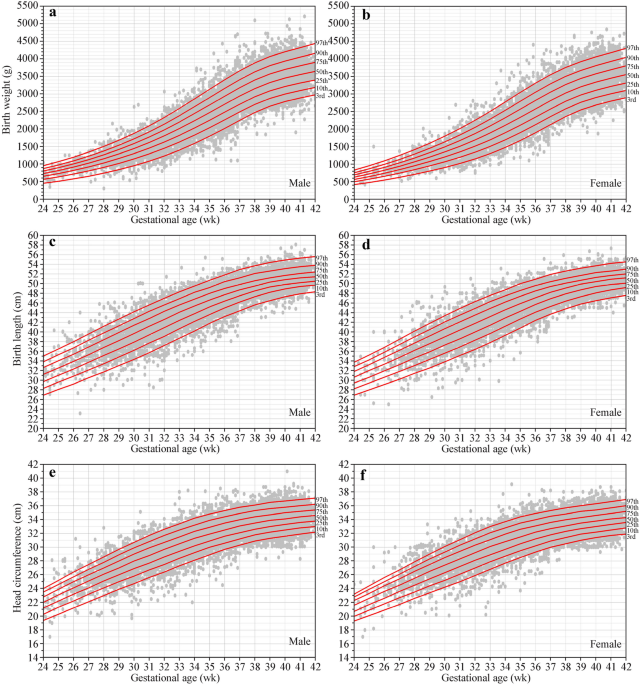
Newborn length and head circumference growth are recorded at routine visits. The clinician compares each result with a growth chart based on the baby’s age and sex. For premature babies, the provider may use corrected age when reviewing growth.
A single result rarely gives the full picture. Babies can be born small, average, or large and still grow well. The key question is whether your baby follows a steady pattern over time.

Average newborn length and head circumference
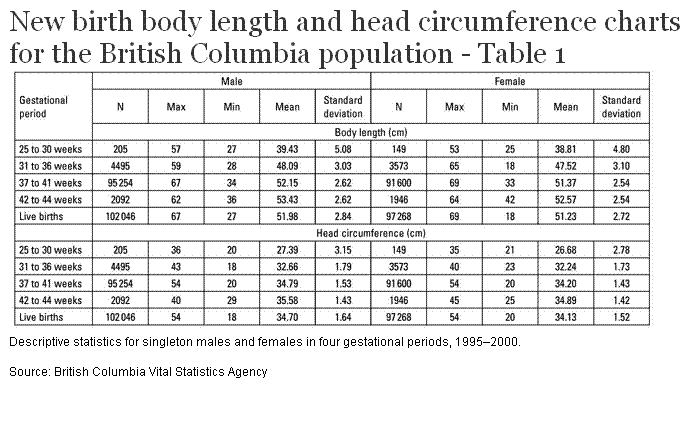
Most full-term newborns measure close to these ranges:
| Measurement | Typical average | Common full-term range |
|---|---|---|
| Length | About 20 inches or 50 centimeters | About 18 to 22 inches or 46 to 56 centimeters |
| Head circumference | About 13.5 to 14 inches or 34 to 36 centimeters | About 12.5 to 15 inches or 32 to 38 centimeters |
These figures are general guides, not strict targets. Genetics, gestational age, fetal growth, and normal family traits can all affect a baby’s size.
A baby born at 37 weeks may measure differently from a baby born at 40 weeks. A small parent may also have a smaller baby without any health problem. Your child’s clinician looks at the whole picture, including weight, feeding, alertness, movement, and physical examination.
Newborn length and head circumference growth may also differ by sex during the first months. The difference is usually small. Accurate measurement and repeated checks matter more than comparing one baby with another.
How newborn growth changes during the first year
Growth is often fastest during the first few months. It then slows in a gradual and expected way.
Birth to 3 months
Many babies grow about 1 inch, or 2.5 centimeters, in length each month during early infancy. Head circumference may increase by about 0.75 inch, or 2 centimeters, each month.
These are rough averages. Some babies grow in short bursts, then pause for a little while. Feeding, illness, sleep, and normal genetic patterns can create small changes from month to month.
3 to 6 months
length often increases by about 0.5 inch, or 1.25 centimeters, each month. Head circumference may grow by about 0.4 inch, or 1 centimeter, each month.
By around 4 to 6 months, many babies have gained noticeable body length and a larger head size. Their neck control also improves, which makes measurement easier.
6 to 12 months
Growth usually slows again. Many babies gain about 0.25 inch, or 0.6 centimeters, in length each month. Head circumference may increase by about 0.2 inch, or 0.5 centimeters, each month.
By the first birthday, many babies are about 50% longer than they were at birth. However, this is an average, not a rule. Newborn length and head circumference growth can follow many healthy paths.
Understanding newborn growth charts and percentiles
Growth charts help clinicians compare your baby’s measurements with those of other children of the same age and sex. The chart does not grade your parenting or predict your child’s final adult size.
A percentile shows where a measurement falls within a reference group. For example, a baby at the 25th percentile for length is longer than about 25% of babies in that chart group and shorter than about 75%.
A baby may be healthy at the 5th, 50th, or 95th percentile. What matters most is the trend. A steady pattern often provides more reassurance than one number.
Providers commonly use:
- World Health Organization growth standards for children from birth to age 2
- Sex-specific charts for length, weight, and head circumference
- Corrected age charts for many premature babies
- Serial measurements from several visits
Newborn length and head circumference growth should be viewed alongside weight and feeding. For example, a baby with a smaller head but steady development may need simple monitoring. A sudden change across several percentile lines may need closer review.
Why percentiles can change
Percentiles may shift for normal reasons. A newborn can move toward a genetic growth pattern during the first two years. Measurement differences can also cause a small change.
A larger shift may occur after:
- Premature birth
- Feeding problems
- Vomiting or diarrhea
- Chronic illness
- Fluid loss
- A measurement taken with poor technique
Ask the clinician to explain the trend in plain language. “Your baby moved from the 50th to the 35th percentile” is less important than understanding why the change occurred and what happens next.
How providers measure newborn length and head size
Accurate measurement takes care and often two adults. Babies move, curl their legs, and dislike being still, so a small difference is common.
For length, the baby lies on a firm measuring board. One person holds the head gently against the fixed top. Another straightens the legs and moves the foot piece against the heels.
For head circumference, the tape should sit:
- Above the eyebrows
- Just above the ears
- Around the widest part of the back of the head
- Flat against the skin without pressing tightly
The provider may measure twice. If the numbers differ, the clinician may repeat the process or record the larger reliable measurement.
Parents should avoid measuring length against a soft bed or using a cloth tape pulled loosely. Home measurements can be useful for curiosity, but they should not replace clinical checks. A small error can change the percentile more than you might expect.
A practical lesson from growth tracking is simple: use the same method when possible. Record the date, age, measurement, and whether the baby was born early. This creates a clearer picture of newborn length and head circumference growth.
What affects newborn length and head circumference growth
Many factors influence early growth. Some are temporary, while others reflect family traits or medical needs.
Genetics
Parents pass down patterns of body size and head shape. A baby with tall parents may grow longer. A baby with smaller parents may stay closer to the lower percentiles.
Gestational age
A baby born early has had less time to grow before birth. Providers may compare growth using corrected age, especially during the first two years.
Nutrition
Breast milk, formula, or a combination can support normal growth when the baby feeds well and receives enough calories. Feeding concerns should be discussed with a pediatric clinician or lactation professional.
Health conditions
Infections, heart problems, digestive disorders, hormone conditions, and other illnesses can affect growth. Most babies with a small variation do not have these problems, but a persistent pattern deserves attention.
Head shape
Molding during birth can temporarily change head shape. A baby’s head may look long, pointed, or uneven after delivery. This often improves over days or weeks.
Position can also affect head shape. Spending supervised awake time on the tummy helps strengthen muscles and reduces pressure on one area of the skull. Babies must always sleep on their backs.
When newborn growth may need medical attention
A single measurement outside the average range does not automatically mean something is wrong. Still, certain patterns should prompt a call to the baby’s health care provider.
Contact the provider if:
- Your baby feeds poorly or has much fewer wet diapers
- Your baby is hard to wake, unusually weak, or less responsive
- Head circumference increases very quickly across visits
- Head circumference does not increase as expected over time
- The soft spot looks very full when your baby is calm and upright
- Your baby has repeated vomiting, seizures, or unusual eye movements
- Length gain slows along with poor weight gain
- Your baby loses weight or cannot keep feeds down
Seek urgent care for breathing trouble, blue or gray skin, severe sleepiness, seizures, or repeated forceful vomiting.
A large or small head does not diagnose a condition by itself. Family head size, body proportions, birth molding, and measurement technique all matter. The provider may recheck the measurement, examine development, and decide whether further evaluation is needed.
Newborn length and head circumference growth in premature babies
Premature babies need a different lens. A baby born at 32 weeks has not had the same time to grow as a baby born at 40 weeks.
Corrected age accounts for the weeks of early birth. For example, a baby born 8 weeks early may be assessed at a corrected age of 2 months when the baby is 4 months old by calendar age.
Clinicians may also monitor:
- Growth velocity
- Weight gain
- Feeding skills
- Muscle tone
- Oxygen needs
- Developmental progress
- Head circumference over time
There is no single perfect schedule for every premature baby. The neonatal team or pediatrician can explain which chart and age system they use.
Parents often worry when a premature baby’s percentile looks low. The more useful question is whether the baby is growing steadily and meeting expected health goals. Newborn length and head circumference growth can catch up gradually, but each baby has a different pace.
How parents can track growth safely
You do not need to measure your baby every day. Daily measurements often create stress and do not show meaningful growth.
Try these steps instead:
- Keep a simple record of clinic measurements.
- Write down the baby’s age and corrected age if needed.
- Note feeding concerns, wet diapers, and major illnesses.
- Ask for the percentile and the trend at each visit.
- Use the same units, such as inches or centimeters.
- Bring questions to the next appointment.
Avoid comparing your baby with a sibling, neighbor, or social media post. Babies grow at different rates, and online charts may use different standards.
It can help to think of growth as a road trip. One stop does not tell you where the car is going. Several stops show the direction.
Common mistakes when reading growth measurements
Growth data can be helpful, but it is easy to misread.
Mistake 1: Treating a percentile like a grade
The 10th percentile is not a failing score. It simply describes a position on a reference chart.
Mistake 2: Focusing on one visit
One number may reflect movement, a full stomach, birth molding, or a small measuring error. Trends provide stronger information.
Mistake 3: Comparing babies directly
Two healthy babies can have different lengths, weights, head sizes, and body shapes. Direct comparison can cause worry without adding useful information.
Mistake 4: Ignoring corrected age
Using calendar age for a premature baby can make normal growth seem delayed. Ask which age the clinician is using.
Mistake 5: Measuring too often at home
Frequent home checks may increase anxiety. Professional measurements at routine visits are usually more reliable.
The best approach to newborn length and head circumference growth is calm, consistent tracking. Bring concerns forward rather than trying to diagnose a problem from a chart alone.
Frequently Asked Questions About Newborn Length and Head Circumference Growth
What is the average length of a newborn?
A full-term newborn is often about 20 inches, or 50 centimeters, long. A healthy full-term range can be roughly 18 to 22 inches, but gestational age and family genetics affect the result.
What is a normal newborn head circumference?
The average newborn head circumference is about 13.5 to 14 inches, or 34 to 36 centimeters. A wider range may still be healthy, especially when the measurement matches the baby’s overall growth pattern.
How fast does a newborn’s head grow?
Head circumference often grows fastest during the first three months, by about 2 centimeters per month on average. Growth usually slows during the second half of the first year.
Should I worry if my baby is in a low percentile?
Not necessarily. A low percentile can be normal when your baby grows steadily, feeds well, and develops as expected. A sudden drop or rise across several percentile lines should be discussed with the baby’s clinician.
How is a premature baby’s growth measured?
Providers may use corrected age and specialized growth charts for premature babies. They also review growth velocity, feeding, development, and health history rather than relying on one measurement.
Can birth molding change head circumference?
Birth molding can change the shape of a newborn’s head for a short time. The clinician may repeat the measurement after the head shape settles to get a more reliable result.
Conclusion
Newborn length and head circumference growth offer helpful clues about early development, but no single number tells the whole story. Length, head size, weight, feeding, development, family traits, and gestational age all belong in the same picture.
Track measurements from routine visits, ask how the trend looks, and use corrected age when your baby was born early. If growth changes quickly or your baby shows concerning symptoms, contact the health care provider rather than relying on an online chart.
Your careful attention is valuable. Keep learning, bring questions to checkups, and explore trusted pediatric resources as your baby grows.