The baby transition from swaddle to sleep sack helps babies stay warm and safe while they learn to sleep with free arms.
Moving from a snug swaddle to a sleep sack can feel like a big change for both baby and parent. I have seen many families worry when a baby wakes more often after the switch, but this is often a short adjustment period, not a sign that the sleep sack is failing. With the right timing, safe sleep setup, and calm routine, the baby transition from swaddle to sleep sack can be smooth and gentle.
When to Start the Baby Transition From Swaddle to Sleep Sack
The safest time to begin the baby transition from swaddle to sleep sack is when your baby shows signs of trying to roll. This may happen around 2 to 4 months, but every baby develops at a different pace. Some babies roll earlier, so watch your baby rather than relying only on age.
Stop swaddling right away when your baby:
- Tries to roll from back to stomach
- Rolls from stomach to back
- Pushes up on their side
- Twists their body to escape the swaddle
- Frees one or both arms often
- Shows strong attempts to move during sleep
A baby who can roll may need their arms free to move their head and body. A wrapped baby may not be able to use their arms well if they roll onto their stomach. This is why safe sleep guidance recommends stopping swaddling when rolling attempts begin.
Do not wait for a perfect night. The goal is not to find a magical date. The goal is to protect your baby as new movement skills appear.

What Is a Sleep Sack?
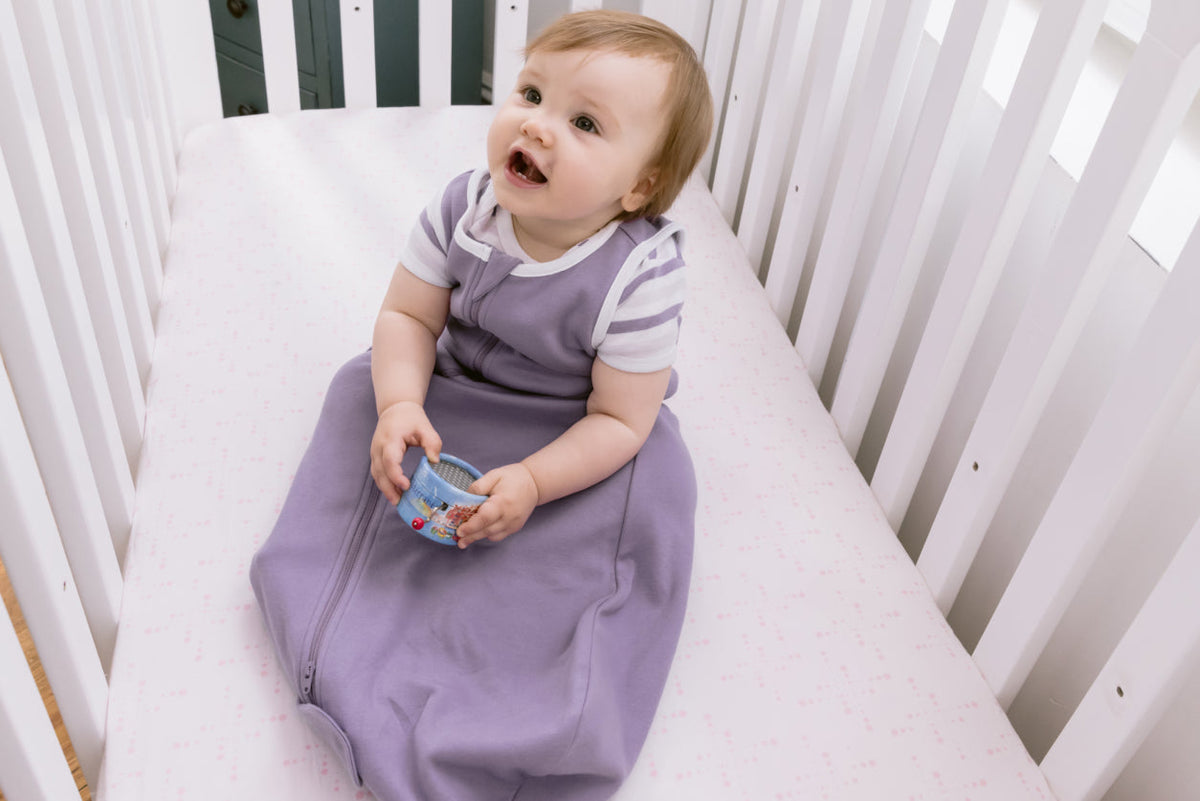
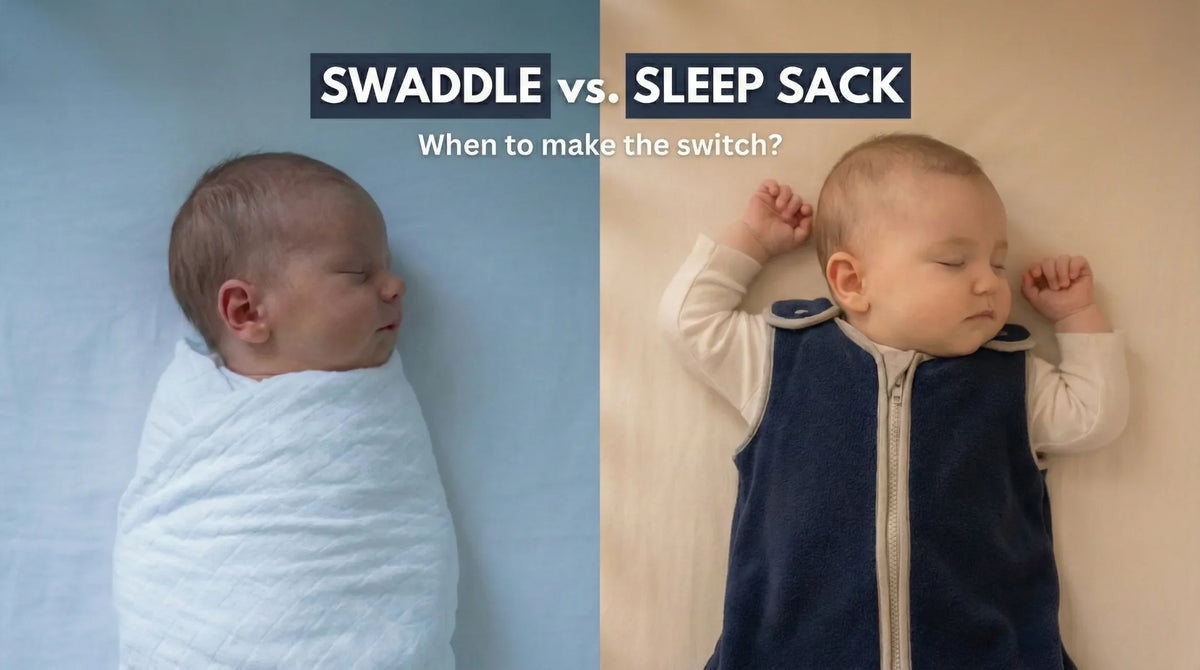
A sleep sack is a wearable blanket that covers a baby’s body but leaves the head and neck uncovered. It usually has openings for the arms and neck, along with a zipper or snaps. Unlike a loose blanket, a properly fitted sleep sack stays on the baby while they sleep.
A sleep sack can help keep your baby warm without placing loose bedding in the crib. It may also become a helpful sleep cue. Over time, your baby may learn that putting on the sleep sack means that sleep is coming.
Sleep sacks come in different designs:
- Sleeveless sacks for babies who sleep warm
- Long sleeve sacks for cooler rooms
- Lightweight cotton sacks for warmer seasons
- Fleece or warmer sacks for cold weather
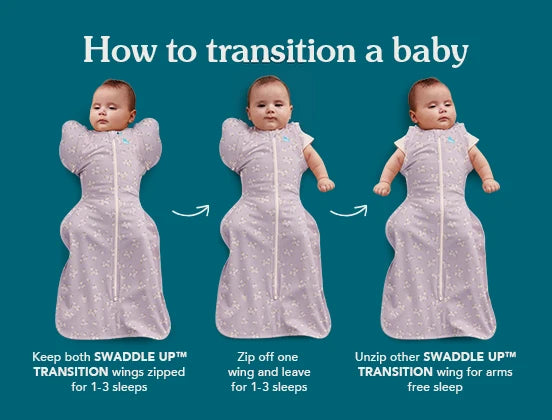
- Swaddle transition sacks with arms that can be zipped out
- Adjustable sacks that fit across several sizes
Choose a sack based on your baby’s size, the room temperature, and the maker’s instructions. Avoid weighted sleep sacks, weighted swaddles, and products that press down on the baby’s chest or body. Current safe sleep guidance does not support weighted sleep products for infants.

How to Make the Baby Transition From Swaddle to Sleep Sack
The baby transition from swaddle to sleep sack does not need to happen in one dramatic night. A gradual plan can help some babies feel more secure, although babies who are already rolling must have both arms free.
Step 1: Choose a safe sleep sack
pick a sleep sack that fits well around the neck and arm openings. Your baby’s head should not be able to slip through the neck hole.
Check that:
- The sack fits your baby’s weight and height
- The neck opening is snug but comfortable
- The arm holes do not allow your baby to slide inside
- The zipper stays away from the face
- The bottom gives the legs room to move
- The material suits the room temperature
Do not use a sack that is too large. A loose sack can slide over the face. Do not pin, clip, or tie the sleep sack to the crib.
Step 2: Begin with a calm bedtime routine
Use the same short routine each night. For example:
- Feed your baby.
- Change the diaper.
- Dim the lights.
- Put on pajamas and the sleep sack.
- Read a short book or sing softly.
- Place your baby on their back in the crib.
A steady routine works like a familiar road. Your baby may still have a few bumps, but the path becomes easier to recognize.
Step 3: Try the sleep sack during a calm sleep
Some parents start with one nap. This can help a baby experience the new feeling during a shorter sleep period. However, if your baby is showing rolling attempts, use an arms free sleep sack for every sleep, including naps.
Avoid testing the sleep sack for the first time during an already difficult night. Try it when your baby is fed, dry, and calm. A calm start can make the new clothing feel less strange.
Step 4: Keep both arms free when rolling begins
Some transition products allow one arm out at a time. This may work for a baby who is not rolling yet. Once rolling starts, however, both arms should be free.
The one arm out method can help babies who strongly depend on the swaddle for comfort. Use it only for a brief transition and follow the product instructions. Never keep one arm swaddled if your baby can roll or is actively trying to roll.
Step 5: Give your baby time to adjust
Many babies wake more often for a few nights. They may startle, rub their face, or move their arms in a new way. This can look dramatic, but it is often part of learning.
Offer comfort with your voice, gentle touch, or a brief cuddle. Keep the room dark and avoid adding loose items to the crib. Try to respond in the same calm way each time.

A Simple Three Night Transition Plan
A gradual plan may suit a baby who has not started rolling. If rolling has begun, go directly to an arms free sleep sack.
Night one
Use the sleep sack for a nap or the first part of bedtime. Watch how your baby moves. Keep the crib clear and place your baby on their back.
Night two
Use the sleep sack for all naps and bedtime. Repeat the same routine. Your baby may need extra soothing as they learn to settle with free arms.
Night three
Continue using the sleep sack for every sleep. Keep your response calm and predictable. Most babies need several days, and some need a week or two, to accept the change.
This plan is only a guide. A baby who is rolling, escaping the swaddle, or becoming tightly wrapped should not remain swaddled while you wait for a convenient schedule.
What to Wear Under a Sleep Sack
A sleep sack replaces a loose blanket, but it does not replace clothing. Dress your baby in layers based on the room temperature and the sack’s warmth rating, often called TOG.
A common approach is:
- A diaper and lightweight bodysuit for a warm room
- A bodysuit and cotton pajamas for a mild room
- A long sleeve bodysuit and warmer pajamas for a cool room
The exact layers depend on the product, your baby, and your home. Always follow the sleep sack maker’s temperature chart.
Check your baby’s chest or upper back. These areas should feel comfortably warm, not hot or sweaty. Cool hands and feet are common and do not always mean your baby is cold.
Signs of overheating may include:
- Sweating
- Damp hair
- Flushed skin
- Hot chest or back
- Rapid breathing
- Unusual restlessness
If you are worried about your baby’s temperature, remove a layer and ask your pediatric clinician for advice. Fever, breathing trouble, poor feeding, or unusual sleepiness needs prompt medical attention.

Safe Sleep Rules During the Transition
The baby transition from swaddle to sleep sack should always follow basic safe sleep practices. Clothing cannot make an unsafe sleep space safe.
Follow these rules:
- Place your baby on their back for every sleep.
- Use a firm, flat mattress with a fitted sheet.
- Keep pillows, blankets, bumpers, toys, and stuffed animals out of the crib.
- Keep the baby’s head and face uncovered.
- Use a crib, bassinet, or play yard that meets current safety standards.
- Keep the sleep space in your room, but not in your bed, when possible.
- Avoid smoking and vaping around your baby.
- Do not use alcohol, cannabis, or sedating medicines before bed if you may fall asleep while holding your baby.
- Stop using the swaddle when your baby shows signs of rolling.
Room sharing can make nighttime care easier, but bed sharing carries extra risks for infants. A separate sleep surface gives your baby room to move and helps reduce hazards from pillows and adult bedding.
If your baby falls asleep in a car seat, swing, or stroller, move them to a firm, flat sleep surface as soon as it is safe to do so.

Common Problems During the Baby Transition From Swaddle to Sleep Sack
Your baby wakes often
Free arms can feel exciting or frustrating. Your baby may hit their face, rub their eyes, or startle more than before. Give them time to practice these movements during awake periods, such as supervised tummy time.
Your baby cries when the swaddle is removed
The swaddle may have become part of your baby’s sleep signal. Keep the bedtime routine the same and add another calm cue, such as a short song or gentle rocking before placing your baby down.
Your baby rolls onto the stomach
Always place your baby on their back. If your baby rolls independently and both arms are free, you do not need to keep turning them back each time, unless your clinician gives different advice. Never use straps, positioners, wedges, or rolled towels to hold a baby in place.
Your baby gets too warm
Use lighter clothing and select a sleep sack with a lower warmth rating. Do not place a blanket over the sleep sack. A baby should not need several thick layers indoors.
Your baby hates the zipper or fabric
Try a different fabric, cut, or zipper design. Some babies prefer a soft cotton sack, while others sleep better in a roomy style that allows their legs to bend and move.
Your baby sleeps better in a swaddle
This is common, but safety comes first. If your baby is showing rolling signs, the swaddle must end even if sleep becomes less settled for a time.
Mistakes to Avoid
The baby transition from swaddle to sleep sack can become harder when parents make several changes at once. Try to keep the room, bedtime, feeding pattern, and soothing style as steady as possible.
Avoid these mistakes:
- Waiting until your baby can fully roll before stopping the swaddle
- Leaving one arm wrapped after rolling attempts begin
- Using a blanket over the sleep sack
- Choosing a sack that is too large
- Dressing by hand temperature alone
- Using weighted products
- Tucking the sleep sack under the mattress
- Adding pillows or positioners for comfort
- Expecting the change to work after one night
- Moving a sleepy baby to an unsafe surface
One mistake I often see in family sleep routines is changing too much at once. Parents may remove the swaddle, move the baby to a new room, change the bedtime, and introduce a new feeding schedule on the same night. Keeping most things familiar can make the transition easier to understand.
How Long Does the Transition Take?
Some babies adjust in two or three nights. Others need one to two weeks. Temperament, age, sleep habits, illness, teething, and recent travel can all affect the process.
Progress may not look perfect. Your baby may sleep well one night and wake more the next. Look for small signs of adjustment, such as settling faster, moving calmly, or returning to sleep with less help.
If sleep remains very difficult, check the basics first:
- Is your baby comfortable and well?
- Is the sleep sack the right size?
- Is the room too hot or cold?
- Is the last nap too late?
- Is your baby overtired?
- Has the bedtime routine stayed consistent?
Contact your pediatric clinician if your baby snores loudly, pauses breathing, struggles to breathe, sweats heavily during sleep, or has unusual movements. Also ask for help if your baby has a medical condition, was born early, or has special sleep needs.
Benefits and Limits of a Sleep Sack
A sleep sack can offer several practical benefits:
- It keeps the baby warm without loose blankets.
- It may provide a steady bedtime cue.
- It allows the arms to move freely.
- It supports safer sleep after swaddling ends.
- It can reduce the need to replace a kicked-off blanket.
A sleep sack is not a treatment for waking, reflux, colic, or sleep disorders. It may improve comfort, but it cannot guarantee longer sleep. Babies still wake for hunger, comfort, illness, growth, and normal development.
The best sleep sack is not always the most expensive one. Fit, safety, comfort, and suitable warmth matter more than brand names or extra features.

Baby Transition From Swaddle to Sleep Sack: A Parent-Friendly Checklist
Use this checklist before the first night:
- My baby is wearing an arms free sleep sack if rolling has begun.
- The sleep sack fits the neck and arms well.
- My baby’s head and face will stay uncovered.
- The crib has only a firm mattress and fitted sheet.
- The room is a comfortable temperature.
- My baby is dressed in light, suitable layers.
- I know how I will soothe my baby during wakeups.
- I will place my baby on their back.
- I will check the product instructions.
- I will ask a pediatric clinician if I have concerns.
This small list can lower stress. You do not need to remember everything while tired at 2 a.m. A written plan can help both parents respond in the same way.
Frequently Asked Questions About Baby Transition From Swaddle to Sleep Sack
When should a baby stop using a swaddle?
Stop swaddling when your baby shows signs of trying to roll, even if your baby is younger than 4 months. At that point, use a properly fitted sleep sack with both arms free.
Can a baby sleep in a sleep sack with arms out?
Yes. An arms free sleep sack is designed to let babies move their arms and shoulders. Make sure it fits correctly and does not cover the baby’s face.
Should I transition one arm at a time?
You may transition one arm at a time only if your baby is not rolling or trying to roll. Once rolling attempts begin, both arms should be free for every sleep.
How long does the baby transition from swaddle to sleep sack take?
Many babies adjust within a few nights, but some take one to two weeks. A steady routine and calm responses can help, but each baby has a different pace.
Can I use a blanket over a sleep sack?
No. Loose blankets should not be placed over or around an infant during sleep. Choose suitable clothing and a sleep sack with the right warmth rating instead.
What should a baby wear under a sleep sack?
Use light layers that match the room temperature and the sleep sack’s warmth rating. Check the baby’s chest or upper back for comfort, and watch for sweating or flushed skin.
Is a weighted sleep sack safe for an infant?
Weighted sleep sacks are not recommended for infants because added pressure may affect movement and breathing. Choose a nonweighted sleep sack that allows free movement.
Conclusion
The baby transition from swaddle to sleep sack is a normal step as your baby grows and begins to move more. Start when rolling signs appear, keep both arms free at the right time, choose a well-fitted sack, and follow safe sleep rules every night.
A few unsettled nights do not mean you are doing something wrong. Stay consistent, offer calm comfort, and give your baby time to learn this new way to sleep. Review trusted pediatric guidance, speak with your child’s clinician when needed, and share your own transition experience in the comments.