Baby swallowing development moves from reflexive milk feeds to safe, skilled eating of varied textures.
Baby swallowing development is a step-by-step process shaped by brain growth, muscle control, oral skills, and feeding practice. Knowing what is typical can help you offer food safely, spot readiness, and seek help early when feeding seems hard.
What Is Baby Swallowing Development?
Baby swallowing development is the gradual growth of skills that help an infant take in milk, move food through the mouth, and swallow it safely. These skills involve the lips, tongue, jaw, cheeks, throat, breathing muscles, and nervous system.
Swallowing may look simple, but it is a complex task. A baby must pause breathing, create suction, move milk or food backward, protect the airway, and then resume breathing. Think of it as a small, well-timed dance between eating and breathing.
Newborns rely mostly on reflexes. Over time, they gain more control and learn to manage thicker liquids, soft foods, finger foods, and family meals. Each baby develops at a different pace, so age ranges are useful guides rather than strict rules.

How Baby Swallowing Development Changes With Age
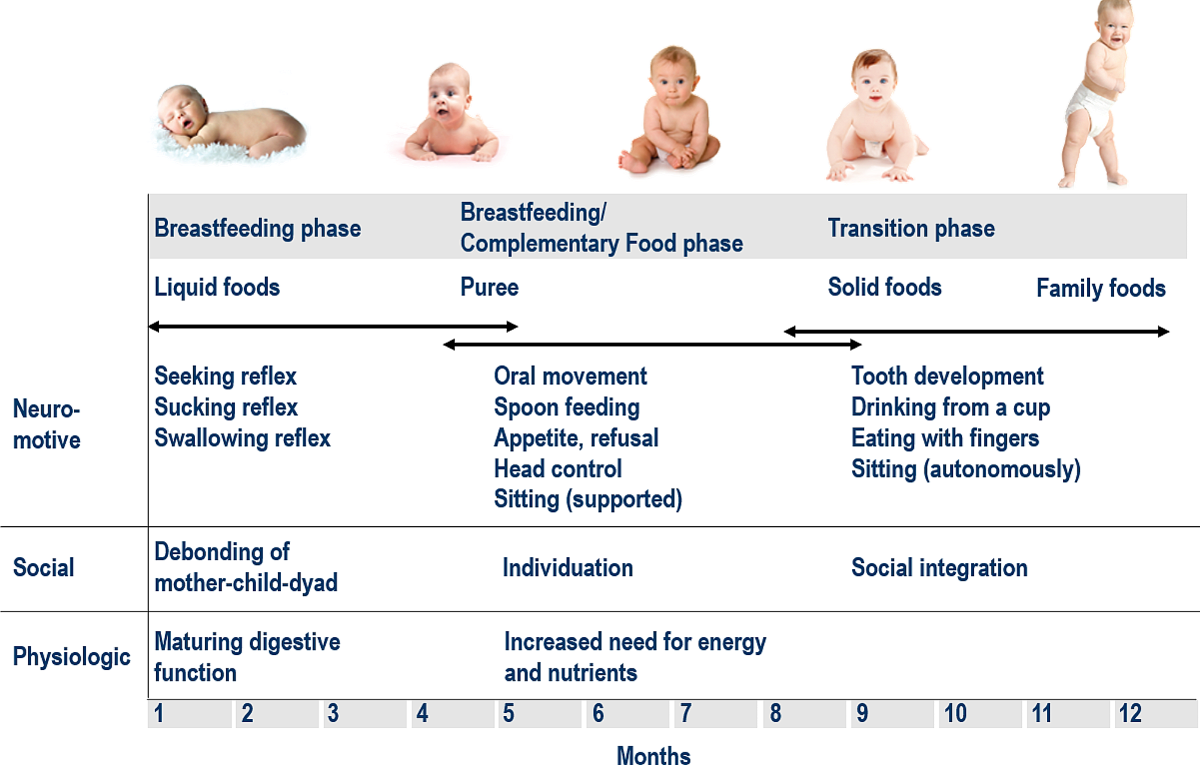
Birth to 3 months
Newborns use several built-in reflexes during feeding. The rooting reflex helps a baby turn toward a nipple or bottle. The sucking reflex helps the baby draw in milk, while the swallow reflex moves milk away from the mouth.
At this stage, babies usually feed best when their head, neck, and body are well supported. Their tongue moves in a forward and backward pattern. This motion helps them take milk but does not yet manage solid food well.
You may notice pauses during a feed. These pauses let the baby breathe and organize the next suck. A calm rhythm is often a good sign.
4 to 6 months
Around this time, many babies gain better head and neck control. They may sit with support, bring toys to their mouths, and show interest when others eat.
Their tongue begins to move food from side to side. This skill is called tongue lateralization. It supports later chewing and helps a baby move soft food toward the gums.
Many infants are ready to start complementary foods at about 6 months, when they show several readiness signs. Age alone does not confirm readiness. A baby who cannot sit upright with support may not be ready for spoon feeding or finger foods.
6 to 9 months
Baby swallowing development often changes quickly during this period. Babies may learn to close their lips around a spoon, move food to the back of the mouth, and swallow thicker purées.
They may also begin to handle mashed foods and very soft pieces. Early chewing does not always look like adult chewing. Babies may use an up-and-down “munching” motion before they develop a more mature rotary chew.
Gagging can happen as babies learn. Gagging is usually noisy and may include coughing, watery eyes, or a red face. Choking is often quiet and can prevent normal breathing. Caregivers should learn infant choking first aid before offering finger foods.
9 to 12 months
Many babies begin to use a pincer grasp, which allows them to pick up small pieces with the thumb and index finger. They may manage soft strips, small lumps, and dissolvable foods with close supervision.
The tongue becomes more skilled at moving food across the mouth. Babies may also drink small amounts from an open cup with help.
Messy eating is normal. Food on the face, hands, tray, and floor is part of learning. The goal is not a clean meal. The goal is safe practice with different tastes, textures, and movements.
12 months and beyond
By the second year, many toddlers can eat a wide range of family foods when those foods are prepared safely. They continue to improve chewing, cup drinking, lip control, and coordination.
Some children still need extra time with certain textures. A toddler may accept soft foods but avoid meat, raw vegetables, or mixed textures. This does not always mean a disorder, but persistent difficulty deserves attention.
Signs That a Baby May Be Ready for Solid Foods
Readiness for complementary foods involves motor, oral, and social skills. Look for several signs together rather than relying on one behavior.
Common readiness signs include:
• Sitting upright with steady head and neck control
• Bringing toys or hands to the mouth
• Showing interest in food
• Opening the mouth when food approaches
• Losing the strong tongue-thrust action that pushes food out
• Reaching for food or trying to hold a spoon
• Staying upright during a meal with support
A baby who watches you eat is interested, but interest alone is not enough. The baby also needs the body control to manage food safely.
Most major pediatric guidance supports starting complementary foods around 6 months for many infants. Breast milk or infant formula remains the main source of nutrition during the first year. Ask your child’s pediatrician about timing if your baby was born early, has poor growth, has a medical condition, or has feeding concerns.

The Difference Between Gagging, Choking, and Aspiration
These three terms are often confused, but they describe different events.
Gagging
Gagging is a protective reflex. It helps move food away from the airway when a baby is still learning. A gagging baby may cough, make noise, retch, or bring food forward.
Gagging can look alarming, but it is often part of normal baby swallowing development. Stay close, remain calm, and let the baby work through the gag unless the baby cannot breathe.
Choking
Choking occurs when food blocks the airway. A choking baby may be unable to cry, cough, or breathe. The baby may become pale or blue, make little sound, or show a weak cough.
Choking is an emergency. Parents and caregivers should take an infant CPR and choking course from a recognized provider. Do not blindly sweep a finger into a baby’s mouth, because this may push food farther back.
Aspiration
Aspiration happens when milk, food, or liquid enters the airway below the vocal cords. It may cause coughing, wet breathing, breathing changes, or repeated chest infections. Some babies aspirate silently without a clear cough.
Signs of possible aspiration include:
• Coughing during or after feeds
• Wet, gurgly, or “rattly” breathing
• Breathing pauses or color changes
• Frequent congestion during meals
• Long feeding times
• Poor weight gain
• Repeated pneumonia or chest infections
One isolated cough does not prove aspiration. A pediatrician or feeding specialist must assess the full pattern. Testing may include a clinical feeding evaluation or an instrumental swallow study.

How to Support Healthy Baby Swallowing Development
Safe feeding begins with position, pace, texture, and attention. Small changes can make meals easier.
Use a stable feeding position
Keep the baby upright, with the head in a neutral position. The ears should generally line up with the shoulders, rather than the head falling far backward or forward.
For bottle feeding, hold the baby close and avoid leaving a bottle propped in the mouth. Bottle propping can increase choking, ear infection, tooth decay, and overfeeding risks.
For solids, use a secure high chair with back support and a footrest when possible. A stable base helps the baby control the jaw and tongue.
Follow the baby’s pace
Pause when the baby stops sucking, turns away, or needs a breath. During bottle feeding, paced feeding can help some babies control the flow.
Signs that the flow may be too fast include:
• Clicking or gulping
• Milk leaking from the mouth
• Coughing or sputtering
• Pulling away often
• Wide eyes or tense movements
A slower-flow nipple does not solve every feeding issue, and nipple changes should be discussed with a feeding professional when problems continue.
Offer safe textures
Start with textures that match the baby’s skills. Soft foods should mash easily between your fingers. Cut foods into shapes and sizes that reduce risk.
Examples may include:
• Soft-cooked vegetables
• Ripe banana or avocado
• Smooth yogurt without added sugar
• Soft scrambled egg
• Tender shredded meat
• Thin strips of toast with a soft spread
• Soft beans that are mashed or flattened
Avoid foods that are hard, round, sticky, tough, or difficult to break apart. Common high-risk foods include whole grapes, nuts, popcorn, hot dogs, hard raw vegetables, chunks of meat, spoonfuls of nut butter, and hard candy.
Prepare foods in a way that fits the baby’s stage. For example, cut grapes lengthwise into quarters and cook firm vegetables until soft. Never offer whole nuts to babies and young toddlers.
Keep mealtimes calm
A calm meal supports learning. Turn off screens, sit near the baby, and watch every bite. Let the baby touch and explore food without pressure.
Do not force a spoon into a closed mouth. Pressure can create stress and make a child more resistant to eating. Offer food, wait, and respect signs of fullness.

Breastfeeding, Bottle Feeding, and Swallowing Skills
Baby swallowing development begins with milk feeding. Breastfeeding and bottle feeding use many shared skills, but they are not identical.
During breastfeeding, the baby must create a latch, draw milk from the breast, coordinate sucking with swallowing, and manage changes in milk flow. During bottle feeding, the nipple shape and flow rate can affect the pace.
Some babies feed well at the breast but struggle with a bottle. Others have the opposite experience. Differences may relate to flow, latch, oral anatomy, body position, or the baby’s ability to coordinate sucking, swallowing, and breathing.
Possible signs of a feeding problem include:
• Frequent coughing or choking
• Clicking sounds throughout feeds
• Poor latch or repeated loss of suction
• Milk leaking from the mouth
• Very long feeds
• Falling asleep from exhaustion before taking enough milk
• Frequent vomiting or distress
• Fewer wet diapers than expected
A lactation consultant, pediatrician, speech-language pathologist, or occupational therapist with infant feeding training can help identify the cause. Feeding problems are not always caused by a parent’s technique, so avoid blame. Support works better than fear.

Oral Motor Skills That Support Swallowing
Oral motor skills are the movements used by the lips, tongue, cheeks, jaw, and mouth. They support both milk feeding and solid food intake.
Important skills include:
• Lip closure around a breast, bottle, spoon, or cup
• Tongue movement from side to side
• Tongue control for moving food backward
• Jaw stability during chewing
• Cheek strength for keeping food on the gums
• Coordination between sucking, swallowing, and breathing
A baby does not need teeth to begin learning soft solids. The gums can mash many safe foods. Teeth become useful as eating skills grow, but they are not the only way a child breaks down food.
Development is not always linear. A baby may manage a soft strip one day and seem unsure the next day. Fatigue, illness, teething, constipation, and a busy setting can affect feeding.

When to Seek Help for Baby Swallowing Development
Talk with a pediatrician if feeding feels stressful, unsafe, or unusually difficult. Early support can prevent small problems from becoming larger ones.
Seek prompt medical advice for:
• Coughing or choking during many feeds
• Blue, gray, or pale skin during feeding
• Breathing trouble
• Repeated chest infections
• Poor weight gain or weight loss
• Fewer wet diapers
• Feeds that regularly take more than 30 minutes
• Strong distress with most textures
• A baby who cannot manage age-appropriate liquids or foods
• Ongoing vomiting, gagging, or food refusal
Call emergency services for severe breathing problems, loss of consciousness, or a choking event that does not resolve.
A healthcare professional may refer your child to a speech-language pathologist or occupational therapist. These specialists can assess oral motor skills, feeding behavior, posture, texture tolerance, and swallow safety.
A swallow study may be recommended when aspiration is suspected. It can show whether food or liquid enters the airway, but it does not explain every feeding problem. Some concerns involve sensory processing, reflux, oral weakness, behavior, or nutrition rather than swallowing alone.
Common Factors That Affect Swallowing Progress
Baby swallowing development can vary for many reasons. A slower pace does not always mean something is wrong.
Factors may include:
• Premature birth
• Low muscle tone or high muscle tone
• Neurologic conditions
• Cleft lip or palate
• Tongue-tie or other oral differences
• Reflux or digestive discomfort
• Food allergies
• Breathing problems
• Heart conditions
• Limited feeding practice
• Sensory sensitivity
• Negative past feeding experiences
Premature babies may develop feeding skills according to their corrected age for a time. Their medical history also matters. A baby who spent time on breathing support may need extra help coordinating breathing and swallowing.
It is also important to avoid quick conclusions. A baby who refuses one food may simply dislike its taste. A baby who coughs once may be tired or distracted. Patterns matter more than one meal.
Practical Mealtime Tips for Parents
The most useful feeding advice is often simple and repeatable. Try these steps at each meal:
-
Wash your hands and prepare an age-appropriate texture.
-
Seat the baby upright and secure the safety straps.
-
Offer a small amount on a spoon or in a safe finger-food shape.
-
Wait for the baby to open the mouth.
-
Watch the baby’s breathing, color, and comfort.
-
Pause when the baby turns away, closes the mouth, or becomes upset.
-
Clean up without pressure or shame.
-
Record concerns and share patterns with the pediatrician.
One lesson many feeding professionals stress is to watch the baby, not the clock. A meal may take longer during early learning, but consistently long or stressful feeds deserve an evaluation.
Another useful habit is to introduce only one major change at a time. If you change the texture, cup, seating position, and feeding schedule all at once, it becomes hard to know what helped.
Mistakes to Avoid
Well-meaning caregivers can accidentally make feeding harder. Avoid these common mistakes:
• Feeding a baby while lying flat
• Offering solids before the baby shows readiness
• Leaving a baby alone with food
• Using screens to distract during meals
• Treating gagging as choking
• Ignoring repeated coughing or wet breathing
• Pressuring a baby to finish
• Offering unsafe foods because they are small
• Comparing one baby’s progress with another’s
• Assuming every feeding problem will disappear without support
Do not place cereal in a bottle unless a qualified clinician specifically recommends it. Thickening feeds can change swallowing safety and may carry risks when used without guidance.
Avoid homemade changes to formula or breast milk. Incorrect mixing can affect a baby’s nutrition and health. Ask a pediatrician or dietitian before making feeding changes for reflux, allergies, or poor growth.
What Research and Clinical Guidance Tell Us
Clinical guidance from pediatric, public health, and speech-language organizations supports a few broad principles:
• Milk remains central during the first year.
• Complementary foods are usually introduced around 6 months when readiness signs appear.
• Babies should be supervised closely while eating.
• Texture should progress as skills improve.
• High-risk choking foods should be modified or avoided.
• Repeated signs of aspiration need professional assessment.
Research also shows that early food experiences involve more than swallowing. Taste learning, texture exposure, posture, hunger, family routines, and caregiver response all shape feeding.
There are limits to age-based charts. Developmental ranges cannot diagnose a feeding disorder. A trained professional must consider the baby’s medical history, growth, breathing, oral movements, and feeding environment.
Frequently Asked Questions About Baby Swallowing Development
When do babies learn to swallow solid food?
Babies begin preparing for solid food before they eat it, but many are ready for complementary foods around 6 months. Readiness includes good head control, sitting with support, interest in food, and improved tongue control.
Is gagging normal when a baby starts solids?
Gagging is common when babies learn new textures and how far food can move in the mouth. It is usually noisy, while choking may be quiet and affect breathing.
How can I tell if my baby is choking?
A choking baby may be unable to cry, cough, or breathe. If the airway seems blocked, use age-appropriate infant choking first aid and call emergency services when needed.
Why does my baby cough during bottle feeding?
Coughing may happen when milk flows too quickly, the baby loses a latch, or sucking and breathing are not well coordinated. Repeated coughing, wet breathing, or poor weight gain should be discussed with a pediatrician.
Do babies need teeth to swallow solid food?
No. Babies can manage many soft foods with their gums. Food must still be prepared safely and matched to the baby’s oral skills.
When should I ask for a feeding evaluation?
Ask for help when feeds are regularly stressful, take a long time, involve frequent coughing or choking, or affect growth and hydration. Early evaluation can clarify whether the issue involves swallowing, oral motor skills, sensory needs, reflux, or another cause.
Can a baby develop swallowing skills at different rates?
Yes. One baby may manage textured foods early, while another needs more practice. Differences are common, but persistent breathing signs, poor intake, or distress should not be ignored.
Conclusion
Baby swallowing development grows from early reflexes into a skilled process that supports safe eating, drinking, and breathing. Upright positioning, close supervision, gradual texture changes, responsive feeding, and attention to warning signs can make this learning period safer and calmer.
Trust your observations, but do not feel that you must solve feeding concerns alone. If your baby coughs often, struggles to breathe, loses weight, or cannot progress with textures, contact a pediatrician or qualified feeding specialist. Keep learning about safe infant feeding, share this guide with other caregivers, and use professional support when your baby needs it.